
On October 14, the Federal Aviation Administration published a notice that sounds more like an airline operations manual than a rocket license. The agency announced it will prepare a Programmatic Environmental Impact Statement for SpaceX's proposal to fly Starship from Starbase, Texas, up to 456 times a year, with as many as 912 landings. Today's limit is 25 launches and 50 landings annually. SpaceX is asking to multiply both by eighteen.
The request is the clearest signal yet of how serious Elon Musk is about his long-stated goal: flying Starship hourly within a few years. If the numbers survive environmental review, Starbase would go from an experimental test site to something closer to a commercial spaceport, launching more than twice a day, every weekday.
What the filing actually asks for
The FAA's notice of intent, filed under docket FAA-2026-12808, opens a public scoping period and begins work on a full programmatic environmental study. The proposal comes in two phases. Phase 1 would allow up to 100 launches and 200 landings a year, on any day and at any hour. Phase 2, which the FAA says could be implemented within several years, raises the ceiling to the full 456 launches and 912 landings a year, with launches restricted to Monday through Friday.
The landing figure needs a footnote. Starship is two vehicles stacked: the Super Heavy booster and the Starship upper stage, both designed to return to Earth separately. That is why landings run at twice the number of launches. The FAA also notes that the 912 figure counts vehicles arriving at Starbase from other launch locations, not only vehicles launched from Texas.
For the study, the FAA assumes launches and landings are split evenly between day (7 a.m. to 10 p.m.) and night (10 p.m. to 7 a.m.). Super Heavy would come down at the launch site, soft-land in the Gulf, or be expended in flight. Starship would land at the site, soft-land in the Gulf or the open ocean, or be expended over open ocean. The review also covers temporary airspace closures and additional ocean landing zones beyond Boca Chica.
What gets studied, and what gets heard
Enjoying this story?
Get the five most important stories in tech, every morning. Free.
The review will examine air quality, wildlife, coastal resources, water quality, noise, visual effects, aviation impacts, socioeconomics, and, notably, children's health and safety risks. That last item is a sign of how seriously the agency is taking the "spaceport next door" question: Starbase sits minutes from the communities of Brownsville and Port Isabel.
The FAA has scheduled three public scoping meetings: in person on November 17 in Brownsville and November 19 in Port Isabel, plus a virtual session on November 18 from 5:30 to 7:30 p.m. Central. Written comments are due November 30 on regulations.gov under docket FAA-2026-12808. The FAA says it considered only one alternative, the "No Action" option that keeps SpaceX at its current 25-flight ceiling, arguing that no other site is a reasonable alternative because Starbase already has the infrastructure.
456 launches a year is more than two a day, every weekday. Starbase would stop being a test site and start being an airport.
Why now
Starbase: From 25 to 456 Launches
SpaceX's requested annual Starship ceiling at Starbase, Texas, versus today's limit.
Note: Figures from the FAA notice of intent, docket FAA-2026-12808. Landings count the booster and upper stage separately.
The timing is not accidental. SpaceX's Starship program has had a breakthrough month. Flight 14, which lifted off September 28, was the first Starship to reach orbit, and it deployed 26 Starlink V3 satellites, the first members of a new broadband constellation that could eventually number 100,000 spacecraft. Ship 40, the first Starship to survive an ocean splashdown, has returned to Starbase for refurbishment.
After years of suborbital hops and spectacular failures, the vehicle now looks like what it was promised to be: a fully reusable, 122-meter-tall workhorse that can put serious mass into orbit. Musk has said SpaceX is targeting more than 10,000 Starship flights a year by 2030, alongside a planned Starmind AI megaconstellation of a million satellites. Starbase hosts two orbital pads today, with Starship pads also being built on Florida's Space Coast.
The FAA filing is, in that context, the regulatory scaffolding for an industrial plan. Building the satellites takes factories. Flying them takes launch licenses at industrial scale. Starship is the bridge between the two, and the FAA's environmental review is the bridge's first permit.
The tension at the heart of it
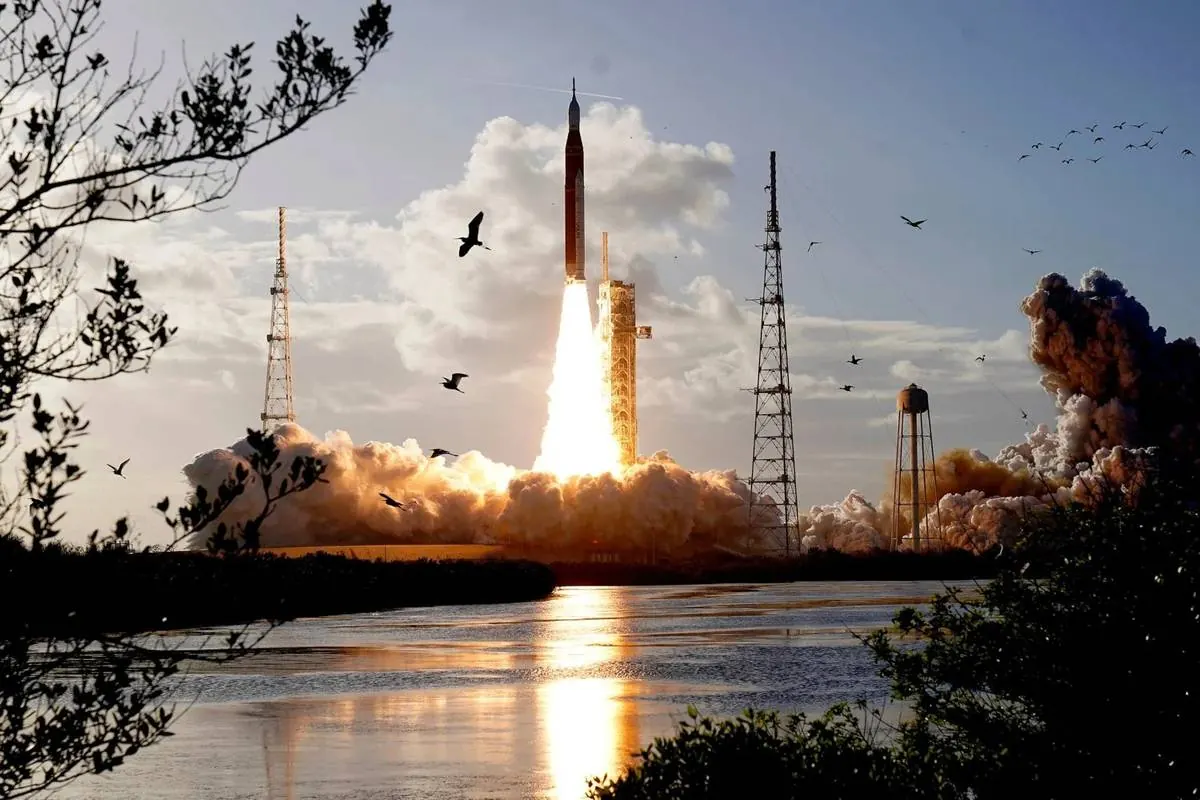
This is where the story stops being about rockets and becomes about governance. The Outer Space Treaty and NASA's Artemis Accords speak to what happens beyond the atmosphere, and the Artemis program's own lunar ambitions depend on Starship working. But the question this review asks is firmly terrestrial: what does it cost a stretch of the Texas coast, its wildlife, its waters, and its people, to host humanity's busiest rocket port?
Environmental reviews of this scale typically take well into the following year or beyond, and the PEIS process is longer than the standard assessments Starbase has faced before. SpaceX is still only authorized for 25 flights a year until the process concludes. The company has launched Starship only three times in 2026 under its V3 design, a long way from 456.
There is also a quieter precedent being set. If the FAA approves anything close to the requested ceiling, it establishes the template for regulating rocket launch at airline cadence, not just at Starbase but wherever the industry goes next. The steady rhythm of ISS cargo flights once normalized the idea of routine spaceflight. The next normalization, daily multi-ton launches over populated coastlines, is exactly what this review is about.
Between now and November 30, the loudest voice in the room will not be SpaceX's. It will be whoever shows up to the scoping meetings and writes into docket FAA-2026-12808. The rocket can already reach orbit. The question is whether the coast beneath it can absorb what comes next.
0 Comments