Five days of rumor and a two-day selloff in Intel stock came to an end this week with two statements. On Wednesday, Intel CEO Lip-Bu Tan, speaking in Tokyo, confirmed that Intel remains involved in Elon Musk's Terafab semiconductor project. The same day, Musk posted on X that his companies will build and operate the planned Texas chip complex themselves, adding: "We will build and run the fab. Let there be ZERO doubt about that. Maybe TSMC subleases part of the Terafab if they want, but nothing more than that."
The back-to-back statements settled the question that had been hanging over the project since October 2, when Musk first confirmed he was in preliminary discussions with TSMC about a possible role. For about 72 hours, investors openly wondered whether the world's largest contract chipmaker was about to displace Intel as the manufacturing brain of Musk's most ambitious hardware bet. It was not. Intel shares, which had shed more than 5 percent on Monday and Tuesday, recovered about 2 percent in premarket trading after the clarifications.
What Terafab is supposed to be
Terafab is Musk's answer to a worry he has voiced for years: that the world's chip foundries will not have enough capacity to meet the coming demand from autonomous vehicles, humanoid robots, and large-scale AI workloads. Announced in March 2026 and jointly led by Tesla and SpaceX, with xAI in the mix, the project targets one terawatt of annual computing capacity. For context, that is an amount Musk has described as twice what the entire United States needs today, a figure best treated as aspiration rather than forecast.
The physical project is moving beyond the concept stage. In August, the Texas governor's office announced that SpaceX would build the first phase of Terafab in Grimes County, about 70 miles northwest of Houston, with more than $16.8 billion in capital investment and 3,000 jobs. Local filings have described a much larger multi-phase build-out, with SpaceX's May application to the county citing $55 billion in investment and a contingency reaching $119 billion. At a planned 100 million square feet, the facility would rank among the largest manufacturing plants in the world. SpaceX's own site describes it as "an advanced semiconductor lab." Back in April, SpaceX also broke ground on a research facility at Tesla's Austin Gigafactory, a precursor to the main build.
The chips are meant for the Musk empire's own appetites: Tesla's cars and its Optimus humanoid robots, xAI's data centers, and SpaceX's hardware. The Texas location puts fabrication close to the Starbase launch site in Brownsville and to existing Starlink dish manufacturing in the state.
Why Intel 14A sits at the center
Enjoying this story?
Get the five most important stories in tech, every morning. Free.
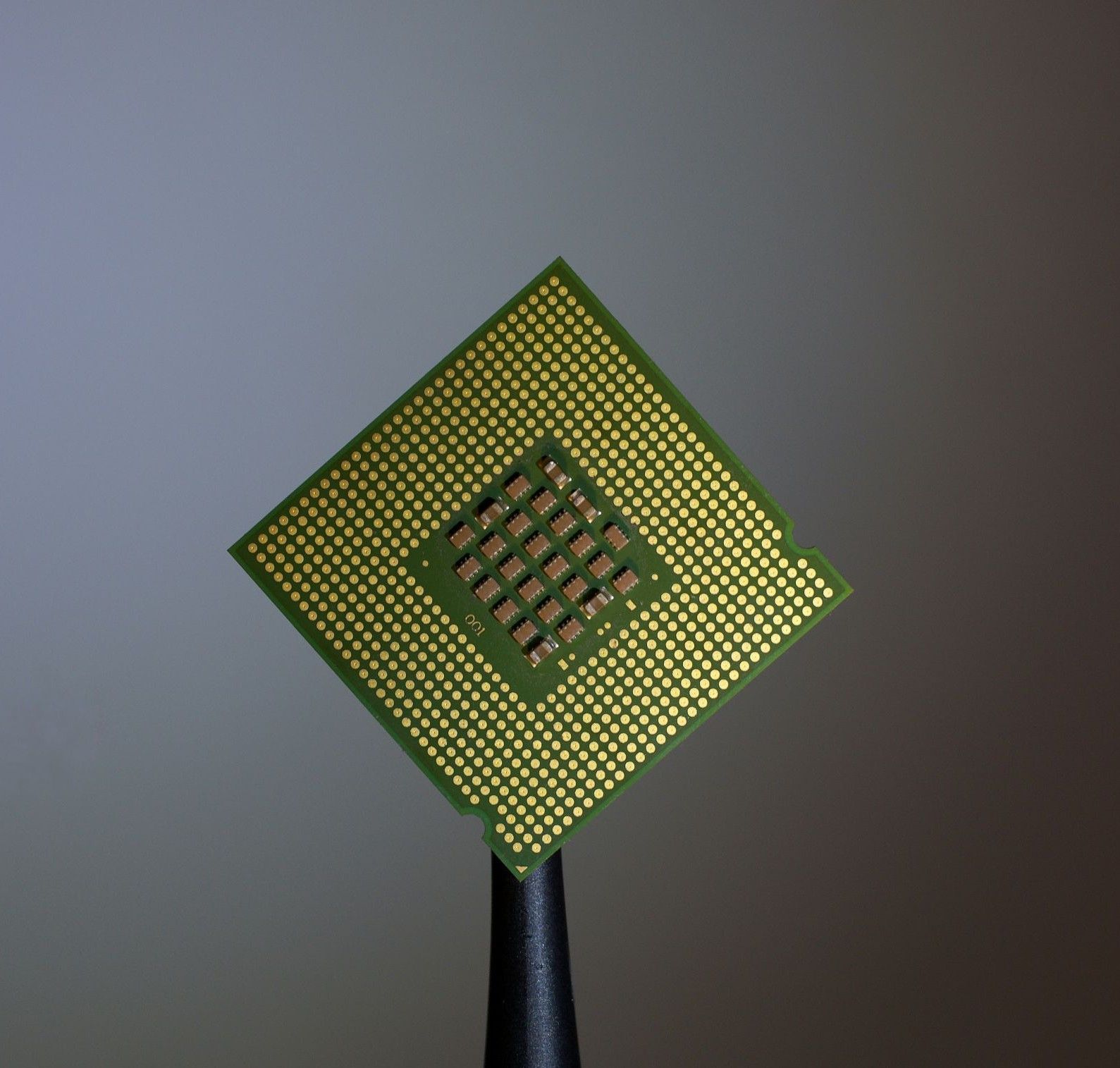
Intel joined Terafab in April as the first named semiconductor technology partner, pledging chip design, manufacturing, and advanced packaging capabilities. Later that month, during Tesla's first-quarter earnings call, the company indicated Terafab would use Intel's 14A process, the company's next-generation node built on second-generation RibbonFET gate-all-around transistors with PowerDirect backside power delivery, aimed at next-generation AI and high-performance computing designs.
The partnership matters to Intel for a structural reason. The company has said publicly that leading-edge process development needs substantial external wafer volume to make the economics work, and in 2026 it committed to completing 14A development while hunting for major outside customers. A Terafab deployment would be Intel's most prominent external use case for the node, although no committed wafer volumes or financial terms have been disclosed. Intel has not detailed whether Terafab will license 14A, receive manufacturing assistance from Intel, or both.
For Musk, Intel was the natural fit: the one partner with both a cutting-edge process roadmap and a business model, through its foundry arm, that lets a customer get close to the process itself. Nobody else in the industry offers access to a leading-edge node quite the way Intel's foundry model now does.
We will build and run the fab. Let there be ZERO doubt about that.
The sublease idea is stranger than it sounds
Terafab by the Numbers
Announced investment figures, in billions of dollars.
Note: Later phases are not committed spending. A single leading-edge fab typically costs $20B or more.
Musk's phrasing left one door open: TSMC might sublease part of the facility. In practice, that would be an unusual arrangement. Advanced fabs are not interchangeable cleanroom shells. Each foundry runs proprietary process flows, tool configurations, materials, metrology, automation, yield management, and contamination controls. A TSMC production line sharing a campus with Intel-derived 14A manufacturing would need strict physical, operational, and intellectual-property separation. It would look less like a conventional sublease and more like a separate fab inside the wider Terafab site.
TSMC also has its own competing roadmap. The foundry says its A14 node is scheduled for volume production in 2028, and it is deep into its own US manufacturing expansion in Arizona. TSMC just posted its biggest quarter ever on AI chip demand, so it is negotiating from a position of strength, and it has no obvious reason to accept a bit-player role on someone else's campus. No agreement for any TSMC role at Terafab has been announced, and Musk himself described the earlier talks as "just discussions," adding that "something may come of it."
What the week actually settled
Strip away the market theater and the week produced three durable facts. First, Intel remains Terafab's manufacturing technology partner, and 14A remains the process of record for the project. Second, operating control will stay with Musk's companies, not with any outside foundry. Third, TSMC's possible role is bounded, by Musk's own words, at a sublease.
What remains unresolved is most of the substance: committed wafer volumes, commercial terms, the build schedule, and whether TSMC wants any part of a campus where it would not be in charge. Those are the details that will determine whether Terafab becomes the vertically integrated AI chip fortress Musk describes, or another spectacularly scaled plan that takes longer than advertised.
For now, though, the message from both ends of the partnership is the same. The deal that was announced in April is the deal that stands in October. In an industry where fab partnerships are measured in decades and tens of billions of dollars, five days of speculation turned out to be exactly that: five days.
0 Comments