
The most expensive object humans have ever built is scheduled to be deliberately crashed into the ocean, and NASA just told private industry what is supposed to take its place. On October 9, the agency released its final solicitation for commercial space stations, the formal start of the race to replace the International Space Station before its controlled deorbit at the end of 2030. The documents contain an admission NASA has been circling for years: the next American space station will not belong to NASA at all.
Instead of building the ISS's successor, NASA wants to rent it. Under the Commercial LEO Destinations program, companies are being asked to design, build, and operate their own stations in low Earth orbit, with NASA as one of several paying customers. Proposals are due December 8, 2026. NASA expects to award contracts by spring 2027. The winners will receive multiple firm-fixed-price, indefinite-delivery contracts with an eight-year base ordering period and optional extensions stretching the arrangement to roughly 15 years.
What the solicitation actually says
The procurement runs in three phases. Phase one winners are guaranteed at least $100 million, according to reporting on the documents. Phase two, beginning next year, funds station development and certification. Phase three is the real prize: the purchase of at least four NASA astronaut missions to the winning stations, with the later phases expected to be worth billions of dollars.
This was not the first plan. In March 2026, NASA floated an approach it called Ignition, which would have anchored private modules to a government-owned core hub, a half-commercial compromise. Industry pushed back hard, and by June 1 the agency reversed course, returning to the original fully commercial model. The final solicitation is the result of that reversal.
The shift has been a decade in the making. NASA said in 2024 that its goal was to be "one of many customers" in low Earth orbit, and the new documents make that the official procurement strategy. NASA Administrator Jared Isaacman put it more plainly in the agency's statement: "NASA is committed to maintaining a sustained American presence in low Earth orbit long after the International Space Station retires," with commercial stations supporting research, technology development, and crew training while the agency concentrates its resources on the far harder missions to the Moon and Mars.
NASA spent roughly $150 billion building the ISS. Its successor will be bought by the seat, not built by the agency.
The price list nobody expected
Enjoying this story?
Get the five most important stories in tech, every morning. Free.
The most surprising pages of the solicitation are the ones with dollar signs. For the first time, NASA published its own cost estimates for buying rides to commercial stations: roughly $325 million for a four-seat crew flight and about $300 million for a cargo flight, both pegged to a 2030 timeline. Even more important for bidders, NASA offered to furnish transportation for the first four of its service missions, and applicants are not required to have a signed transportation contract, or even a letter of intent, with any provider.
For startups whose biggest problem is getting people to orbit, that concession removes the single hardest line item from their business plans. And the industry's transport problem is real. SpaceX has said it plans to retire Crew Dragon once the ISS is deorbited, and it has not offered seats to future station operators. Boeing's Starliner is the remaining American option, and two weeks before the final solicitation, NASA added $359 million to support the capsule's certification for low Earth orbit crew missions.
Who is actually bidding
The Road to the Post-ISS Era
Key dates in NASA's commercial station transition.
Note: Dates based on NASA's stated schedule and company plans.
The likely field is small and familiar. Axiom Space, which has already flown four private astronaut missions to the ISS and is building its own modules in Europe, said its team was reviewing the documents and called itself the clear choice to meet NASA's objectives. Starlab, the consortium led by Voyager Space, welcomed the release, with chief executive Marshall Smith calling it "an important milestone" and claiming the strongest business plan and technical solution. Vast Space said it is in final integration with Haven-1, its first single-module station, and is ready to compete.
The question marks are Blue Origin, which won funding in an earlier round but whose commitment to the program remains uncertain, and SpaceX, which appears unlikely to bid. That leaves three serious contenders, and here is the uncomfortable fact about all of them: as of September 2026, not one of their proposed stations had a single bolt in orbit.
The gap in the middle
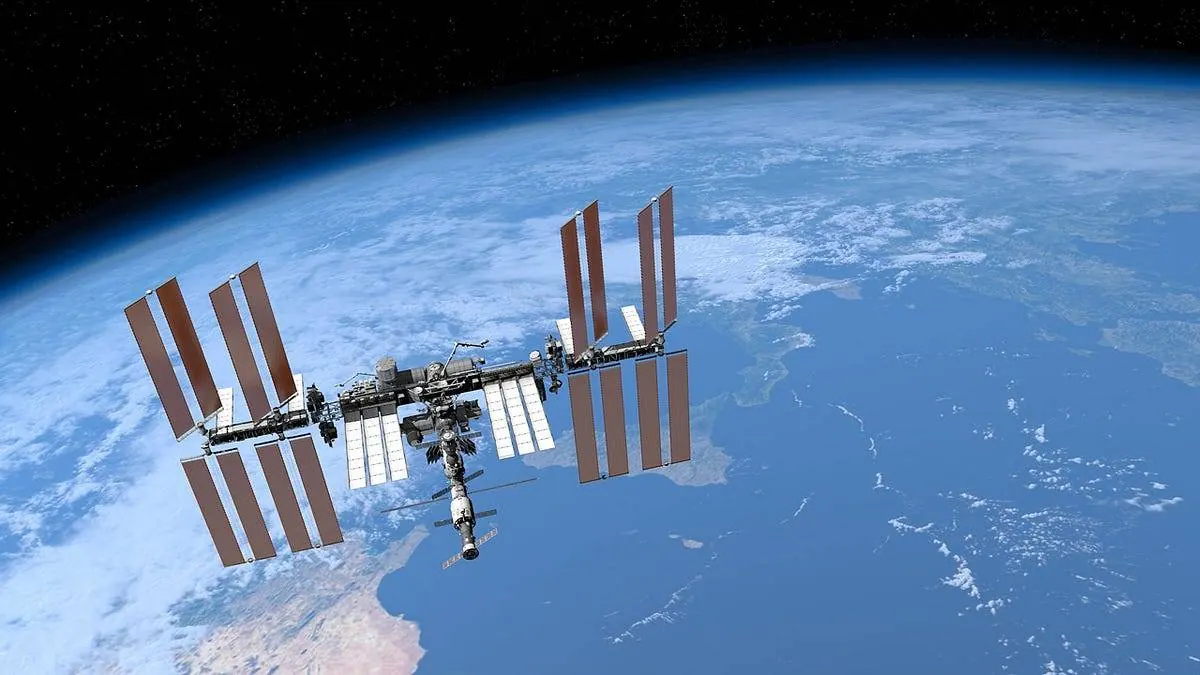
That is the central tension of the whole program. NASA expects to award contracts in spring 2027. The ISS comes down in a controlled deorbit around the end of 2030. In between, someone has to design, build, launch, and human-rate entirely new space stations, on a schedule no private company has ever achieved. The gap between ISS retirement and the first commercial station being ready for NASA crews is the thing nobody at the agency wants to talk about, and the thing every bidder has to price in.
The contenders are at very different stages. Vast is furthest along by most accounts: Haven-1 is aimed at a 2027 launch, with the company pursuing a modular path toward a multi-module station capable of supporting a continuous human presence. Axiom's first modules are being built by Thales Alenia in Europe, with a first launch targeted for 2028. Starlab has raised hundreds of millions in public and private capital and signed customers and hardware suppliers, but construction on its approved design has not begun.
NASA's answer to the schedule risk is money: billions of dollars of it, spread across development funding and guaranteed service missions. The agency's logic is that it does not need to own the station, it just needs to be the anchor tenant that makes the economics work. It is the same playbook that created the commercial crew and cargo programs, which replaced the shuttle's supply runs at a fraction of the cost. It is also worth remembering that NASA ran the same kind of bet on the ISS's final years, and that gamble is what makes this transition credible.
Whether the playbook works a third time is now a bidding question with a December 8 deadline. The era that began with the first ISS module in 1998, and brought continuous human occupation from 2000, will end with a controlled plunge into the Pacific. What replaces it will be decided not by a NASA center but by a procurement office, and the landlords are still building their buildings.
0 Comments