
The most important document in the future of human spaceflight is not a launch manifest. It is a 360-page federal procurement solicitation that landed on SAM.gov on October 9. NASA has formally asked American industry to design, build, and operate the commercial space stations that will replace the International Space Station, and the numbers inside reveal exactly how the agency plans to stop owning space stations and start renting seats on them.
The Commercial Low Earth Orbit Destination Contract, or CLDC, is the endgame of a strategy NASA has been telegraphing for years. The ISS, whose construction began in 1998, is headed for retirement at the end of the decade, and in 2024 NASA awarded SpaceX an $843 million contract to build the vehicle that will drag it out of the sky and into an unpopulated stretch of ocean. The question was never whether the ISS would come down. It was what would replace it.
This is NASA's answer: a private market, not a government program.
What NASA is actually buying
The solicitation, numbered 80JSC027R0004, invites U.S. companies to compete for multiple firm-fixed-price, indefinite-delivery/indefinite-quantity contracts. In plain terms, NASA is not buying a station. It is setting up a menu of contractors it can order rides from, with an eight-year base ordering period and two extensions that could stretch the whole arrangement to 15 years.
The plan has three phases. Phase one selects at least two contractors, each guaranteed a minimum of $100 million. Phase two, beginning in 2027, funds development and certification of the stations themselves. Phase three is the payoff: NASA buying operational services aboard working private stations, including at least four crewed missions for agency astronauts.
For those missions, NASA's shopping list is specific. The solicitation describes two kinds of crew flights: one-month missions carrying three astronauts (two from NASA) and six-month expeditions carrying four astronauts (two from NASA). Every bid will be judged against those concrete requirements, not against glossy renderings.
NASA is not buying a space station anymore. It is setting up a menu of contractors it can order rides from, and the ISS gets demolished on a timer.
The price tags, on the record
Enjoying this story?
Get the five most important stories in tech, every morning. Free.
Buried in the procurement documents are the numbers that matter most. NASA estimates that by 2030, a four-seat crew trip to a commercial station should cost roughly $325 million, and a cargo haul should run about $300 million. That $25 million gap between flying people and flying freight is a rough measure of what human life support, safety certification, and crew systems add to the bill.
Compare that to the status quo. The ISS costs NASA as much as $4 billion a year to operate, according to a 2021 inspector general report. Even if NASA ends up buying several missions a year from private operators, the math suggests the agency could spend a fraction of its current orbital budget while freeing the rest for the moon and Mars. That is the entire logic of the program.
NASA Administrator Jared Isaacman framed it as a shift from landlord to customer. The agency, he said, remains committed to a sustained American presence in low Earth orbit after the ISS retires, because it will still need a place to conduct research, develop technologies, train crews, and prepare for lunar and Martian missions. Commercial stations could provide that capability, he argued, while letting NASA concentrate its resources on the harder missions ahead.
Meet the contenders
The Economics of Life After the ISS
NASA's procurement numbers for the commercial space station era.
Note: Figures from NASA's CLDC solicitation and inspector general reports; shown for illustrative comparison only.
The field lining up to bid is the who's who of the new space industry. Vast is pitching its Haven-1 single-module station and the larger Haven-2 design. Axiom Space has been flying hardware toward its own station concept for years. Starlab Space, backed by major aerospace partners, is developing a large station meant for continuous crewed operations. And the Blue Origin-led Orbital Reef partnership brings the deepest pockets in the room.
Here is the catch that specialist outlets keep flagging: as of September 2026, not a single one of those proposed stations had so much as a bolt in orbit. Every bid arriving by the December 8 deadline will be a promise, not hardware. NASA is not evaluating working stations. It is evaluating who it trusts to build one at a fixed price.
That is precisely why the contract is firm-fixed-price, meaning contractors eat the cost if their estimates are wrong. NASA learned from the commercial crew era, where cost-plus arrangements let bills balloon. This time, overruns are the vendor's problem.
The year of the reversal
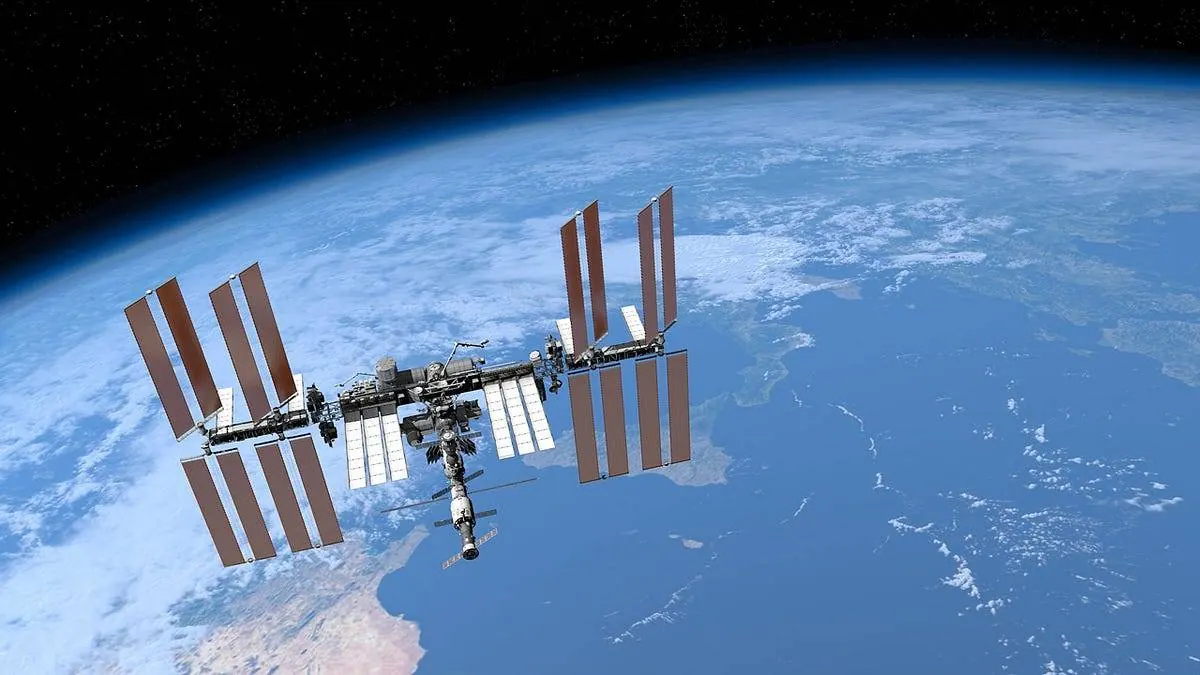
Getting to this solicitation was not smooth. In March 2026, NASA floated an approach it called Ignition, which would have anchored private modules to a government-owned core hub rather than going fully commercial. Industry pushed back hard, arguing the hybrid model kept NASA in the landlord business instead of the customer business. By June 1, 2026, NASA reversed course and returned to the fully commercial model, a pivot documented by analysts at the Center for Strategic and International Studies and elsewhere.
The reversal matters because it reveals the stakes. NASA's contracting officer explicitly encouraged bidders to use the agency's personnel and expertise through public-private partnerships, an olive branch meant to reassure companies worried about the certification gauntlet. The agency wants partners, but partners who build, own, and operate, not tenants on a government station.
The gap everyone is racing
The real drama is the calendar. Proposals are due December 8, 2026, with contract awards expected around April 15, 2027. Development and certification run through the late 2020s, and NASA expects commercial crew flights to start around 2030, the same year the ISS is slated for deorbit (Keeping the station supplied until then is its own feat: SpaceX's CRS-35 resupply run to the ISS.).
That timeline has almost no slack. A development delay of a year or two in any of the winning programs could leave a gap between the ISS's fiery end and the first certified commercial station, a period in which American astronauts have nowhere in low Earth orbit to go. The firm-fixed-price structure, the multiple-award design, and the 15-year potential term are all hedges against exactly that risk.
If it works, the model becomes a template for everything NASA does next: the agency as anchor tenant, not landlord. Commercial destinations keep the lights on in low Earth orbit while NASA spends its money on the moon and Mars. The 360 pages released on October 9 are the first formal draft of that arrangement. The bids due in December will tell us whether industry believes the numbers.
0 Comments