
On Tuesday morning at 6:33 a.m. ET, a SpaceX Falcon 9 will lift off from Cape Canaveral with roughly 6,500 pounds of cargo bound for the International Space Station. Most of it is routine: food, experiments, spare parts. But tucked into the Dragon spacecraft is hardware that marks the end of an era, the fourth and final pair of Redwire ROSA roll-out solar wings, completing a power modernization program that began in 2021.
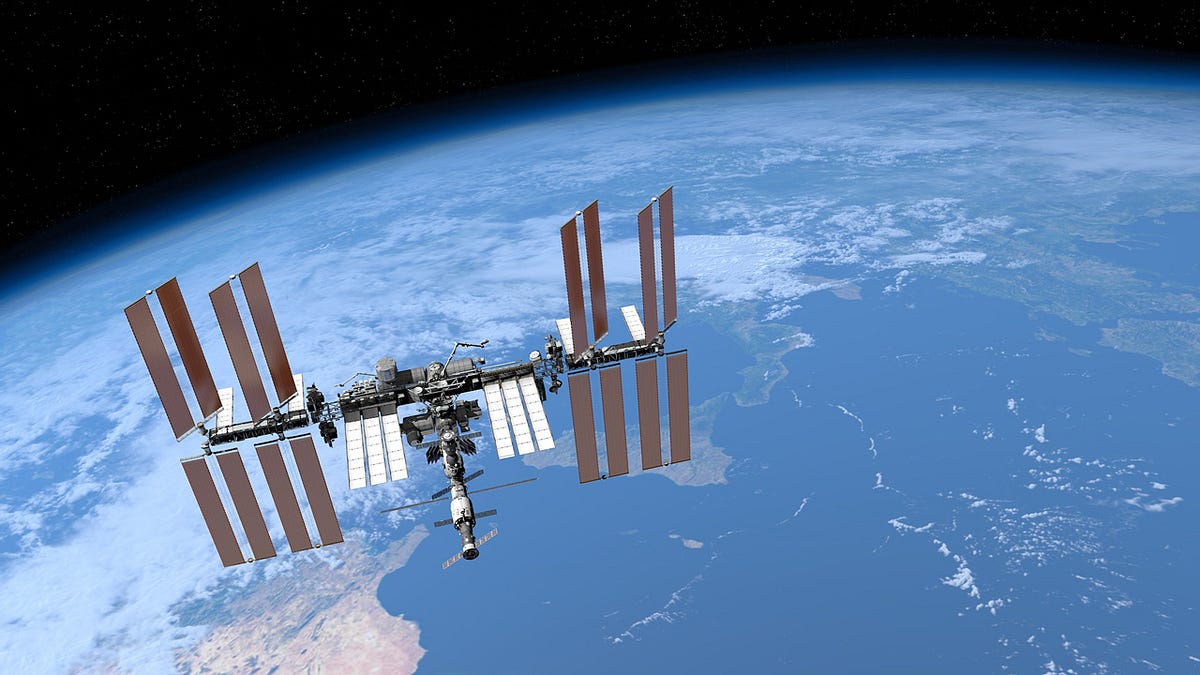
When these two wings are installed, the station will have eight ROSA arrays generating more than 160 kilowatts of power, a quiet but decisive upgrade that secures the aging outpost's energy budget through its planned operations to 2030. It is the kind of milestone that rarely gets a parade, but it is the reason the ISS keeps working.
A station that keeps outliving its power budget
The International Space Station was designed for a 15-year life. It has now been continuously occupied for more than 25 years, and its original solar arrays have been degrading the whole time. Solar cells lose efficiency in orbit as they are bombarded by atomic oxygen, micrometeoroids, and harsh ultraviolet radiation. By the early 2020s, the station's power margin, the gap between what it generated and what its growing list of experiments and systems demanded, was getting uncomfortably thin.
The answer was the Roll-Out Solar Array, or ROSA. Developed by Redwire with Boeing as the customer, ROSA wings are a radical departure from traditional rigid solar panels. Each wing is 63 feet long and 20 feet wide, yet it launches rolled up like a yoga mat, packed into a cylinder small enough to fit inside a Dragon cargo trunk. Once outside the station, the array unrolls itself using the stored energy in its composite booms. No motors, no hinges, no complicated deployment choreography. Each wing produces more than 20 kilowatts of power and is designed to operate for over a decade.
Each ROSA wing launches rolled up like a yoga mat and unrolls itself using the stored energy in its composite booms. No motors, no hinges, no complicated choreography.
Five years, four missions, one finished job
Enjoying this story?
Get the five most important stories in tech, every morning. Free.
The first pair of ROSA wings arrived on CRS-22 in June 2021 and was installed by astronauts on spacewalks that summer. Two more pairs followed in 2022 and 2023, and each installation immediately boosted the station's power output. The six wings already deployed have contributed toward extending the station's operations to 2030, according to Redwire.
The final pair, launching aboard CRS-35, completes the set. All eight wings together will deliver more than 160 kilowatts, effectively restoring the station's power to better than its original specification while leaving headroom for new research equipment, commercial modules, and the power-hungry systems that a 28-year-old spacecraft was never designed to carry.
The technology has already outgrown the station. Redwire says it has built ROSA variants for NASA's Double Asteroid Redirection Test, commercial geotelecommunications satellites, and even the SR-1 Freedom mission concept to Mars, plus a related Extensible Low-Profile Solar Array design. More than 65 solar array wings have been delivered or are in development across the company's space business.
A finished power system for the station's final years
The ISS Power Upgrade at a Glance
Roll-Out Solar Array wings deployed from 2021 to 2026.
Note: Figures from Redwire and NASA mission releases.
The timing matters. NASA plans to keep the ISS flying through 2030, after which the station will be guided into a controlled reentry over the Pacific Ocean. The ROSA upgrade ensures the lab does not limp into retirement on failing arrays. It also buys time for the commercial successors, stations from Axiom Space, Vast, and Blue Origin, that are racing to be ready before the handoff. Full power means the ISS can keep hosting the science that justifies its budget: drug crystallization, materials research, and biology experiments that only work in microgravity. For an outpost older than most of its current crew, finishing the power upgrade is less a luxury than a requirement.
What CRS-35 is really about
Beyond the solar wings, CRS-35 is a routine resupply milestone: the 35th SpaceX cargo mission to the ISS under NASA's commercial resupply contract. Dragon will dock autonomously around 11 a.m. on Thursday, October 15, at the station's Harmony module. The mission comes just days after Crew-12 splashed down off California on October 8, ending a nearly eight-month stay, while the newly arrived Crew-13, which launched October 1, will be on hand to receive the delivery.
The launch itself will be hard to miss on the East Coast. The Falcon 9 will fly northeast up the Atlantic coast, and if skies are clear, residents as far north as New Jersey may see the glowing exhaust plume phenomenon sometimes called a space jellyfish, the same effect photographed after an August 2026 launch. Central Florida can expect sonic booms as the first-stage booster returns to Landing Zone 40.
But the quiet headline is the power. The ISS was supposed to die years ago. It keeps flying because engineers keep solving its problems faster than age creates them, and the ROSA program is one of the best examples of that. A rolled-up mat of solar cells, launched in a cylinder, now keeps one of humanity's greatest machines alive. When the last pair unrolls outside the station, the power problem is officially solved.
0 Comments