
At 6:33 a.m. ET on Tuesday, a SpaceX Falcon 9 lifted off from Launch Complex 40 at Cape Canaveral Space Force Station on a launch window measured in zero seconds: miss the moment and you wait for another day. The rocket carried a Cargo Dragon spacecraft bound for the International Space Station on the mission known as CRS-35, the 35th resupply flight SpaceX has flown for NASA under its Commercial Resupply Services contract. On board: roughly 6,500 pounds of food, equipment, and scientific cargo for the crew living and working aboard the orbiting laboratory.
If it sounds routine, that is precisely the point. The International Space Station has been continuously occupied for more than a quarter century, and keeping it supplied has become one of the most dependable logistics chains ever built. (The human side of that logistics chain keeps turning over too: Crew-12 recently splashed down after 237 days aboard the station.) It is a truck run to orbit, except the truck is a 70-meter rocket and the destination circles the planet at 17,500 miles per hour. The uneventfulness of missions like CRS-35 is the achievement.
What is flying on CRS-35
The Cargo Dragon's manifest covers the full spectrum of station life. Food and clothing for the crew, hardware spares, and a slate of science experiments headed to the station's laboratories. NASA's manifest notes for this flight include research payloads alongside the consumables, a mix that has become standard: every resupply mission doubles as a delivery of laboratory time, since the experiments arriving today become the crew's work schedule for the coming weeks.
One of the more notable entries this time comes from much closer to home. Students at Florida Tech in Melbourne, Florida, contributed an experiment that is riding to orbit on the flight, a reminder that the station's research program extends beyond professional labs. Student-built hardware has been a steady feature of ISS logistics for years, and each one has to pass the same brutal certification as anything else that flies: vibration, vacuum, and the hard requirement that it cannot endanger the crew.
The flight also keeps to the resupply rhythm the station demands. The ISS orbits roughly 260 miles overhead, and its atmosphere of consumables is not a figure of speech: food, water, oxygen generation supplies, and filters all arrive by rocket. Lose the cadence and the margin thins fast, which is why a single missed launch window matters more to station operations than it looks from the outside.
A fresh crew is waiting for the delivery
Enjoying this story?
Get the five most important stories in tech, every morning. Free.
Timing here is everything. The Zenith Port where Dragon is scheduled to dock on October 15 was only just freed up: NASA's Crew-12 spacecraft splashed down off the coast of California on October 8, ending a nearly eight-month stay aboard the station. Their replacements, the Crew-13 mission, launched from the Cape on October 1 after a three-week delay to repair a leaking fuel system on their Dragon capsule.
Crew-13 is commanded by Jessica Watkins, making her second trip to the station and, with this flight, the first Black woman to command a crew headed to orbit. She is joined by NASA astronaut Luke Delaney, a retired Marine; Canada's Joshua Kutryk, a Royal Canadian Air Force colonel; and Russia's Sergey Teteryatnikov, a former submariner. Their trip up was fast by design: an eight-hour transit from liftoff to docking, arriving well before bedtime on launch day. They will be the ones unpacking the CRS-35 delivery when it arrives around 11 a.m. on October 15.
The ISS runs on logistics. Every pound of food, every experiment, every spare part arrives on a rocket, and nothing up there works without the freight line.
The economics of the freight run
CRS-35 by the Numbers
The 35th SpaceX resupply mission to the International Space Station, in context
CRS-35 is also a quiet demonstration of the commercial model that now sustains American spaceflight. NASA no longer buys resupply rockets the way it used to, paying contractors for development costs plus a fee. Under the Commercial Resupply Services contracts, the agency buys a service: cargo delivered to the station, for a fixed price, with the provider owning the vehicle and the risk. SpaceX developed Dragon and Falcon 9 with a mix of private capital and NASA milestone funding, and it now sells flights the way a freight company sells capacity.
The reusable first stage is the visible end of that bargain. Shortly after Tuesday's launch, the Falcon 9 booster was expected to fly back and land at Landing Zone 40 near the launch pad, producing the sonic booms that wake up Brevard County whenever a return-to-launch-site flight is on the schedule. Reusability is what lets SpaceX price these flights where it does, and every RTLS landing, the routine ones especially, is another data point in the case that reusability is the normal way to fly.
That matters beyond this single mission because the ISS will not last forever. NASA's plan calls for retiring the station and shifting to commercial successors, and whatever those stations look like, they will need exactly this: scheduled, reliable, affordable freight. Every CRS flight is effectively a rehearsal for the commercial-station era, proving that the logistics model scales and that the vehicles hold up over dozens of flights.
What happens next
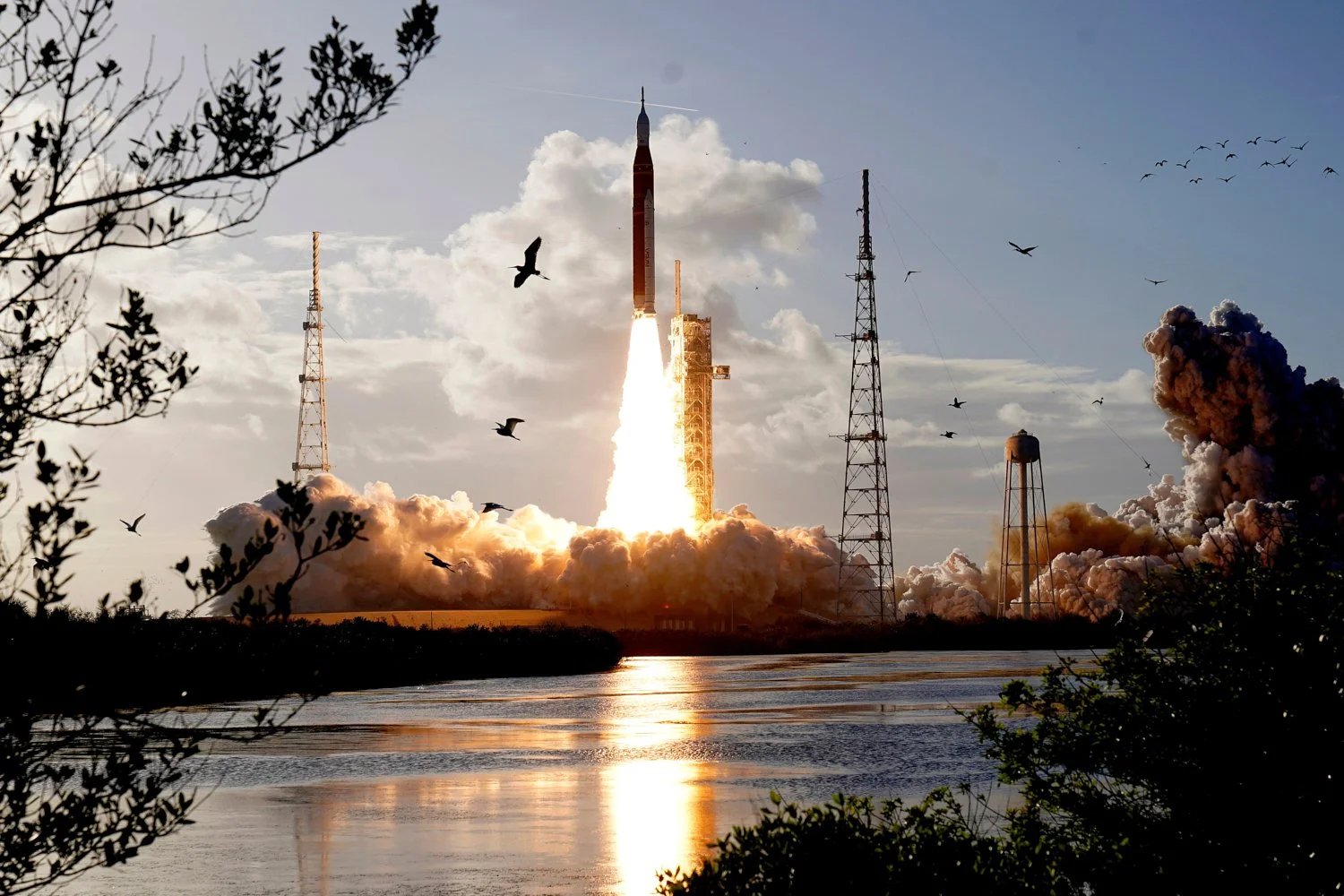
Assuming the timeline holds, Cargo Dragon will reach the station about 53 hours after launch, docking at approximately 11 a.m. ET on October 15. The crew will begin unloading almost immediately, prioritizing the time-sensitive science payloads before working through the rest of the manifest. Unloading a Dragon is a days-long choreography, and it runs in parallel with the experiments already underway on the station.
For watchers on the ground, Tuesday's pre-dawn timing offered a possible bonus: the so-called space jellyfish, where sunlight below the horizon illuminates the rocket's exhaust plume and paints a glowing, drifting shape across the dark sky. Florida's Space Coast, from Jacksonville Beach to West Palm Beach, sits under the flight path of northeast-bound launches, making early morning flights some of the most photographed on the manifest. Another quiet, on-time delivery, and one more week of groceries, science, and spare parts for the people living 260 miles up.
0 Comments