
On Friday, October 9, Barclays analyst Anthony Valentini rearranged the entire listed electric air taxi sector in a single morning. Archer Aviation went to Overweight, with its price target lifted to $8 from $4.50. Joby Aviation went the other way, cut to Underweight with a target of $4, down from $6. Vertical Aerospace, the British developer based in Bristol, was upgraded to Equal Weight from Underweight. Joby fell about 9 percent to $5.26 by midday; Archer rose to about $4.99; China's EHang gained alongside it. (EHang is also testing its air taxis abroad: its Hanoi sandbox is shaping Vietnam's eVTOL rules.)
Analyst ratings are opinions, not facts, and they move share prices more than they move aircraft. But this particular reshuffle is worth reading as a map, because each call encodes a theory about how electric vertical takeoff and landing aircraft actually become a business. The eVTOL industry has spent a decade arguing about aerodynamics and certification. The argument has now moved on to a harder question: who pays for the machine first, and who builds the ground to land it on?
Archer's defense detour
Archer's upgrade was built on a deal that has little to do with air taxis. The company announced that the Hart-Scott-Rodino antitrust waiting period has expired for its planned acquisition of three Boeing-owned businesses: Wisk Aero, which develops autonomous electric air taxis; SkyGrid, which manages autonomous aircraft; and Insitu, which builds drones for surveillance and defense. Clearing that hurdle moves Archer closer to closing the deal by the end of 2026, and the company frames the combination as an AI-driven, end-to-end aerospace and defense platform rather than a passenger business.
The defense pivot is the most consequential strategic move in the eVTOL industry this year. Passenger air taxis need years of certification, vertiport construction, and consumer trust before they generate a dollar of fare revenue. Defense logistics contracts pay earlier, and they fund the flight hours that de-risk the technology.
Archer is also building the ground. Through America's Consortium for Electric Skyways, with BETA Technologies and Macquarie, Archer plans an interoperable eVTOL charging network across Texas, targeting up to 250 US air taxi sites over the next decade under the White House's pilot program. Meanwhile the piloted four-seat Midnight air taxi is scheduled to fly publicly at the 2026 California International Air Show as part of the company's "No Roads" demonstration tour.
The finances explain both the optimism and the skepticism. In the latest reported quarter, Archer booked just $5.0 million in revenue against $186.0 million in research and development, producing an operating loss of $279.2 million and a net loss of $263.2 million. Free cash flow was roughly negative $193.5 million. The bull case is the balance sheet: $852.7 million in cash and $1.56 billion in cash plus short-term investments as of June 30, 2026. Archer can keep burning for years. It cannot yet afford to stop.
Wall Street has stopped asking whether electric air taxis can fly. The new question is who pays for them first: the Pentagon, the farebox, or the landlord who owns the roof they land on.
Joby's certification-first bet
Enjoying this story?
Get the five most important stories in tech, every morning. Free.
Joby, the company furthest along in FAA certification, got the downgrade. Barclays' case, as reported, questions Joby's long-term market share potential, a striking call against the industry's certification leader. The stock slid roughly 9 percent on the news and was down about 20 percent over the preceding month to $5.14. The broader Street consensus remains a Hold with an average target near $10.31, so Barclays' $4 target is an outlier on the bearish side, and that gap itself is the story: nobody agrees what a certified-but-pre-revenue air taxi company is worth.
Joby's week also brought a legal blow. A federal jury in Tampa awarded Aerosonic about $116.9 million after finding that Joby Aero breached a confidentiality agreement and misused trade secrets. Joby said it intends to "vigorously pursue all available post-trial and appellate remedies," but a nine-figure verdict is a cash and attention cost for a company that needs both for certification.
The underlying numbers tell the familiar pre-revenue story. For the quarter ended June 30, 2026, Joby generated about $38.6 million in operating revenue against a net loss of roughly $245.4 million. It ended the quarter with about $629.9 million in cash and $2.26 billion in cash plus short-term investments, burning about $201.8 million in free cash flow for the period. Multiple Form 144 filings have also signaled potential insider share sales, an overhang the stock does not need.
The third strategy: build the roof first
The eVTOL Scoreboard, October 2026
Barclays' October 9 calls against the companies' latest reported quarterly finances (quarter ended June 30, 2026)
Note: Analyst targets are opinions, not guarantees. Financial figures from the companies' latest reported quarter. For illustrative purposes only.
While the American stocks were being rerated, Japan was demonstrating the strategy nobody's analyst covers. On October 6, SkyDrive and MUFG Bank launched a joint feasibility study for commercial eVTOL services across the Kansai region of western Japan, bringing in Osaka Metro and other regional enterprises under a "Kansai Air Transportation Network Concept." The working group covers six areas: flight networks and route planning, vertiport and maintenance infrastructure, operations and safety management, demand generation, commercial feasibility, and community engagement.
The groundwork started earlier. On October 1, SkyDrive announced a collaboration with Osaka Metro under a Cabinet Office Super City research project to study converting existing rooftop emergency helipads into operational vertiports, with 146 Osaka rooftops under evaluation. This is the unglamorous half of air mobility: no airframe generates revenue without somewhere to land, somewhere to charge, and somewhere for passengers to board. The Kansai program treats the network, not the aircraft, as the product, and it puts a bank in the lead on commercial feasibility, which is exactly where the financing questions live.
What actually decides the next two years
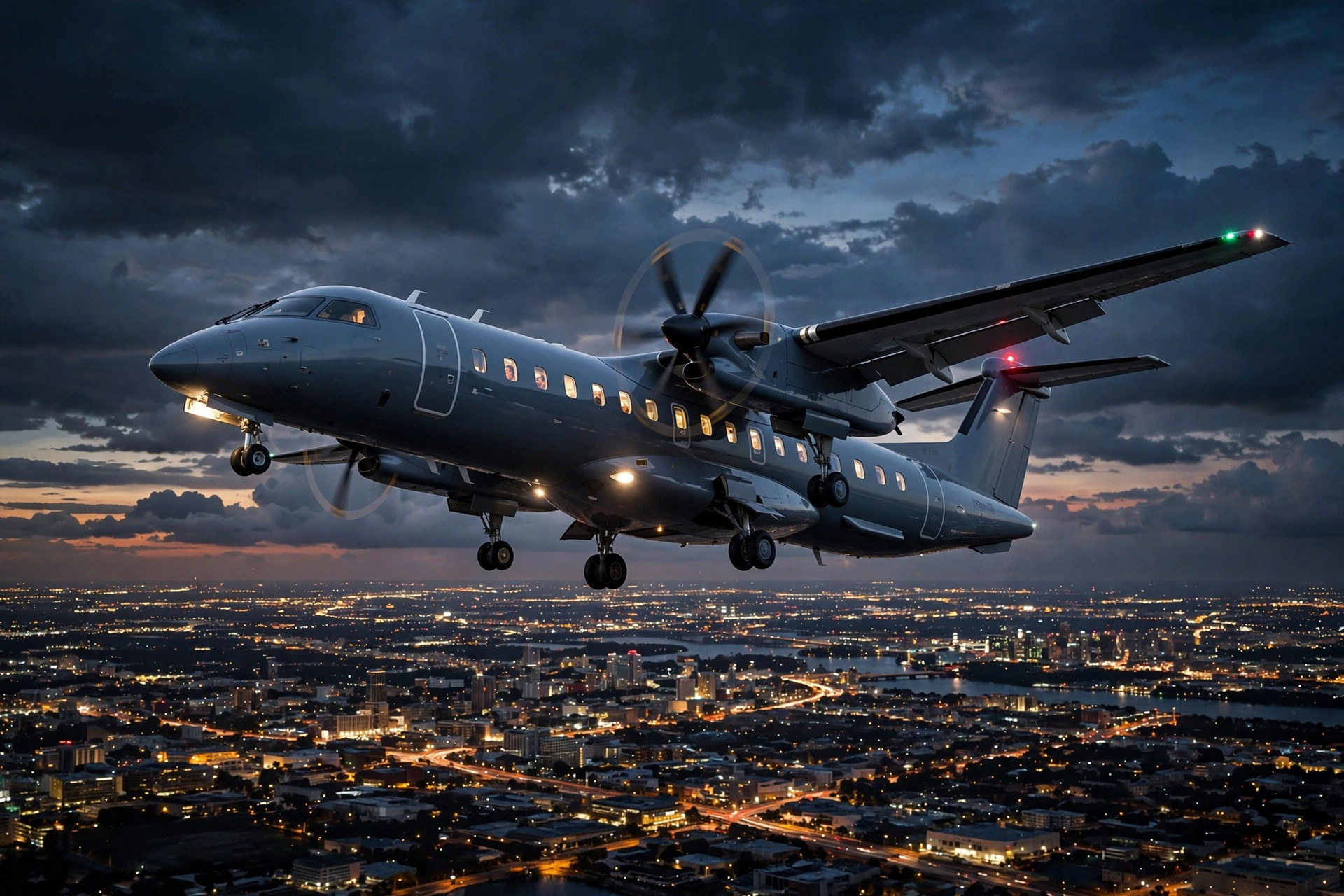
Three variables will settle this argument, and none of them is a price target. The first is certification: FAA type certification remains the binary event for the passenger business, and every quarter without it is another quarter of nine-figure burn. The second is cash discipline: both Archer and Joby hold multibillion-dollar liquidity cushions, but at current burn rates those cushions buy a few years, not a decade, and raising more will mean dilution. The third is who finds paying work first for the aircraft, whether that is defense logistics, cargo, or medical transport rather than commuters.
The honest read on October 9 is that the industry's center of gravity is shifting. The pure passenger-air-taxi story, the one that sold a thousand SPAC decks in 2021, is being outbid by two more practical theories: sell to the military and the infrastructure builders first, or start with the vertiports and let the aircraft follow. Joby still holds the certification lead, and leads matter. But Wall Street just told us it thinks the first profitable eVTOL company may be the one that stops trying to sell rides to commuters and starts selling logistics to whoever will pay today.
0 Comments