
On Friday, October 9, the sky over Round Rock, Texas, got busier in a very specific way. Zipline opened its First Flight early-access program in the Austin metro, offering autonomous drone delivery to the first 5,000 residents who register through the Zipline app. Deliveries start in Round Rock and will expand across Austin over time.
It sounds like a modest launch, five thousand people, one suburb. But it is the clearest signal yet of where the drone delivery industry thinks it is heading: block-by-block suburban conquest, fought with app signups, discounts, and school visits.
How it works
First Flight members get $10 off each of their first three orders, pay no service or delivery fees, and unlock perks including facility tours. Ordering works like any food delivery app: download from the App Store or Google Play, create an account, pick a restaurant or merchant, and a Zipline aircraft does the driving.
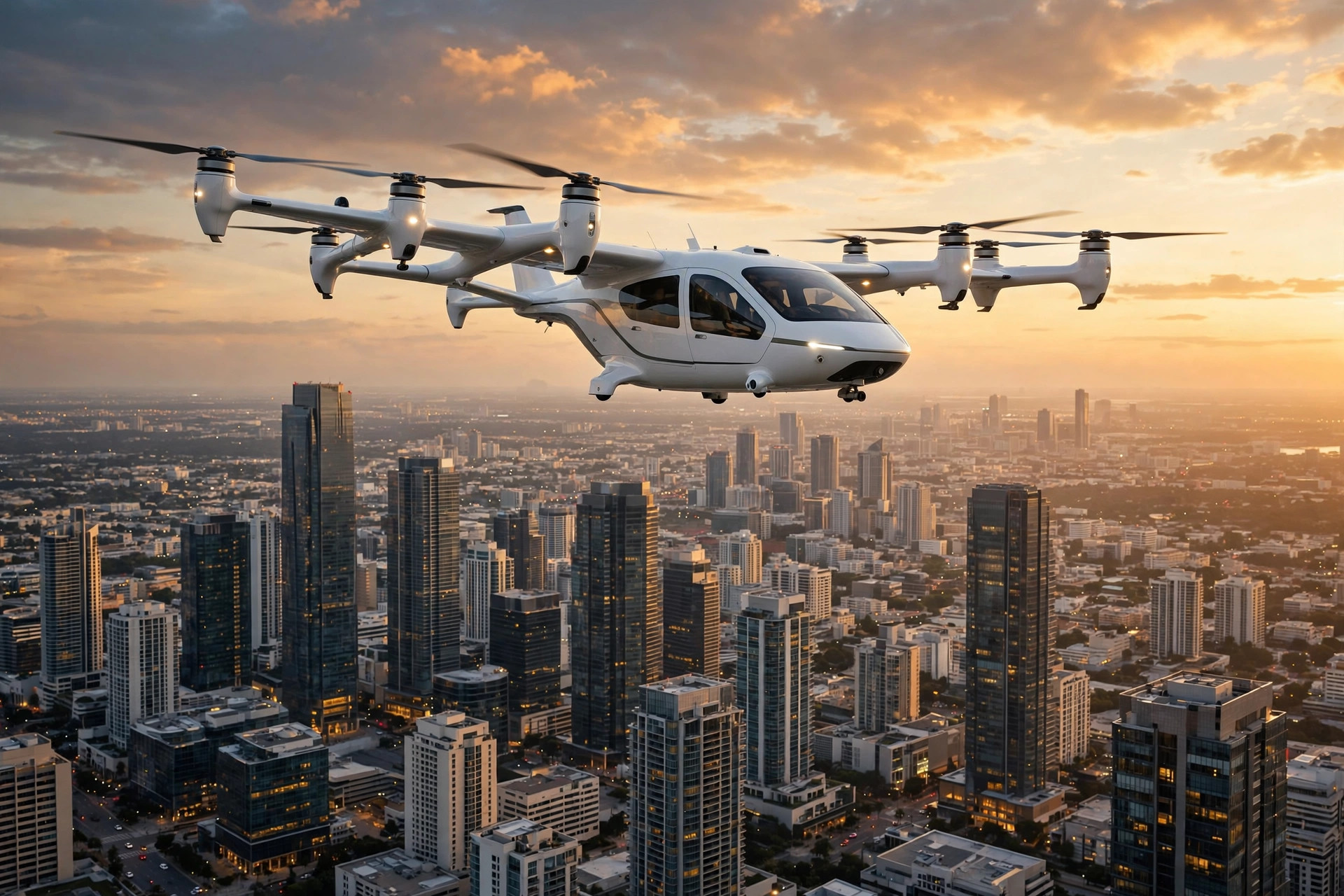
The aircraft is the company's Platform 2, an electric, autonomous system that takes off and lands vertically on five propellers, then transitions to wing-borne forward flight. On arrival, the plane holds station above 300 feet while a small pod, the delivery droid, rides a tether down to the customer's yard or driveway. The whole descent takes about 90 seconds. Per-order weight is capped at about 5 pounds (2.3 kilograms), roughly a family dinner order or a pharmacy bag.
Customers in the launch zone need to be within 3 miles (4.8 kilometers) of the company's Round Rock hub at 3000 E. Palm Valley Blvd. Zipline has not named the merchants serving the zone yet. For comparison, the Houston launch opened with nine restaurant and retail partners, including Walmart and Chipotle.
Austin is the third stop on the Texas playbook
Enjoying this story?
Get the five most important stories in tech, every morning. Free.
Austin is Zipline's third Texas metro in 14 months, following Dallas-Fort Worth in August 2025 and Houston in April. The company announced Austin as its next market back in June without naming a neighborhood, and the answer turned out to be Round Rock, a fast-growing suburb north of the city in Williamson County.
The groundwork was political as much as logistical. The day before the public launch, Zipline flew a demonstration delivery over Stony Point High School, which runs a drone aviation program. The company says the partnership will bring classroom visits, career fairs, and facility tours to students, a pipeline strategy that doubles as workforce development and marketing.
Williamson County Judge Steven Snell supplied the quote in Zipline's announcement, calling the company's choice of Round Rock as its first Austin location evidence that the county has become an important technology center, with faster, more convenient delivery for residents. A county judge who wants to be in the press release is, by now, part of the Texas playbook: Rowlett and Cypress got the same treatment.
Its announcement cited the TomTom Traffic Index, which recorded Austin's 2025 commutes taking 40 percent longer than free-flow travel, with a metro congestion level of 40.5 percent, up 1.4 points from 2024. Drivers lost about 60 hours to rush-hour traffic across the year. The argument is simple: why sit in that when your pad thai can fly over it.
The question in Austin is no longer whether delivery drones can fly. It is whether a city will let them stay, and whether residents will keep ordering after the novelty fades.
The regulatory wrinkle nobody advertises
Austin launch, by the numbers
Zipline's First Flight program in Round Rock, Texas, launched October 9, 2026
Sources: Zipline announcement, FAA draft environmental assessment (Sept. 2026), TomTom Traffic Index 2025. "Six times quieter" and scale figures are company-reported.
Here is the part the launch graphics do not dwell on. The Federal Aviation Administration's draft environmental assessment covering Zipline's Austin operations was still open for public comment when the first Round Rock orders went out. The comment window closed on Sunday, October 11, two days after service began.
This is now a pattern. The FAA's September 11 draft would amend Zipline's Part 135 air carrier operating specifications to cover five Texas metros, including Austin. For Austin, the ceiling is 30 Chargers, 600 Dropbox pickup kiosks, and 30,000 deliveries a day across 2,498 square miles (6,470 square kilometers). In Houston, Zipline began flying Cypress on April 29, four and a half months before the draft review of its operations opened for comment.
To be precise, the company already holds a Part 135 air carrier certificate, so the draft covers an amendment to its operating areas rather than permission to fly at all. The FAA's nationwide programmatic assessment, final since July, still requires an operations specification amendment for each new area. Zipline's announcement does not say which authorization covers the Round Rock flights today.
The quiet race is the real race
Regulatory tolerance and customer demand both hinge on one engineering problem: noise. A drone that wakes the neighbors at 6 a.m. will not survive its own press coverage, no matter how fast the tether is. Zipline knows this, and its acoustic engineering has become one of its most distinctive product features.
In a March 25 engineering post, the company said its system is six times quieter during delivery than others in the industry (its own comparison, with no published decibel figures behind it). The approach is layered: keep the aircraft high, at least 300 feet during delivery, with plans to cruise at 400 feet; spend more of each flight in fixed-wing forward flight, which needs less high-power propulsion than hovering; spin the propellers more slowly and space the blades unevenly to spread sound energy across a broader frequency range, which humans perceive as quieter.
A software update alone cut perceived noise by 30 percent by trimming the time aircraft spend in mixed propulsion, the awkward stretch between hover and wing-borne flight. A later update has the drones dive to build speed and climb to brake, spending 19 seconds less per flight at peak noise. In drone delivery, stealth is a consumer feature.
What this tells us about the industry
Zoom out, and the Austin launch looks like the industry maturing from demonstration to logistics. Zipline reports more than 140 million miles flown and more than 3 million deliveries completed, with operations spanning more than 30 municipalities in four U.S. states. The October 9 announcement put the total above 3 million, up from 2.5 million reported in mid-July. That is half a million commercial deliveries in under three months, a pace that suggests the operation is compounding, not just experimenting.
The competition is sharpening too. Walmart and Wing, Alphabet's drone subsidiary, announced on October 7 that they will bring automated drone delivery to the Seattle area in 2027 as part of a push across nearly 20 U.S. metros, eventually reaching more than 270 Walmart stores and over 40 million potential customers. Connecticut is reviewing a proposed Amazon Prime Air facility in North Haven that could request up to 1,000 MK30 flights a day. Three different business models, Walmart retail, Zipline logistics, Amazon fulfillment, are converging on the same last few miles of sky.
The throughline is that drone delivery is no longer a question of physics. The aircraft work, the software works, the tether works. What remains is a civic question: permitting, noise, and the patient accumulation of public trust, neighborhood by neighborhood, flight by flight. Round Rock is the next test. If the drones stay quiet and the orders keep coming, the next Austin suburb is already in the app.
0 Comments