
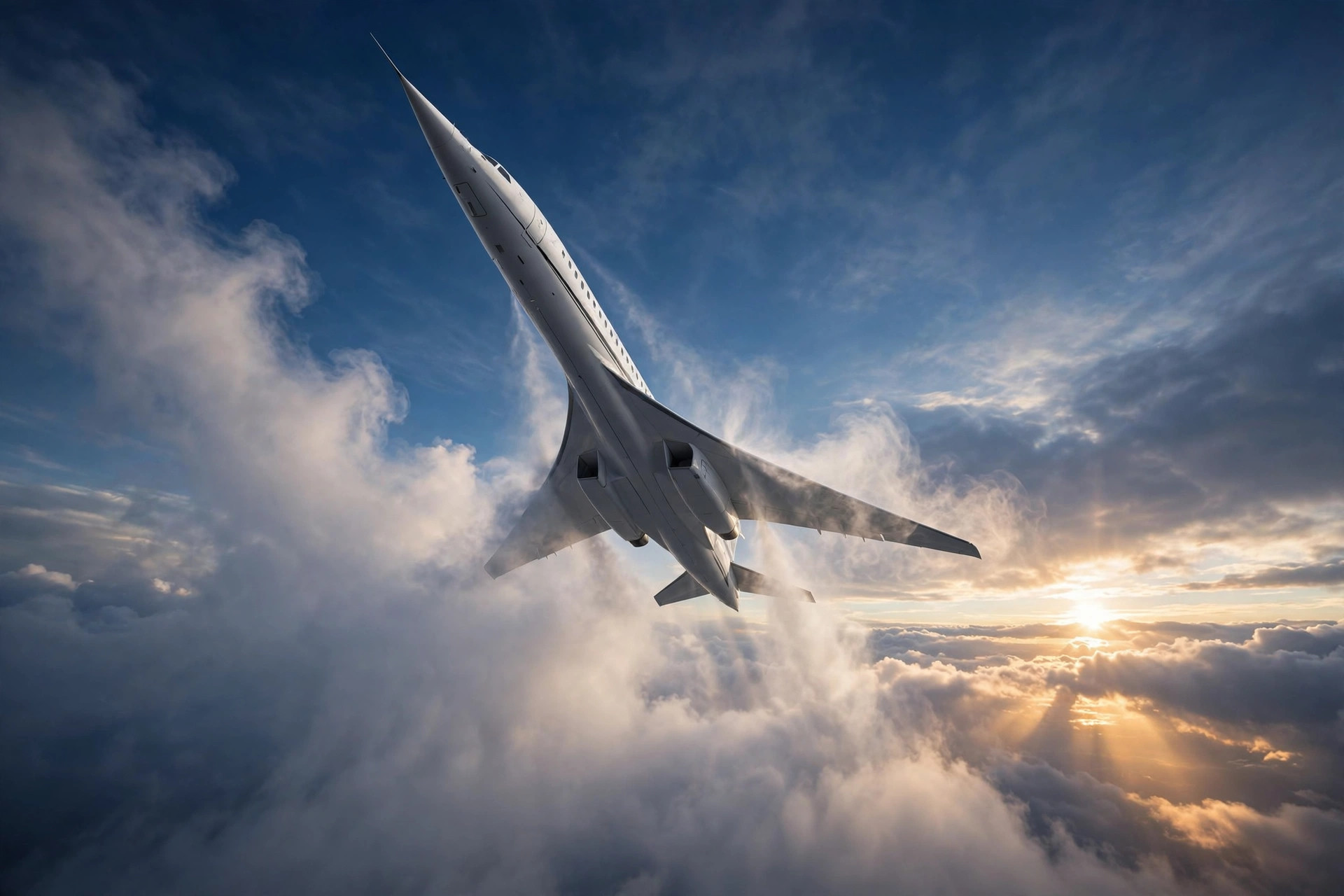
On 12 October 2026, an uncrewed jet lifted off a launch rail at a test facility in Northern Europe, worked through a program of altitude changes and mission updates, and reached Mach 0.8. No pilot touched the controls. The sortie was the first European flight of the U740 Valkyrie, the aircraft at the center of Airbus and Kratos’s bid to deliver a combat-ready Collaborative Combat Aircraft (CCA) to Germany and other European air forces by 2029.
The announcement, released jointly by the two companies the same day, said every flight objective was achieved: a runway-independent rocket-assisted takeoff, maneuvers across several altitude and speed regimes, and in-flight mission adjustments that exercised the aircraft’s autonomy as something more than a passenger on its own airframe. The flight now opens the next, harder phase of the program: testing with Airbus’s MARS mission system, the “European brain” that will determine whether the Valkyrie is a European weapon system or merely a European flight test of an American one.
A launch rail, a rocket boost, and no runway
The most operationally interesting detail of the flight was not the speed. It was the takeoff. The U740 launched with rocket assistance from a rail, demonstrating runway independence, while the aircraft is also designed for conventional takeoff and landing from a standard runway. That dual option matters more than it sounds. Fixed runways are among the most fragile assets in a contested environment, and a drone that can launch from a cleared patch of ground, disperse, and recover somewhere else is far harder to neutralize than one tied to a concrete strip. Rail launch turns geography into flexibility, which is exactly what air forces worried about airbase survivability are asking for.
The underlying Kratos Valkyrie airframe first flew in the United States in 2019, which is why Airbus could promise a European flight campaign only three years ahead of its operational target. By adopting a mature, flight-proven air vehicle rather than designing a new one, the partners compressed the development timeline and pushed European engineering effort toward missionisation, autonomy, connectivity, and crewed-uncrewed teaming. That is a deliberate trade: less airframe risk, more integration work.
The aircraft, by the numbers
Enjoying this story?
Get the five most important stories in tech, every morning. Free.
The U740 Valkyrie is a 9.1-metre jet with an 8.2-metre wingspan, a maximum takeoff weight of roughly three tonnes, a range exceeding 5,000 kilometres, and a service ceiling of 45,000 feet. It carries an internal weapons bay plus external payload stations under the wings. Those numbers put it in the class of a long-legged reconnaissance and strike platform: the 5,000-kilometre range means it can accompany crewed fighters on deep missions, loiter in a threat zone, or transit between dispersed operating locations without tanker support.
The design is built around two operating modes. It can fly missions autonomously, or it can operate under the command of crewed fighters such as the Eurofighter, executing high-risk tasks while shielding pilots from the most dangerous parts of the airspace. Airbus describes the intended role as extending the range, firepower, and survivability of crewed formations. In plain terms, the Valkyrie is meant to absorb the risk that air forces currently assign to people.
MARS: the European brain
The U740 Valkyrie, by the Numbers
Key specifications from the Airbus and Kratos announcement, 12 October 2026.
Bar widths are illustrative; figures as announced. Note: For illustrative purposes only.
The hardware, however, is the easy half of the story. The center of the Airbus proposition is MARS, short for Multi-platform Autonomous Reconfigurable and Secure, a mission system Airbus calls the Valkyrie’s European brain. It is designed to give European operators full control over the software, mission applications, data, and system hardware, using AI-enhanced software to fly missions autonomously and coordinate groups of collaborating aircraft. Airbus also stresses a strict control hierarchy in which a human remains on the loop, with critical decisions governed by established rules of engagement and applicable ethical and legal standards.
That sovereignty layer is the strategic point of the whole program. The U740 is based on the American-designed Kratos Valkyrie, and Airbus does not pretend it is a wholly indigenous European aircraft. Instead, the company is placing sovereignty at the mission-system level: a proven foreign airframe paired with European-controlled software, mission data, and command architecture. The calculation is that Europe cannot afford the decade-plus timeline of a clean-sheet design and cannot accept the dependence of a fully imported system either. Owning the brain is the compromise between urgency and autonomy.
The airframe is American. The brain is European. That split is the entire bet.
Why the loyal-wingman moment is now
The phrase Airbus CEO Mike Schoellhorn used to justify the program is “affordable combat mass.” The idea is arithmetic. A crewed fighter costs tens of millions to buy and millions more to keep trained and maintained; a reusable uncrewed platform built for a fraction of that price changes what a commander is willing to risk. Distributed, semi-autonomous aircraft can carry sensors and weapons into airspace that would be irresponsible to send a pilot into, and they can do it in numbers that no crewed fleet can match.
This is not a European-only instinct. The United States has been building its own CCA fleet under the same logic, and the concept of crewed-uncrewed teaming, once a research topic, is now an explicit procurement category on both sides of the Atlantic. The U740’s position is distinctive because it adapts an existing American platform with a European software stack rather than waiting for either a fully European design or a fully imported solution. Whether that hybrid model survives first contact with procurement politics is one of the program’s open questions. Kratos CEO Eric DeMarco called the first flight “an amazing success,” citing the maturity of the Valkyrie system and the integration of the two teams, which suggests the partners are betting the hardest technical work is already behind them.
The road to 2029
A single successful test flight proves the air vehicle can fly in Europe. It does not prove the autonomous combat architecture. The decisive milestones now are progressively more complex MARS-equipped flight tests, validation of autonomous mission functions, secure cooperation between crewed and uncrewed aircraft, and operational integration with platforms like the Eurofighter. Each of those steps is harder than the last, and the 2029 target for a combat-ready system gives the program roughly three years to climb the curve.
Beyond the U740, Airbus is already positioning the aircraft as a stepping stone. The company has pointed to future Eurofighter teaming and to a larger U760 Ravenstorm planned for the early 2030s as the next stage of its collaborative combat roadmap. If the U740 hits its 2029 mark, it will become one of Europe’s first operational bridges from fighter-centric air power toward distributed, software-defined, collaboratively autonomous aviation. If it slips, it will join the long list of programs where the ambition was right and the timeline was not. The 12 October flight was a first answer. The next three years will supply the rest.
0 Comments