
Taiwan Semiconductor Manufacturing Co. just posted the kind of quarter that makes the rest of the chip industry look like a rounding error. Third-quarter revenue reached NT$1.494 trillion, about $46.7 billion, up 51 percent from a year earlier. Net profit hit NT$763.34 billion, roughly $23.9 billion, beating analyst estimates. It is the sixth consecutive record quarter for the world's largest contract chipmaker, and it arrived right in the middle of a rough month for semiconductor stocks.
The market, for once, was unimpressed. TSMC's New York-listed shares slipped 1.5 percent in premarket trading to $423.30 after the results, and the stock closed 2 percent lower in Taiwan. Energy-driven inflation fears and jitters about the pace of AI development have dragged chip shares lower in October, and Thursday's numbers were strong enough that much of the good news was already priced in. The American depository receipts are still up about 44 percent this year, but the quarter is a reminder of an odd reality: the best earnings report in chip history can land with a shrug when expectations have already done the celebrating.
Where the money comes from
Strip out the noise and the print is remarkable. Advanced technologies, TSMC's 7-nanometer process and everything more advanced, accounted for 79 percent of total wafer revenue. High-performance computing, the platform that includes AI accelerators for Nvidia and AMD, now generates 68 percent of revenue, up 11 percentage points in a single year. The company's cutting-edge 2-nanometer process has already reached 8 percent of revenue, up from 3 percent just a quarter earlier, an unusually fast ramp for a node that is still in its infancy.
The mix tells the story of a transformed company. Smartphones, once TSMC's growth engine and the reason most consumers had ever heard of a foundry, are now firmly the second platform behind high-performance computing. The foundry that used to live and die on iPhone cycles now lives and dies on data centers, and the data centers are not cutting orders.
No sign of a slowdown
Enjoying this story?
Get the five most important stories in tech, every morning. Free.
Chairman and CEO C.C. Wei told investors on Thursday's earnings call that demand was, in his words, extremely robust, adding that the company had not seen any sign of slowdown. His explanation for the next leg of growth was agentic AI: a shift from chatbots that answer questions to AI assistants that take action on your behalf. Wei said the company is observing rising AI demand fueled by agentic adoption, and the logic is simple. A chatbot answers once; an agent plans, calls tools, checks its work, and iterates. Every step is inference compute, and inference compute is silicon.
And we did not see any sign of slowdown, chairman and CEO C.C. Wei told investors, calling demand extremely robust.
The guidance backed up the confidence. Finance chief Wendell Huang guided fourth-quarter revenue to between $52.3 billion and $54.3 billion, a 58 percent year-on-year increase at the midpoint, with gross margin between 65 and 67 percent. Full-year 2026 revenue growth is now expected at 44 percent in dollar terms, raised from a previous forecast of slightly over 40 percent. The one wrinkle: gross margin narrowed to 66.4 percent in the third quarter from 67.7 percent in the second, a sign that ramping up 2-nanometer output and building new capacity is expensive even at record scale.
TSMC held its 2026 capital expenditure forecast at $60 billion to $64 billion, but Huang said the company expects significantly higher spending on AI from 2026 to 2028 than over the past three years. Goldman Sachs analyst Sean Johnstone wrote that the results should reassure investors that AI deployment remains on track, though he noted that bulls had hoped for a bigger capex raise. The tension is a healthy one: TSMC is disciplined about how fast it spends, even when the order book argues for more.
The $265 billion Arizona bet
The Quarter in Numbers
TSMC's Q3 2026 results, reported October 15.
Note: Figures from TSMC's Q3 2026 earnings (Oct 15).
The record cash flow is funding the largest manufacturing bet in American industrial history. TSMC is investing $265 billion in Arizona chip factories, including an additional $100 billion announced in July, and said volume production will start in the third quarter of 2027, slightly ahead of schedule. The company has also begun localizing the pieces around the fabs: GlobalFoundries signed a reported $2 billion, five-year contract to supply silicon interposers, the wiring boards inside advanced AI chip packages, from its Malta plant in New York, with production set to begin in the first half of 2028.
The GlobalFoundries deal is notable for its history. The two companies sued each other over semiconductor patents in the United States, Germany, and elsewhere in 2019, then settled about two months later with a cross-licensing agreement. Now they sit inside the same AI supply chain. Silicon interposers are a core element of CoWoS, TSMC's advanced packaging technology used to build Nvidia AI accelerators and similar products, and packaging capacity has been one of the industry's tightest bottlenecks. Every interposer made in Malta is one fewer that has to be shipped from Taiwan.
What the quarter really tells us
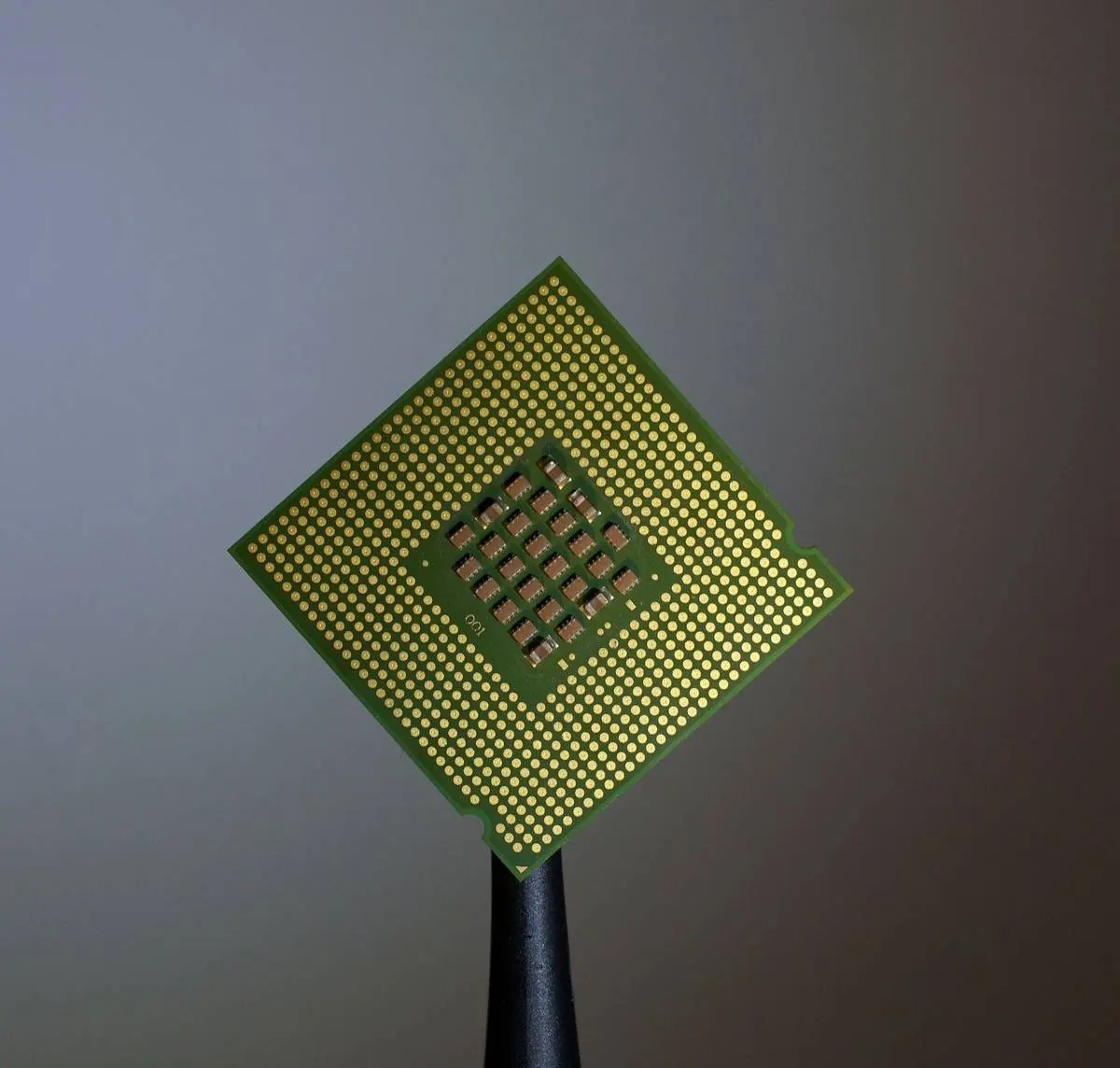
The deeper story is structural. TSMC controls 72.5 percent of global foundry revenue, according to TrendForce, while Samsung, the second-largest foundry, holds just 5.9 percent. Intel's foundry business, the supposed American challenger, posted a $2.1 billion operating loss in the second quarter of 2026 with only $293 million in revenue from external customers, against TSMC's $40.2 billion. There is no second source for the world's most advanced silicon. When one company makes the AI industry's chips and nobody else can, its quarterly results are the industry's quarterly results.
That is why this quarter matters beyond the numbers. As we reported earlier this month, equipment maker ASML is raising its forecasts on AI demand, while Chinese memory makers face a brutal repricing on capex fears. TSMC sits at the fulcrum of both stories: whatever happens to AI hype cycles, the silicon gets made in Taiwan, soon in Arizona, and increasingly on 2-nanometer lines.
The honest read of Thursday's call is that demand is not the risk. Wei said so himself. The risk is whether any amount of $60-billion-a-year capital spending can build fabs fast enough for a world where AI agents do a growing share of the world's computing. For now, the answer from Hsinchu is that the orders keep coming, the margins keep beating, and the slowdown nobody is seeing has not arrived.
0 Comments