
There is exactly one company whose quarterly results serve as a physical audit of the artificial intelligence boom, and on Thursday it delivered its verdict. Taiwan Semiconductor Manufacturing Company reported net income of NT$763.06 billion for the third quarter of 2026, up 68.7 percent from a year earlier, or about US$23.4 billion of profit in ninety days. It is the sixth consecutive quarter in which TSMC has set an earnings record, and its eleventh straight quarter of profit growth. Revenue reached NT$1,494.24 billion, about US$46.72 billion, up 50.9 percent year over year and above the top of the US$44.6 billion to US$45.8 billion range the company forecast in July.
Analysts expected a good quarter but not quite this good. The LSEG SmartEstimate, a consensus weighted toward the most consistently accurate forecasters, had predicted net income of NT$746.3 billion. TSMC cleared it comfortably and raised its outlook. Chief executive C.C. Wei told analysts on the earnings call that the company now expects full-year 2026 revenue to grow about 44 percent in US dollar terms, up from the "slightly more than 40 percent" it guided three months ago. For the fourth quarter, TSMC expects revenue of US$52.3 billion to US$54.3 billion, with a gross margin of 65 to 67 percent.
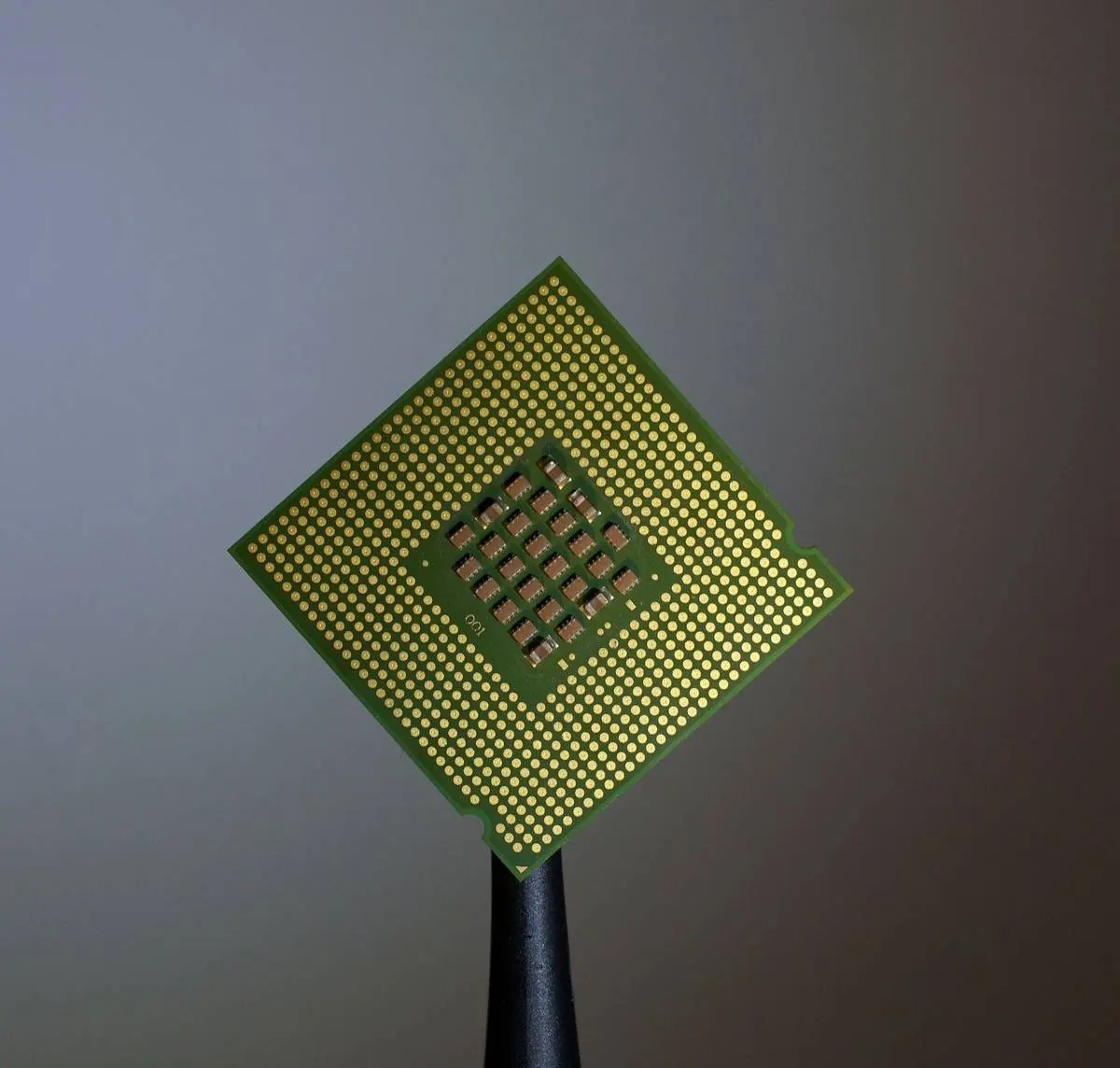
The engine behind the numbers is concentrated demand. TSMC sells no chips to consumers; it manufactures them for everyone else, and right now everyone else means the AI buildout. Chips made at 7 nanometers or smaller, which TSMC classifies as its advanced technologies, generated 79 percent of wafer revenue in the quarter. The newest node, 2 nanometers, already accounted for 8 percent. Chief financial officer Wendell Huang credited continued strong demand for leading-edge process technologies, including the steep ramp of 2-nanometer technology, for the quarter's strength.
The 2nm ramp is the story inside the story
TSMC's 2-nanometer process is the most advanced chipmaking technology in commercial production, and it is scaling faster than any node before it. Wei said 2-nanometer production capacity will more than double in 2027 from a year earlier. New process nodes typically take years to reach meaningful volume; 2nm reached 8 percent of wafer revenue within roughly its first year of production. The buyers are the usual suspects at the leading edge: data center accelerators from Nvidia and flagship mobile processors from Apple, TSMC's two most important customers, plus demand flowing through its CoWoS advanced packaging lines.
The fast ramp is also TSMC's best defense against the risk that shadows every one of its earnings calls: concentration. Its leading-edge customers are few, and their capital spending cycles drive TSMC's results more than any consumer cycle. By getting 2nm into volume quickly while holding margins, the company is converting a lumpy AI investment wave into a durable manufacturing franchise. Gross margin was 66.4 percent in the quarter, inside the guided range though down from 67.7 percent in the second quarter. Operating margin was 58.7 percent, above the guided 56 to 58 percent range, and net profit margin reached 51.1 percent.
TSMC keeps 66 cents of every dollar of sales after the cost of making its chips, a margin almost no other manufacturer on Earth can claim.
Arizona gets a timeline
Enjoying this story?
Get the five most important stories in tech, every morning. Free.
The earnings call also put dates on TSMC's American buildout. Wei said a second Arizona factory producing 2-nanometer chips should start mass production in the third quarter of 2027. The Arizona complex represents a total planned investment of $265 billion, including an additional $100 billion the company committed in July, making it one of the largest manufacturing investments in American history. The company also raised its 2026 capital expenditure forecast to between $60 billion and $64 billion.
The timeline matters because it is about more than capacity. The world's most important chips are still made on one island, Taiwan, which the world's largest economies treat as a strategic fault line. Putting leading-edge 2nm capacity on US soil in 2027 is TSMC's answer to that exposure: part industrial policy, part insurance policy. With a market capitalization near $2 trillion, roughly double that of Samsung Electronics, TSMC has the balance sheet to fund the buildout without blinking.
The Terafab question, answered on TSMC's terms
TSMC Q3 2026 at a glance
Then came the question analysts most wanted answered. Elon Musk's companies are building Terafab, a giant chip complex in Texas meant to supply Tesla, SpaceX, and xAI. Musk confirmed in early October that TSMC was in preliminary talks about a role, while Intel has been the project's publicly named manufacturing partner since April. On October 7, Musk wrote on X that TSMC could sublease part of the complex but nothing more. Wei's response, delivered Thursday, was a polite reversal: TSMC has sent teams to Texas to evaluate the site, the talks are still ongoing, and, as he put it, the fab has to be run by TSMC.
That single condition explains a great deal. TSMC's manufacturing edge is not just its lithography machines, which anyone with enough money can buy from ASML. It is the operating culture: process discipline, yield management, and decades of accumulated know-how that do not transfer with a lease agreement. Subleasing clean-room space inside someone else's fab would dilute exactly what makes TSMC valuable. The message to Texas was clear: TSMC will expand in America, but only as TSMC.
Record profits, falling shares
Here is the part that makes TSMC's quarter so instructive. The results beat every estimate, guidance went up, and the stock still fell. TSMC's US-listed shares dropped 3.4 percent in premarket trading on Thursday to $415.58, and its Taipei-listed shares were down 2 percent in the morning session. Some of the weakness came from the Federal Reserve, where worries about further interest rate hikes punished AI-exposed stocks across the board. Some of it is the curse of perfection: after TSMC shares hit a record high on October 5, only a beat-and-raise clears the bar, and even then the market asks for more.
The deeper constraint surfaced the day before, when ASML said its planned supply of lithography machines would not fully meet customer demand in 2027 and 2028. That is the industry's true bottleneck: TSMC cannot print more leading-edge wafers than ASML can equip it for, no matter how many orders arrive. For investors, the quarter therefore reads as both a peak and a promise. The numbers confirm the AI boom is real, measured in silicon rather than sentiment. The capacity announcements, doubling 2nm output, a second Arizona fab in 2027, tell you where the ceiling sits.
Put together, TSMC's quarter is the clearest statement yet of the industry's structure: one company holding the leading edge in one place, running out of machines to run it all on. The record profits are the present. The fight over who builds the next fabs, and on whose terms, is the future.
0 Comments