
Right now, surveillance networks are tracking 46,860 objects circling Earth. That number sounds precise and manageable. It is neither.
The tracked catalog is only the visible part. Statistical models from the European Space Agency estimate another 1.5 million fragments between 1 and 10 centimeters across, and 230 million more between 1 millimeter and 1 centimeter. None of them can be reliably tracked, and at orbital speeds, the smallest ones can still kill a satellite.
ESA updated its public debris statistics in July 2026, and issued the tenth edition of its Space Environment Report in September 2026. Together they give the clearest picture yet of how crowded orbit has become, and where the real danger sits.
How we got here
Since the space age began in 1957, there have been about 7,320 rocket launches, excluding failures. Those launches placed roughly 27,490 satellites into Earth orbit. About 18,840 of them are still up there, and only around 16,000 still function.
The rest is the problem. Dead satellites, spent upper stages, and the shards of more than 660 recorded breakups, explosions, and collisions now account for most of what orbits the planet. The total mass of all space objects in Earth orbit exceeds 17,000 tonnes, the equivalent of several thousand cars, spread thin across the sky but concentrated in the orbits everyone wants to use.
Growth has accelerated sharply. More than 300 launches delivered over 4,000 new payloads into space in 2025 alone, according to ESA's 2026 report. Launch activity keeps expanding even as roughly 1,200 intact objects burned up in the atmosphere that same year. The industry is getting better at cleaning up after itself, but the cleanup is not keeping pace with the traffic.
The part no one can see
Enjoying this story?
Get the five most important stories in tech, every morning. Free.
The catalogued objects are the ones big enough for ground-based radar and telescopes to follow individually. Everything smaller has to be estimated with statistical models, and those estimates are sobering.
ESA's MASTER debris model, using a reference population from February 2026, estimates 68,450 objects larger than 10 centimeters in orbit, including about 11,300 active payloads. That means a meaningful share of objects big enough to catastrophically destroy a satellite are not in any tracking catalog.
Below that, the numbers explode. The model estimates 1.5 million debris objects between 1 and 10 centimeters, and 230 million between 1 millimeter and 1 centimeter. Debris scientists call the middle range the lethal non-trackable zone: too small for surveillance networks to follow, large enough to destroy a functioning spacecraft on impact. No warning would be issued before a strike. No avoidance maneuver would be commanded. The collision would simply happen.
A one-centimeter fragment travels at 28,000 kilometers per hour, and no sensor on Earth can reliably track it.
Speed is what makes the small stuff deadly. In low Earth orbit, objects move at roughly 28,000 kilometers per hour relative to each other. At that velocity, a fleck of paint can pit a spacecraft window and a centimeter-scale fragment hits with the energy of an exploding grenade.
What the 2026 report found
Space debris by the numbers (ESA, July 2026)
The 2026 Space Environment Report's end-of-2025 accounting lists 44,964 objects across its orbital categories, including 16,946 payloads and 2,080 rocket bodies. Another 11,087 objects sit in an unidentified category, meaning their orbits are known but their origin is not.
The report's tone is carefully balanced: measurable improvement, but not yet sustainability. More spacecraft now end their missions in orbits from which they can be removed within accepted time limits. Controlled rocket-body reentries have become more common. Large satellite fleets increasingly fly low enough that atmospheric drag clears their failures relatively quickly.
But percentages can mislead when the totals keep growing. A disposal system can work reliably for most satellites and still leave a large accumulation of failed spacecraft once deployments get big enough. And old debris can collide with old debris, no new launches required. The report's central warning is that good behavior by individual missions does not automatically produce a safe orbital environment in aggregate.
Can we clean it up
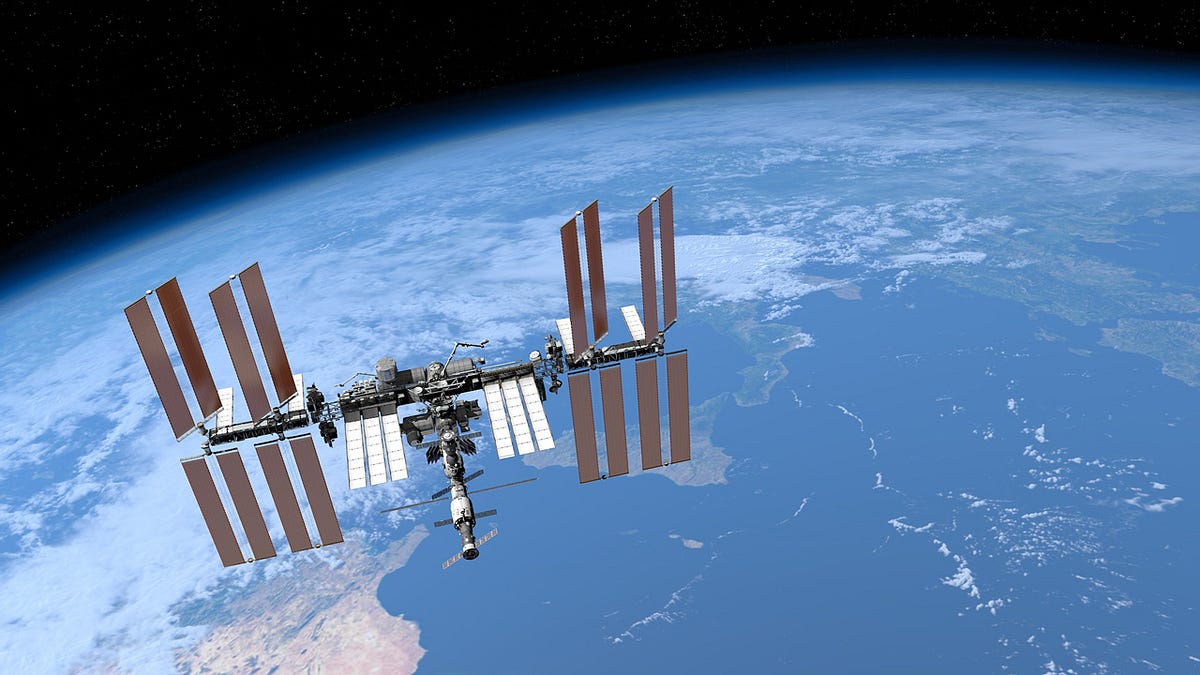
There is no single fix, but the report points to three priorities: reliable disposal at end of life, coordinated traffic management, and targeted removal of the most dangerous objects. The last one is the hardest. Grabbing a tumbling, uncooperative rocket stage the size of a bus is one of the most difficult maneuvers in spaceflight, and the economics of who pays for it are still unresolved.
Geography matters too. Low Earth orbit, the region out to about 2,000 kilometers altitude, is not uniform. Between 400 and 600 kilometers, dense fleets of active, maneuverable satellites make traffic coordination the main challenge. Higher up, fewer satellites operate, but debris lingers far longer because there is almost no atmospheric drag to pull it down. Different altitudes need different strategies.
One distinction the report stresses: not everything counted is junk. Lumping working satellites in with debris inflates the scary numbers and confuses the discussion. The hazard comes from the nonfunctional population and the fragments, and the solutions, better disposal, better tracking, and eventually active removal, target those specifically.
The hopeful version of this story is that the industry knows exactly what to do. The worrying version is the math: with launch rates still climbing, doing the right thing most of the time is no longer enough. Orbit is an environment now, and like any environment, it needs maintenance, not just good intentions.
0 Comments