
On Tuesday morning, a Falcon 9 rocket is scheduled to lift off from Cape Canaveral carrying the last major power upgrade the International Space Station will ever receive.
NASA and SpaceX are targeting 6:33 a.m. EDT on October 13 for CRS-35, the 35th SpaceX commercial resupply mission to the station. The Cargo Dragon will launch from Space Launch Complex 40 at Cape Canaveral Space Force Station in Florida, packed with more than 6,300 pounds of supplies, science experiments, and equipment.
The headline cargo is the station's final set of ISS Roll-Out Solar Arrays: the roll-up panels NASA has spent years adding to boost the power coming from the station's original solar wings.
The last upgrade
The station's original solar arrays have been generating electricity since the early 2000s. Two decades of harsh sunlight and extreme temperature swings have degraded them, the way any hardware left outside eventually wears out. NASA's answer was IROSA: panels that launch rolled into a compact cylinder and unfurl once in space, supplementing the aging wings without requiring a full replacement. They are the latest in a series of panels installed over recent years, each one adding to the station's total generating capacity as the original wings aged.
This flight delivers the very last pair. Once they are installed, the years-long modernization of the station's power supply system will be completely finalized, according to mission details released ahead of the launch.
It is a quiet milestone. Power upgrades do not get the attention of a new module or a visiting crew, but almost everything on the station, from life support to the science racks, runs on electricity. Finishing this upgrade means the station enters its final years with its energy system in the best shape it has been in for a decade.
Why power matters in the station's final years
Enjoying this story?
Get the five most important stories in tech, every morning. Free.
The timing is deliberate. NASA plans a safe and controlled deorbit of the International Space Station at the end of 2030, and keeping the station fully powered through its remaining years is part of that plan. A healthy power system supports continuous operations and the careful planning that a controlled reentry demands.
There is also the science. The station's research agenda has only grown more power-hungry, with advanced manufacturing experiments and Earth observation instruments competing for electricity. The completed arrays give the station headroom to run that full agenda right up to retirement instead of rationing power in its final years.
This is the last power upgrade the International Space Station will ever receive.
What else is riding along
CRS-35 at a glance
The solar arrays are the headline, but the Dragon's pressurized cabin is full of research. The science manifest is a mix of medical and materials work that takes advantage of microgravity.
One experiment carries hardware for manufacturing artificial retinas in microgravity, research aimed at eventually restoring vision on Earth. Another brings 3D heart tissue models designed to advance large-scale drug testing. A third carries brain organoids, miniature lab-grown brain models that could reveal treatment targets for Alzheimer's, Parkinson's, and multiple sclerosis. There are also materials to study how a new type of glass forms without gravity pulling on it.
It is a reminder of what the station is for in these final years: a working laboratory, not a monument. The power upgrade exists to keep experiments like these running.
A crowded week at the station
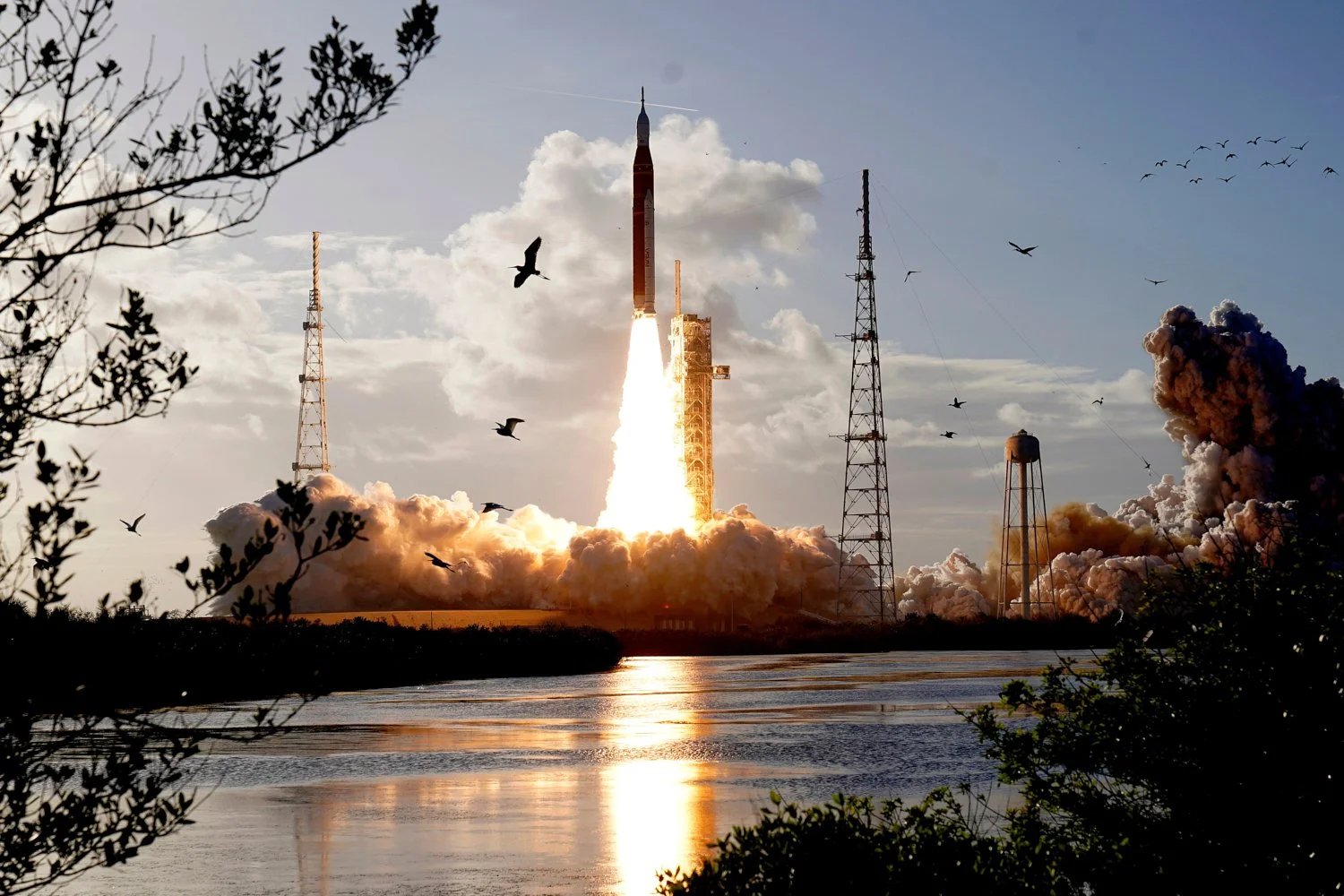
Once in orbit, Dragon will dock on its own at about 11 a.m. EDT on Thursday, October 15, at the space-facing port of the station's Harmony module. It is scheduled to stay until mid-November, then return to Earth with time-critical research and splash down off the California coast.
The launch caps a busy stretch for the station's American spacecraft. NASA says the Crew-12 Dragon will be back on Earth by Thursday morning after departing the ISS, and the agency will hold a teleconference that afternoon at 1:15 p.m. EDT covering both the Crew-12 return and the CRS-35 launch, with speakers from NASA, SpaceX, and the European Space Agency.
The resupply line itself has a long track record. From October 2012 to August 2025, SpaceX flew 34 Cargo Dragon missions to the ISS, with only one ending in failure, the 2015 Falcon 9 accident. Dragon also remains the only cargo vehicle serving the station that can bring significant cargo back to Earth, landing under parachutes in the ocean.
And the partnership keeps extending. SpaceX recently locked in a $946 million NASA deal for three more crew flights, a sign that even as the ISS heads toward its 2030 finale, the commercial crew and cargo pipeline NASA built around it is still growing.
Live launch coverage for CRS-35 starts at 6:15 a.m. EDT on October 13 on NASA's website and NASA+. Once the final pair is installed after Dragon's arrival, the station's power story closes out for good: no more upgrades, just operations, science, and the long glide path toward the controlled deorbit planned for the end of 2030.
0 Comments