
Here is a sentence you do not see every day in the chip industry: a company is paying to reserve production lines in factories it does not own. On October 13, Semtech announced it will invest in securing dedicated silicon germanium (SiGe) capacity at Tower Semiconductor's fabs in the United States, Israel, and Japan, under an expanded multi-year agreement that builds on a 20-year partnership between the two companies.
The announcement was datelined Migdal Haemek, Israel, and Camarillo, California, and it landed before the market opened on Tuesday. Tower filed the joint release with the SEC as a Form 6-K. The market reaction was split: Tower shares rose about 0.7 percent in premarket trading to $218.12, while Semtech fell 3.1 percent to $163.00.
The deal, in plain terms
Semtech does not make GPUs or memory. It makes the signal integrity chips that move data between AI servers: transimpedance amplifiers, modulator and laser drivers, and linear equalizers. These are the high-speed analog front ends that sit at both ends of every link, pushing copper connections inside a server rack and optical connections across a data center campus.
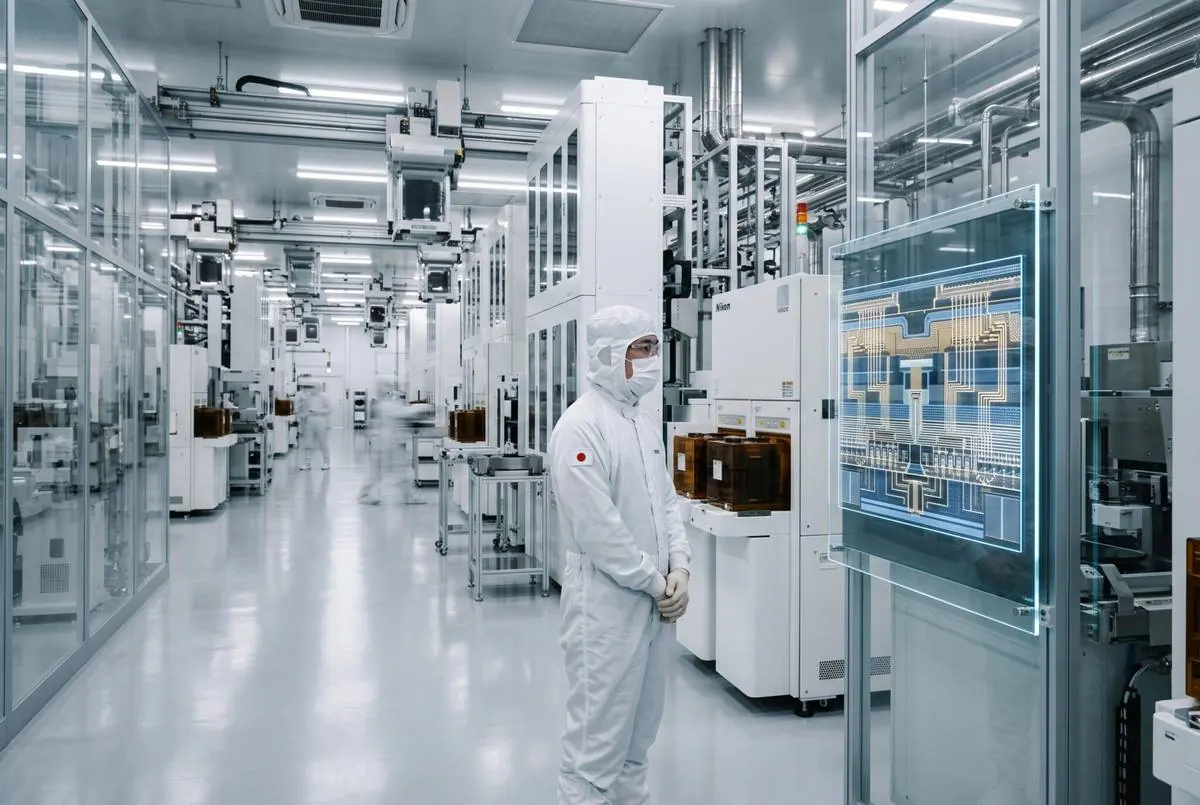
Every one of those chips is built on Tower's SiGe process. SiGe mixes germanium into silicon to make transistors fast enough for high-speed analog circuits, and Tower has spent decades turning that process into one of the industry's standard platforms for optical transceiver components. Under the new agreement, Semtech is essentially paying Tower to guarantee that a dedicated slice of that SiGe capacity is held for Semtech's products, with joint development work continuing on future generations of optical components built with the same technology.
What Semtech is not saying is just as notable as what it said. The companies disclosed no dollar amount, no contract length, and no wafer volumes. They did not say whether Semtech's investment takes the form of the upfront cash prepayments that have become fashionable in the foundry world this year.
Why companies are paying upfront for fab space
Enjoying this story?
Get the five most important stories in tech, every morning. Free.
Tower has already made this exact movie once, with a different technology. In May, the company said it had signed $1.3 billion of silicon photonics contracts for 2027 revenue with its largest customers and received $290 million in customer prepayments to reserve capacity. It also disclosed a larger wafer commitment for 2028, with more prepayments due by January 2027.
Silicon photonics is a separate platform from the SiGe capacity at the center of the Semtech deal. But the pattern is identical: when capacity is the scarce input, customers buy their place in line with cash. The pressure behind that behavior is visible across the interconnect market. On October 9, optical component maker Lumentum said its capacity for AI data-center optical parts is sold out through early 2029.
"Connectivity is now a primary factor in how far AI systems can scale," Semtech CEO Hong Hou said, framing the capacity reservation as the price of staying in the game.
The numbers behind that framing are large. Research firm Cignal AI estimates the interconnect market grew from about $9 billion in 2024 to an estimated $37 billion in 2026, as AI clusters moved from 800-gigabit links to 1.6-terabit links and beyond. Semtech's bet is that the compounding continues, and that the company that cannot guarantee supply gets designed out.
800G today, 3.2T and beyond tomorrow
AI data-center interconnect, in three numbers
The market and the money behind the Tower-Semtech deal.
Note: 2026 market figure is an estimate from Cignal AI, reported via The Inference.
The release frames the agreement around a specific speed roadmap. Semtech's products address copper links within a rack and optical links across a data center, with 800 gigabits per second and 1.6 terabits per second shipping today and 3.2 terabits per second and beyond on the horizon. Each step up that ladder raises the requirements for bandwidth, reach, and power per bit, and increases the importance of the analog front end that drives and receives the signal.
Tower CEO Russell Ellwanger said qualifying the two companies' technology ahead of market need is ensuring "a continual expansion of our already leading market share in optical transceiver connectivity." In plain language: they are qualifying the 3.2T parts before the big orders arrive, because the customers who cannot see the roadmap will not commit.
Hou added that meeting customer demand "requires long-term capacity planning and commitment with our manufacturing partners," which is executive-speak for a simple reality: nobody builds a multi-billion-dollar AI cluster on components that might be allocated away mid-build.
The fine print the release skips
There is a reason Semtech's stock fell on the news even as Tower's rose. Paying to reserve capacity transfers risk from the foundry to the customer. The filing's own risk language concedes the obvious: if demand "does not develop as anticipated," or if Semtech "does not fully utilize the capacity reserved for it," the money is still spent. Semtech carries the risk of idle lines; Tower collects a committed customer.
The timing adds its own color. The deal was announced the morning after Semtech's fourth consecutive down session, a 10.15 percent drop to $168.28. Two days later, on October 15, Semtech holds its analyst day, where Hou and CFO Mark Lin are scheduled to present long-term financial objectives. Tower, meanwhile, reports third-quarter results on November 2, with a conference call at 10 a.m. ET, and the capacity strategy will almost certainly be the first question.
What to watch next
Watch the October 15 analyst day for the numbers this release did not contain. If Semtech attaches a dollar figure or a wafer commitment to the Tower agreement, you will learn how seriously it is betting on the 3.2T transition. Watch Tower's November 2 earnings for whether the prepayment model keeps spreading across its platforms; $290 million in May may turn out to be the first installment of a much larger pattern.
And watch Lumentum's warning as the industry's background condition. When optical parts are sold out through early 2029, reserving capacity in 2026 is not paranoia. It is the only plan that works.
0 Comments