
Japan has put roughly $15 billion of public money behind a chipmaker with no manufacturing track record, and given it about a year to start producing 2-nanometer chips, the most advanced class of logic semiconductors in existence. This week, Rapidus took its most concrete step yet toward meeting that deadline: it recruited 17 companies into a new ecosystem designed to deliver the one thing no amount of state funding can buy, customers.
The October 5 announcement is less about physics than about trust. Rapidus says it will begin mass production of 2nm chips in the second half of the next fiscal year, with its IIM-1 fabrication plant in Chitose, Hokkaido, already in pilot operation and development support coming from IBM. Whether the process will yield usable chips at volume is a question only production can answer. The more immediate problem is commercial: chip designers must commit their products to a foundry that has not yet shipped one.
The customer problem
A leading-edge fab is an expensive machine to run empty. Before a single commercial wafer ships, the Chitose plant represents billions in sunk capital, thousands of staff, and a fixed cost base that does not wait for customers to arrive. Rapidus cannot afford to finish the fab and only then go looking for business.
Its answer is Rapidus CORE, the Rapidus Collaborative Open Rapid Ecosystem: a wrapper around the foundry that ties together design support, engineering talent, electronic design automation tools, intellectual property, and manufacturing into a single pipeline, so a customer can go from an idea to a finished chip without assembling that machinery itself.
The first layer, called Design Solution Associates, includes 17 firms from Japan, the United States, India, Malaysia, Singapore, and South Korea. The roster includes Cadence Design Systems and Synopsys, the two dominant suppliers of chip-design software, plus Toshiba Information Systems, Dai Nippon Printing, TOPPAN, HCL Technologies, Infosys, Wipro, and AION Silicon. Malaysian specialists, including Oppstar Technology and SkyeChip, round out the list alongside Singapore and South Korean participants.
The rationale is grounded in a real shortage. Designing at 2nm is brutally difficult, and there is a global shortage of engineers who can do it. Rapidus said that advanced chip development now requires manufacturing to be integrated with research, design tools, IP, and design talent, and the Associates are meant to sit between customers and the fab, supplying resources and know-how from the first design sketch through to manufacturing.
The biggest question for Rapidus is still who will actually fill the fab.
What the analysts are actually saying
Enjoying this story?
Get the five most important stories in tech, every morning. Free.
The skepticism is specific, and it comes from people who watch foundries for a living. Nori Chiou, investment director at White Oak Capital, told Reuters that the partnership announcement was incremental progress but not yet evidence of commercial traction. Kazuyoshi Saito, an analyst at IwaiCosmo Securities, framed the manufacturing challenge bluntly: running a chip fab around the clock, maintaining stable and consistent yields, and producing in a way that makes the business viable is extremely difficult. Even Samsung, which began producing 2nm chips last year, has struggled.
The optimistic case is also specific. Akira Minamikawa, an analyst at Omdia, noted that TSMC will continue to dominate the majority of the market, while plenty of customers in the remaining 20 percent cannot get capacity from TSMC because their orders are small or they sit low on its priority list. Rapidus CEO Atsuyoshi Koike made the same point in his own way: "One or two companies are nowhere near enough," he told Reuters, arguing the market has room for another leading-edge manufacturer.
Chip buyers themselves are cautious. One executive at a potential customer, speaking anonymously to Reuters, said the company could not move everything from TSMC to Rapidus, because if the bet failed there would be no way back to TSMC. That is the default posture of the industry: the most realistic early role for Rapidus is as a second source for supply-chain diversification, not as a replacement for the incumbent.
Why Japan is betting anyway
The Rapidus Bet, in Numbers
Japan's push to reclaim a share of leading-edge chipmaking.
Sources: Reuters, Rapidus announcements, October 2026.
Japan once made about half of the world's semiconductors. Today it makes less than 10 percent, and Rapidus is the centerpiece of Prime Minister Sanae Takaichi's plan to rebuild the country's chip industry. The fear driving the spending is geopolitical: with regional tensions rising and concern over a possible Chinese move against Taiwan, Tokyo wants an alternative source of leading-edge chips that sits on Japanese soil.
The ambition extends beyond the fab. Rapidus is targeting an initial public offering by around the fiscal year ending March 2032, and Daishiro Yamagiwa, the lawmaker who heads the ruling Liberal Democratic Party's parliamentary group on chip strategy, has said manufacturing operations in the United States are a possibility. The company also plans to expand CORE beyond design services into EDA, IP, and other parts of the chip development chain.
Even supporters acknowledge the judgment timeline is long. A government official told Reuters that Rapidus's success or failure will not be known for a decade, pointing to the investment losses of the government-backed Cool Japan Fund as a cautionary precedent.
What to watch
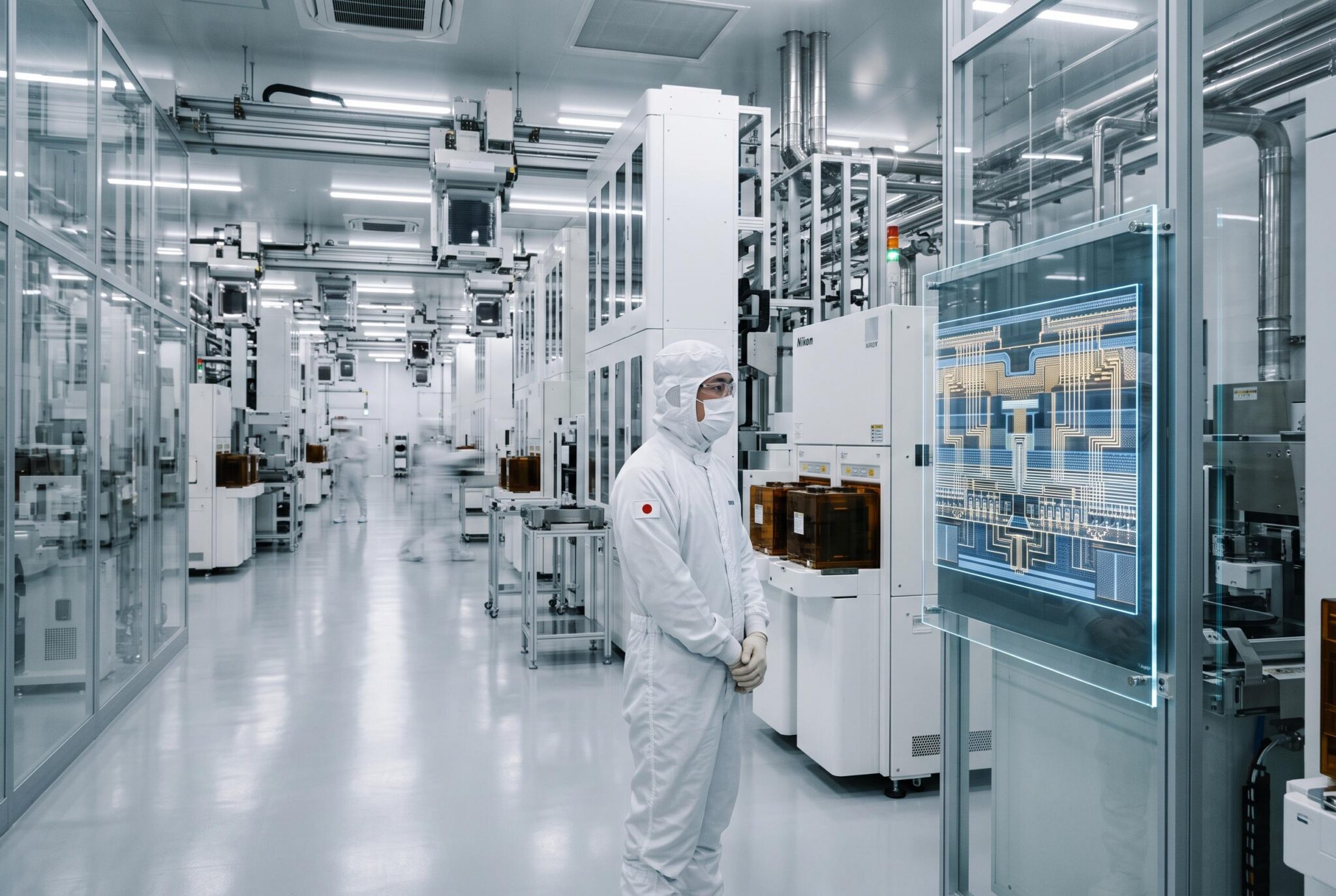
The signals to track are straightforward. First, confirmed customer commitments, not ecosystem partnerships but real manufacturing contracts. Second, yield and pilot-line data as the Chitose fab ramps toward mass production. Third, whether CORE expands into the EDA and IP categories Rapidus has promised. Until a major customer puts a real product through the line, Rapidus remains what it has been since its founding in 2022: a $15 billion bet on a future that has not happened yet.
0 Comments