
On Friday afternoon in a Wilmington, Delaware courtroom, the jury in Qualcomm's breach-of-contract lawsuit against Arm Holdings announced it had not reached a verdict. It will return on Tuesday, October 13, to try again.
This was supposed to be the end of a two-year legal war. Instead it was an intermission. The fight between the world's most important chip architecture company and one of its biggest customers is about something dry on paper, licensing contracts, and something enormous in practice: who gets to set the terms on which nearly every processor in a phone, laptop, and a growing share of data centers is built.
What the jury is deciding
This trial was not a rerun of the 2024 Nuvia case. It was Qualcomm's counteroffensive. Qualcomm alleges that Arm breached its licensing agreements in three specific ways. First, by withholding software patches and development tools Qualcomm says it was owed for Arm's processor designs. Second, by violating a pricing-parity provision meant to ensure Qualcomm paid no more than 10% above the lowest price Arm charged anyone for the same designs. Third, and most colorfully, by trying to sabotage Qualcomm's relationship with Meta Platforms by leaking to Bloomberg a 2024 letter in which Arm told Qualcomm it considered it in breach of a key license.
Arm's defense, as presented this week, was not that everything Qualcomm described was above board. It was that Qualcomm suffered no compensable harm, and that the lawsuit is a negotiating tactic, leverage deployed while the two companies argue over terms for future versions of Arm's architecture. Qualcomm's existing architecture license runs until 2033, so the industry's core instruction set, the language in which chip designers describe how a processor works, is not in immediate danger. What is at stake is how much the next generation of that language will cost, and what restrictions will come attached.
This was supposed to be the end of a two-year legal war. Instead it was an intermission.
Why two partners keep suing each other
Enjoying this story?
Get the five most important stories in tech, every morning. Free.
The relationship started deteriorating a decade ago. Arm began life under a simple, durable business model: license the blueprints, collect a fee per chip shipped, never build chips yourself, and therefore never compete with your customers. That neutrality was the reason dozens of chipmakers trusted Arm as the foundation of their products.
Then SoftBank acquired control of Arm in 2016, and the model started to tilt. Arm began designing more complete chip solutions and exploring selling silicon directly, which made licensees look less like customers and more like competitors. The tension detonated when Qualcomm bought Nuvia, a server-chip startup founded in 2018 by three Apple engineers, for $1.4 billion in 2021. Arm argued the acquisition violated Nuvia's own architecture license; Qualcomm insisted its cores, the basis of the Oryon CPUs now in Snapdragon laptop and mobile chips, were properly covered by Qualcomm's separate license.
The December 2024 jury sided mostly with Qualcomm, finding it had not breached the Nuvia license, though it could not agree on Nuvia itself. That loose end was tied this week when Judge Maryellen Noreika ruled that Nuvia had not breached either, rejecting Arm's request for a new trial. Arm says it will appeal.
What happens on Tuesday
The Qualcomm-Arm Fight: Key Dates
A decade of partnership turning into courtroom combat.
Sources: Reuters, company statements. For illustrative purposes only.
A deadlocked jury after four hours is not unusual in a case built on contract interpretation, but it is not comforting for either side. If Tuesday's resumed deliberations produce a verdict, it will answer whether Arm breached its agreements and whether Qualcomm was harmed, and the damages phase will follow. If the jury hangs again, Qualcomm can retry the case, and the uncertainty continues.
Running in parallel was a bench trial, decided by the judge rather than a jury, over whether Arm has negotiated in good faith on terms for new architecture versions. A ruling on that could land well after any jury verdict, and it may matter more than the jury's decision. The industry can survive one contract dispute. What it cannot easily survive is a licensing framework so adversarial that designing a CPU on Arm's architecture becomes a legal risk rather than a technical choice.
The industry is watching the blueprint business
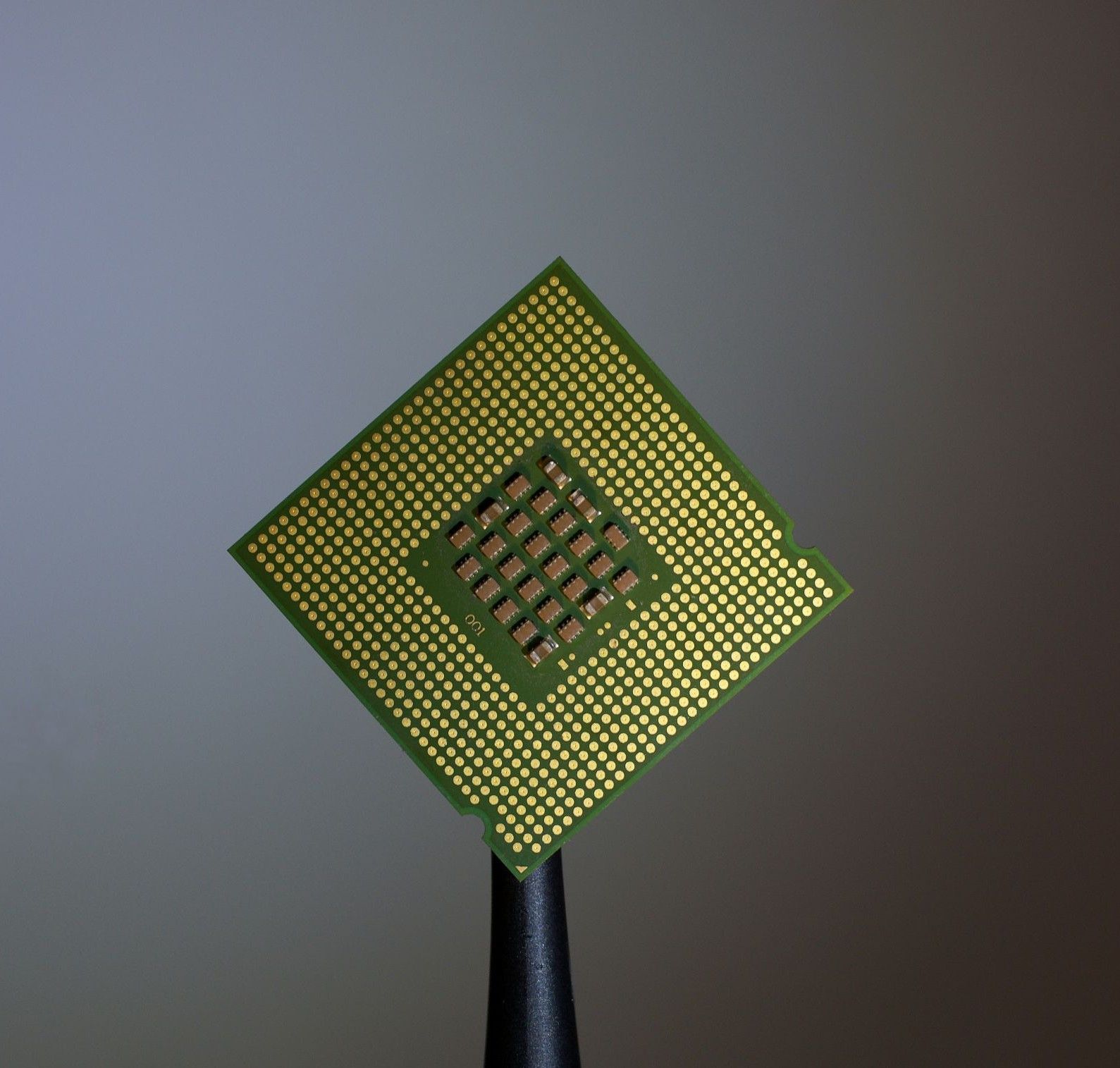
Stepping back, the pattern is the story. Arm's architecture sits under Qualcomm's Snapdragon, Apple's A-series, most Android server experiments, and a wave of AI accelerator startups. That universality is Arm's superpower, and it is also its vulnerability: every change in licensing terms is a change in the cost structure of the entire semiconductor industry.
There is a plausible reading in which this resolves as ordinary business friction. Qualcomm and Arm need each other: Qualcomm cannot easily walk away from the ecosystem its chips live in, and Arm cannot afford to alienate one of its largest royalty payers. Deals get struck. Lawyers get paid. Chips keep shipping.
But there is a darker reading, and it is the reason executives across the industry read trial transcripts. If the companies that define how processors are licensed can no longer agree on what their contracts mean, the incentive to build alternatives grows. Open instruction sets like RISC-V keep improving, and every year the legal fog thickens around Arm, they look a little more attractive. Nobody wants to rewrite a licensing war's ending in silicon. Tuesday's verdict, if it comes, will tell us whether this chapter closes, or just gets a sequel.
0 Comments