
For most of its life, post-quantum cryptography has lived in documents: standards publications, migration guidance, and deadlines that kept slipping into the future. This week, it started living in hardware. On October 12, Geneva-based SEALSQ unveiled the VaultIC409, a secure-element chip designed to run post-quantum algorithms inside connected devices. Days earlier, its sister company WISeSat.Space confirmed with FOSSA Systems that a new satellite, built with post-quantum security and hardware roots of trust on board, will launch this month. And on October 6, SEALSQ disclosed that it had led a $10 million investment in that satellite venture. A standards migration is turning into a supply chain.
That phrase deserves scrutiny. The VaultIC409 is a roadmap product, not a shipping one: engineering samples are not expected until the second quarter of 2027, and its underlying QS7001 platform is still undergoing Common Criteria EAL5+ certification. But taken together, this week's announcements mark the moment when quantum-safe security stopped being a standards committee's problem and started being a supply chain's problem. Devices have to be designed now, and the chips inside them have to exist.
Why cryptography needs new silicon
The physics is not the hard part; the arithmetic is. The three post-quantum standards NIST finalized in August 2024, ML-KEM for key establishment (FIPS 203), ML-DSA for signatures (FIPS 204), and SLH-DSA for hash-based signatures (FIPS 205), resist future quantum attacks but use far larger keys and signatures than RSA or elliptic-curve cryptography. An RSA-2048 public key is 256 bytes. An ML-KEM-1024 public key is 1,568 bytes. An ML-DSA-87 signature is 4,627 bytes. On a server, that is trivia. On a microcontroller inside a smart meter, a factory sensor, or a satellite bus, it is an engineering problem: more memory, more data exchanged, and more computation per operation.
A secure element answers this by giving cryptography its own dedicated chip. It is a tamper-resistant component that generates and stores keys in isolation, acts as the hardware root of trust for the device, and, in VaultIC409's case, adds dedicated acceleration for post-quantum operations plus cryptographic agility, the ability to swap algorithms without replacing the hardware. SEALSQ is selling continuity: the new chip targets the same smart energy, industrial, and IoT markets as its predecessor VaultIC408, so customers get a path to post-quantum security without redesigning their hardware security foundation.
The Geneva stack
Enjoying this story?
Get the five most important stories in tech, every morning. Free.
SEALSQ, WISeSat.Space, and their parent WISeQey are building a vertically integrated bet on quantum-safe infrastructure. SEALSQ, which trades on Nasdaq as LAES, contributes the silicon: the VaultIC409, built on the QS7001 platform currently going through Common Criteria EAL5+ certification, with a public demonstration planned for the Electronica trade show in November 2026 and engineering samples in the second quarter of 2027.
WISeSat.Space, which listed on Nasdaq as SAIQ on October 2, 2026 after completing a merger with Columbus Acquisition Corp, contributes the orbit. On October 8, the company and Spanish partner FOSSA Systems confirmed a satellite launch scheduled for October 2026, the first of a new series supporting QSOC, the Quantum Spatial Orbital Cloud, a planned constellation for decentralized, quantum-resilient space infrastructure. The four-year collaboration integrates post-quantum security, hardware roots of trust, and digital identity into hardened satellite platforms, effectively extending the trusted security perimeter into space itself.
The money follows the same logic. On October 6, SEALSQ announced it had led a $10 million private investment in WISeSat.Space, closing October 1 at $10.79 per share, to fund next-generation satellites and integrate SEALSQ's post-quantum technologies across space and ground infrastructure. One company makes the secure chips, the other launches the secure satellites, and both answer to the same parent.
"VaultIC409 gives our customers a direct path to post-quantum security on a certified platform they already know. With new EU and U.S. security requirements approaching, manufacturers need to prepare their products now.", said Carlos Moreira, founder and CEO of SEALSQ
The deadlines are no longer theoretical
Post-Quantum Keys Are Bigger. Hardware Is Why It Matters.
The larger keys and signatures of NIST's post-quantum standards are an engineering problem for embedded devices.
Note: Sizes from NIST FIPS 203 (ML-KEM) and FIPS 204 (ML-DSA), finalized August 2024.
The hardware is arriving because the dates are. Under the NSA's CNSA 2.0 framework, every new national security system acquisition from January 1, 2027 must support ML-KEM-1024 and ML-DSA-87, a requirement that flows through procurement clauses into the defense supply chain. Executive Order 14412, signed June 22, 2026, gives civilian agencies until December 31, 2030 to migrate high-value systems to post-quantum key establishment and until December 31, 2031 for digital signatures, with covered contractors expected to comply by the end of 2030. This month, federal agencies owe the Office of Management and Budget their post-quantum migration plans, and on September 21, 2026, NIST moved remaining FIPS 140-2 validations to its Historical list. These are procurement rules now, not advisories.
The threat model behind the deadlines is not that a quantum computer will break RSA tomorrow. None can today, and mainstream estimates place a cryptographically relevant machine five to twenty years away. The urgency comes from "harvest now, decrypt later": adversaries capture encrypted traffic today to decrypt when quantum hardware matures. For data that must stay confidential for a decade, satellite telemetry, energy grid controls, medical records, the migration window is already closing. That is why the action is in chips and satellites, not just software patches.
What the announcements do not say
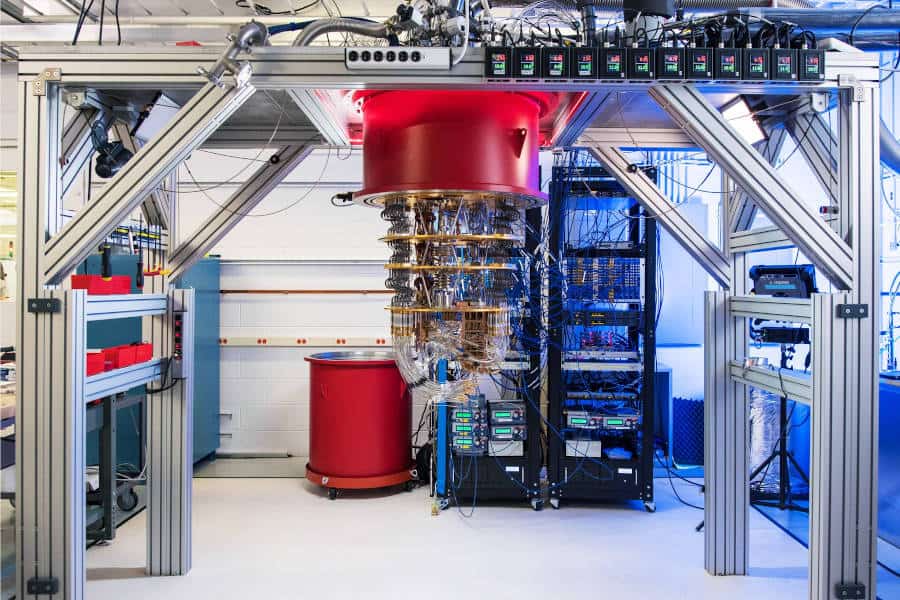
None of this is shipping yet. Certification is described as "undergoing," not complete; samples arrive in mid-2027 at the earliest; and the post-quantum satellite payload will be proven in operation, not in press releases. A single vendor stack, however coherent, is one ecosystem's bet rather than an industry consensus, and the standards landscape is still moving: NIST selected HQC as a code-based backup to ML-KEM in March 2025, and its additional signature competition remains open. That is precisely why the industry talks about cryptographic agility as much as algorithms. A chip that cannot be updated will be obsolete before the satellites carrying it retire.
The honest reading of this week is that the post-quantum migration has reached the bill-of-materials stage. The standards were the easy part. Replacing the cryptography inside every device that will still be in service when quantum computers arrive is the decade-long work, and this week it started showing up in product announcements.
0 Comments