
On October 14, 2026, three companies announced a joint venture to build one of the internet's newest pieces of physical infrastructure. The Pisces subsea cable will run approximately 3,125 kilometers along the Atlantic coast, linking Galway on Ireland's west coast directly to landing points in France, Spain, and Portugal. Its most interesting feature is what it avoids: the route is deliberately designed so Irish internet traffic can reach continental Europe without transiting through the United Kingdom.
The joint venture, Pisces Cable System Limited, pairs Orange, one of the world's largest telecom operators, with Equitix Investment Management, a European small to mid-market infrastructure investor, and McMahon Design and Management (MDM), an Irish subsea and civil engineering firm. The new company's chief executive is Carine Romanetti, a recognized subsea cable specialist. Deployment is expected in 2028.
What is actually being built
A subsea cable is not one cable but many. Pisces is designed with 16 fiber pairs, which means 16 independent high-capacity glass pathways inside a single armored bundle. Each pair, once fitted with modern optical equipment, can carry tens of terabits per second. The four landing points are Galway (Ireland), Saint-Hilaire-de-Riez (France), Sopelana (Spain), and Carcavelos (Portugal). Orange will build a brand-new landing station in Sopelana.
A landing station is the building where the cable comes ashore: it houses the power feeds that keep optical repeaters alive on the seabed, and the backhaul connections that carry traffic inland. Without one, a cable cannot plug into a country's internet. The marine survey, the detailed mapping of the seabed the cable will rest on, was conducted by Elettra Tlc Spa and Orange Marine and finished in August. Engineering and permitting are underway now.
Why Ireland wants its own front door to Europe
Enjoying this story?
Get the five most important stories in tech, every morning. Free.
Ireland has become one of Europe's densest concentrations of data centers, hosting facilities for hyperscalers and a growing set of AI companies. Much of its traffic to continental Europe currently passes through the United Kingdom, a legacy of how cables were historically laid and of Ireland's proximity to its neighbor.
A single transit path is a risk. If the UK corridor is congested, damaged, or politically complicated, Ireland's access to the rest of Europe narrows. Pisces gives the country an independent route, shorter latency to key European hubs, and insurance against the day the usual path fails. The system is explicitly pitched as interconnecting with existing transatlantic and international systems, so it strengthens Ireland's position as a hub rather than just a spoke.
The internet does not route itself around problems by accident. Every backup path is a deliberate, expensive decision made years in advance.
How a cable like this gets built
Pisces, by the Numbers
The planned Ireland-to-Europe subsea cable, announced October 14, 2026.
Note: Route, capacity, and timeline from Orange's October 14 announcement.
The sequence is almost always the same. First, a feasibility study and marine survey map the seabed in detail: depth, currents, shipwreck zones, fishing grounds, and geology all determine the route. Pisces completed this phase in August. Then come permits from every coastal state the cable touches, a process that can take a year or more. Then manufacturing, loading the cable onto specialized ships, and the slow process of laying it at a few kilometers per hour. The two years between now and the 2028 deployment target are, by industry standards, brisk but normal.
Then there is the business model. Pisces is designed as an open-access dark fiber system. "Dark fiber" means unlit glass: the joint venture sells or leases raw fiber pairs to other operators, who install their own optical equipment to light them. "Open access" means any qualified carrier can buy capacity, not just the builders. For data center operators in Ireland, that matters: direct interconnection across the four landing countries, on infrastructure they do not have to build themselves.
The public money behind a private cable
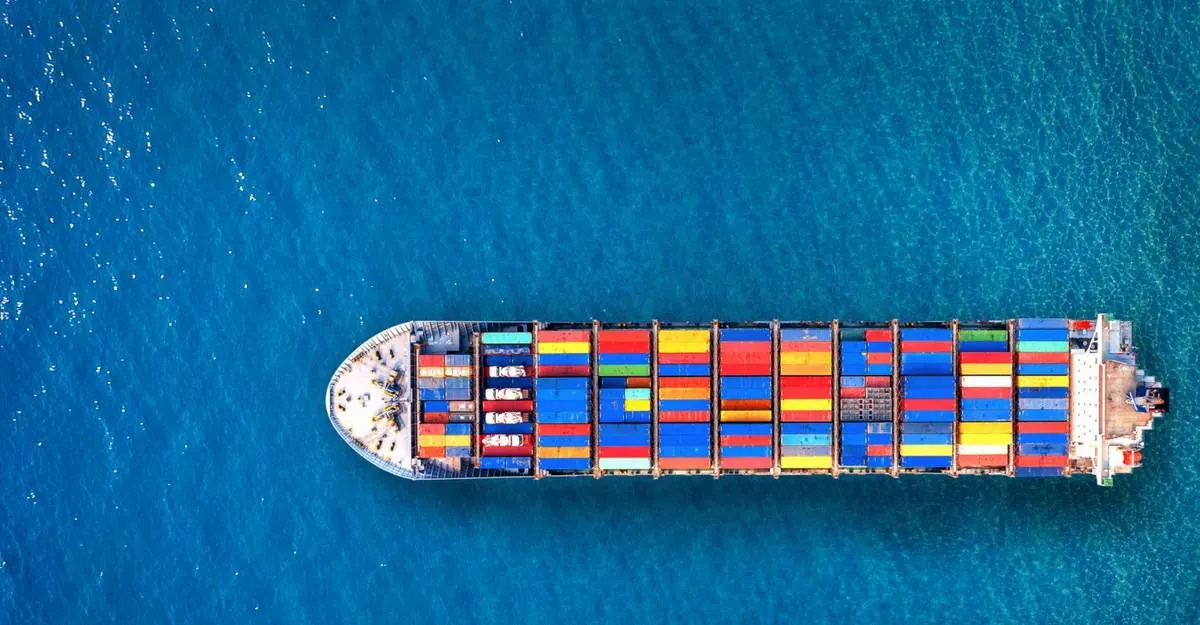
The project benefits from significant funding through the European Union's Connecting Europe Facility (CEF), and it sits under the EU's Digital Global Gateway Strategy, which treats internet infrastructure as an extension of foreign and economic policy. Valerie Cussac, CEO of Orange Wholesale International, tied the project directly to the continent's AI ambitions: "As Europe accelerates its artificial intelligence ambitions, subsea infrastructure along the Atlantic coast becomes more critical than ever." In other words, the cables that will carry Europe's AI traffic are being financed partly as sovereign infrastructure, not just as private telecom assets.
What "open access" promises, and what is still unproven
There is an important distinction between announcing a cable and delivering usable capacity. The route is public, the 16-pair design is public, and open access is the stated commercial model. But as the industry outlet btw.media noted this week, the capacity-allocation rules, wholesale terms, and ownership shares have not yet been published. A mapped route creates a physical option; it does not by itself establish that an independent carrier can buy usable capacity at a usable price, or that landing and backhaul arrangements will be ready on day one. Those details are what turns a cable into connectivity, and they are still to come.
The lesson of Pisces is a general one. The internet's resilience is not an emergent miracle; it is the sum of thousands of deliberate projects like this one, each adding a new path so that traffic has somewhere else to go. When the cable is deployed in 2028, a small slice of the world's data will flow from Ireland's west coast to France, Spain, and Portugal on a route that exists because three companies, and the European Union, decided the internet needed a new thread.
0 Comments