
Western Australia has been running on borrowed internet for more than two months. Three of the subsea cables that connect Perth directly to Singapore and the rest of Asia are down, repair dates keep slipping, and operator Vocus puts permanent restoration somewhere in November. For most users the internet still works, just slower and more fragile than it should be. The reason it takes months to fix a broken internet cable is not incompetence. It is that fixing one requires finding a ship, sailing it to the middle of the ocean, and performing surgery on a fiber-optic thread in open water.
Here is what is actually happening off the coast of Perth, and what it reveals about how the internet's physical backbone really works.
What broke, and when
The trouble began in early August 2026, when both Indigo systems went offline. Shunt faults struck Indigo Central and Indigo West at around the same time, and both faults were detected in cable segments inside the Perth Submarine Cable Protection Zone, the federally designated strip of seabed where anchoring and dredging are prohibited precisely to protect cables.
Then, on September 4, the Australia Singapore Cable (ASC), operated by Vocus, failed as well. Backbone provider GSL observed short flaps at 03:50 UTC followed by a hard down event at 06:19 UTC, with the break located on the Indonesia-to-Singapore segment. One industry analysis estimates the combined loss of ASC and Indigo West removed roughly 100 terabits per second of direct bandwidth out of Western Australia.
What made the Indigo failures especially notable came next. Subco founder and co-CEO Bevan Slattery posted AIS ship-tracking data on LinkedIn showing an oil tanker, the GEM Sapphire, making repeated erratic crossings over the Cable Protection Zone around the time the faults occurred. Subco reported the incident as a potential crime to the Australian Federal Police, which is assessing the report. No root cause has been publicly disclosed. It is worth care here: suspicious ship activity is not proof of deliberate damage, and most historical cable faults turn out to be accidental anchor drags.
A shunt fault is not a clean break
Enjoying this story?
Get the five most important stories in tech, every morning. Free.
Most people imagine a cable cut the way a film would show it: a fiber snapped in two, ocean water pouring in. The Indigo failures were shunt faults, which are sneakier. In a subsea power-and-data cable, a shunt fault means electrical current is leaking from the cable's power conductor into the surrounding seawater, usually because the insulation has been damaged somewhere. The fiber pairs carrying data may still be intact, but the power feeding the underwater repeaters, the amplifiers spaced every 60 to 100 kilometers that boost the light signal, is compromised. A shunt fault can degrade slowly, and one of the Indigo West shunt faults at the Singapore end deteriorated into a full cable break while repairs were still being organized.
This is why the first repair attempt failed. On September 15, engineers fixed a fault about 47.6 kilometers off Perth, but when power control was handed back to the landing station, traffic did not return. The Singapore-end fault had worsened, and the repair had to start over on a different segment.
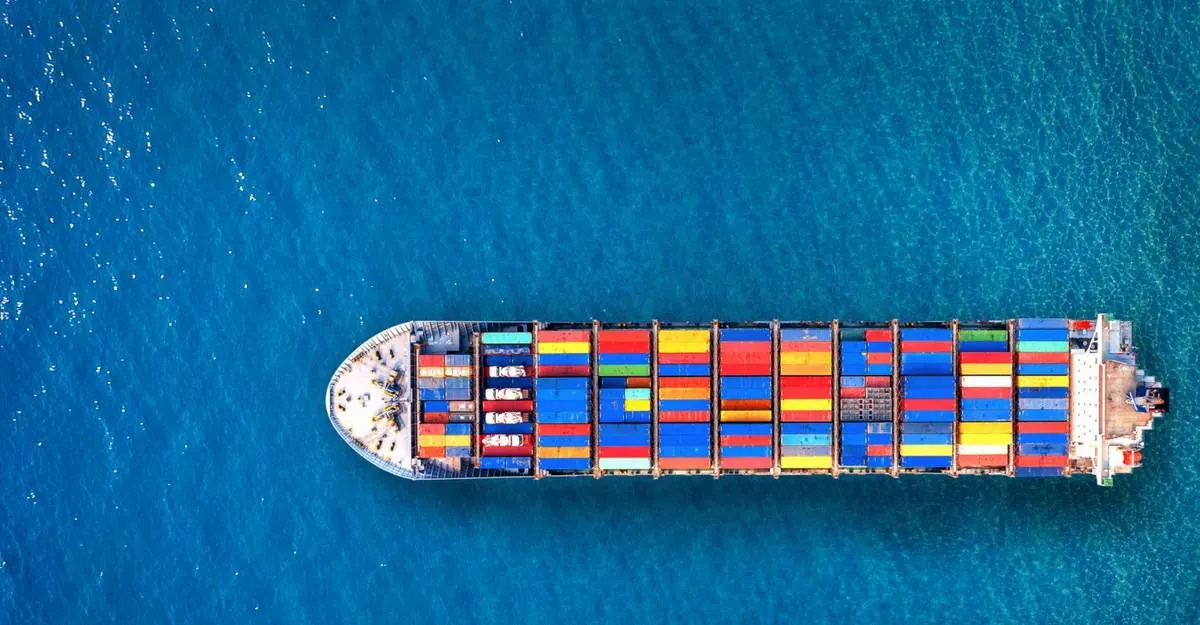
Fixing the internet means finding a ship, sailing to open water, and performing surgery on a fiber-optic thread.
How you actually fix a cable on the seafloor
The Perth Cable Crisis: By the Numbers
Western Australia's subsea links to Asia, as reported by operators and monitoring platforms.
Note: Repair dates are operator estimates and depend on weather, permits, and cable condition.
There is no underwater repair robot that patches cables in place. When a deep-water fault is confirmed, the standard procedure is: dispatch a cable repair ship, sail to the fault location (known only approximately from fault-finding measurements), drag a grapnel along the seabed to catch the cable, haul it up from the ocean floor, cut out the damaged section, splice in a new length, test it, and lower it back down. In shallow water, divers or remotely operated vehicles can work directly. Either way, each fault is a multi-day operation requiring precise weather, permits, and a vessel equipped with cable tanks, jointing rooms, and trained crew.
And here is the bottleneck that explains the slipping dates: there are very few of these ships in the world, and they are booked solid. When multiple cables break at once, repairs get queued. Vocus agreed to sequence the Indigo West repair ahead of ASC, so that Indigo West could restore a working route between Singapore and Australia before ASC's affected section is powered down for its own repair. That sequencing is a deliberate tradeoff: it reduces disruption overall but extends the total timeline. The schedule has shifted repeatedly since September, from late October to the current targets of roughly November 1 for Indigo West and November 11 for ASC, with Vocus citing delayed vessel mobilization. Operators attach the same caveat to every date: weather, permits, and the actual condition of the cable can move them again.
Why your internet still works
Here is the part that surprises people: with three cables down, most Australians barely noticed. That is because the internet routes around damage. Network operators run backup capacity on alternative paths, and when a cable fails, traffic shifts to other systems, even if those paths are longer and slower. You saw this in miniature earlier this month in the Philippines: when the C2C cable segment between the Philippines and Singapore went down on October 2, PLDT confirmed a loss of about 300 Gbps of international capacity, and monitoring platform CableStatus measured average latency on the Philippines-Singapore route jumping from a baseline of about 53 milliseconds to around 177 milliseconds, more than three times normal, before rerouting restored service within days.
The mechanism is peering and transit: when one path dies, routing protocols recalculate and push packets through whatever survives. The catch is that the surviving paths get congested, latencies rise, and redundancy is exhausted. If another fault strikes while repairs are pending, there is no backup left to absorb it. That is the precarious state Perth has been in since August: the internet still works, but its safety net is gone.
The monitoring gap
One detail from the Indigo episode deserves attention. Indigo West and Central did not have FiberSense monitoring installed, a distributed acoustic sensing technology that turns a fiber cable into a microphone detecting anchor drags and seabed disturbances in near real time. Had it been installed, operators would have known within minutes whether the event was a ship strike or something else, and could have contacted the vessel directly. Newer systems on the route, including ASC, SMAP, and OAC, do have this kind of sensing. The lesson is simple: much of the internet's backbone is still monitored the way it was decades ago, by noticing it went dark and then going looking.
The Perth saga is not really a story about Australia. It is a preview of a global fragility. Nearly all intercontinental internet traffic travels through a few hundred subsea cables, repaired by a few dozen specialized ships, and most faults still take weeks to months to fix. The cables will be fixed, probably in November. But the next time a ship drags an anchor through the wrong patch of seabed, remember: the global internet does not have a repair department. It has a waiting list.
0 Comments