
Microsoft announced its third-generation custom AI chip, the Maia 300, on October 12, in the most aggressive move yet by a cloud giant to loosen Nvidia's hold on AI computing. CEO Satya Nadella called the chip Microsoft's "biggest bet yet on our own silicon" in a post on X, and the company said the Maia family will become the primary inference system for its own products and services, with deployments scaling to multi-gigawatt capacity starting in 2027.
The announcement matters because inference, the work of running AI models to answer questions and complete tasks, has become the dominant and fastest-growing share of AI computing. Training a model is a one-time event; serving it to hundreds of millions of users is a perpetual electricity bill. Microsoft is betting that silicon designed from the ground up for inference can serve answers more cheaply than Nvidia's general-purpose GPUs.
What the chip actually is
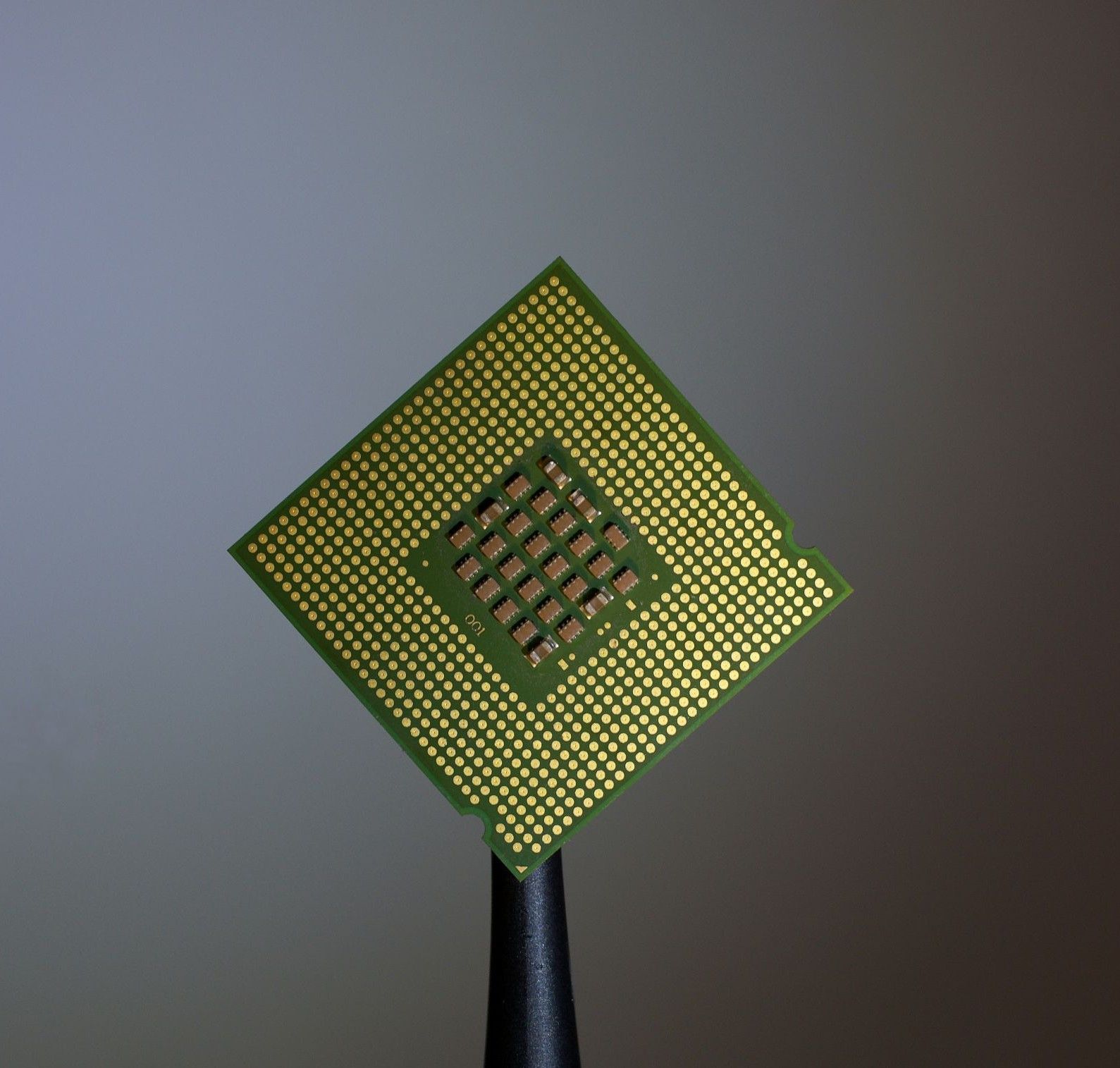
The Maia 300 is a multi-chiplet accelerator, which means it is assembled from several smaller, specialized pieces of silicon bonded together rather than etched as one monolithic die. The compute chiplets are manufactured on TSMC's advanced N2P process, a 2-nanometer-class technology, while the memory-controller and input-output chiplets use a cheaper 3-nanometer process. That split is deliberate: only the parts that benefit from the most advanced (and most expensive) process get it, and everything else rides on cheaper silicon.
This is a different technical path from Nvidia, whose accelerators use one massive computing die surrounded by high-bandwidth memory chips. Microsoft's approach is designed for yield and cost: smaller chiplets are easier to manufacture successfully, and mixing process nodes lets the company avoid paying 2-nanometer prices for circuitry that does not need it.
The headline numbers, all from Microsoft: up to 13.8 petaFLOPS of FP4 compute and 6.9 petaFLOPS at FP8 precision, with 288 GB of HBM4 memory delivering 18 terabytes per second of bandwidth. The memory is where Microsoft spent most of its upgrade budget, and the company says that is intentional, because in large inference systems, waiting for data to arrive from memory, not raw compute, is increasingly the bottleneck. Each chip carries eight HBM4 stacks of 36 GB apiece. The chip draws 950 watts at the SoC level, up from 750 watts on the Maia 200, but packs them into racks of 96 accelerators, double the previous generation's 48.
The chip wars are no longer about who makes the fastest processor. They are about who controls the cost of every answer.
The efficiency claims, with caveats
Enjoying this story?
Get the five most important stories in tech, every morning. Free.
Microsoft says the Maia 300 delivers 40 percent more AI tokens per watt than leading GPU-based systems, and that a full 96-chip rack will produce up to seven times the token throughput of a Maia 200 rack. The rack itself is specified at about 167 kilowatts of power, compared with roughly 142 kilowatts for Nvidia's most recent GB300 server rack with 72 GPUs, according to Reuters.
The important caveat is that Microsoft has not named the GPU systems behind the 40 percent figure or published how it measured them. Independent verification is impossible right now, because Maia accelerators are internal-only: Microsoft has not said whether Azure customers will be able to rent them the way they rent GPU servers today. Until outside workloads run on the hardware, the efficiency claims remain company marketing dressed as engineering.
There is, however, a track record to point to. Microsoft told investors that running OpenAI and its own models on the Maia 200 costs 30 to 40 percent less than running them on comparable Nvidia hardware, and Nadella said the Maia 200 is already serving production workloads, delivering up to 1.7 times the tokens per watt across Teams and Copilot experiences in the US, Europe, and Australia. The Maia 100 debuted in 2023, the Maia 200 followed in January 2026, and the Maia 300 is now the third step in a cadence that is accelerating.
Why this is happening now
Maia 300 vs. Maia 200
How Microsoft's third-generation AI chip compares to its predecessor.
Note: Figures are per Microsoft's October 2026 announcement.
Microsoft is not alone. The hyperscaler silicon race is now fully on: Google is on its eighth generation of TPUs, Amazon has its Trainium and Inferentia lines, Meta has entered the custom-silicon game, and OpenAI recently debuted its own in-house chip, Jalapeno. Each of these companies reached the same conclusion, which is that at their scale, renting Nvidia GPUs forever is a margin tax they would rather not pay.
Microsoft's version of the argument is about where the money goes. Nadella has reportedly described Microsoft's position as being "a very thin layer on top of Nvidia," meaning too much of the value in the AI stack accrues to the company that makes the chips. Custom silicon reclaims some of that margin. Evercore ISI analysts estimate that Maia chips could account for about 10 percent of Microsoft's AI chip spending by the first quarter of 2027, a meaningful share for a program that did not exist in shipping form two years ago.
Microsoft also intends to move Microsoft 365 Copilot onto Maia hardware, and the company says Copilot should get faster as a result, though that improvement is an expectation rather than a measured result on deployed hardware. The first step is inference for its own services; training stays on Nvidia and AMD GPUs, and Microsoft has announced no plan to stop buying from either company.
What to watch
The announcement leaves the most important questions unanswered. How many gigawatts does "multi-gigawatt" actually mean? Which data centers will get the hardware first? How much is the program costing? And the biggest one: will third-party Azure customers ever be able to buy Maia compute, or does it stay a private advantage for Microsoft's own services?
The market, for now, took Microsoft at its word. Nvidia shares fell 1.5 percent on the day of the announcement, AMD dropped 3.4 percent, and Microsoft rose 1.1 percent to $540.84, according to Barron's. Those are single-day moves on sentiment, not fundamentals, but they signal how seriously investors take the idea that the era of the GPU default is ending.
Production deployments begin in 2027. Until then, the Maia 300 is a set of specifications and a claim about efficiency. The chiplet strategy is sound, the memory numbers are genuinely strong, and the inference-first thesis is the direction the whole industry is moving. Whether Microsoft's third attempt at its own silicon finally breaks the Nvidia tax will be decided not by announcements, but by power bills.
0 Comments