
The largest funding round of the week was not a chatbot company, a model lab, or anything with an agent in its name. It was a power company, one most people have never heard of. On October 5, 2026, Axiom Solutions International, the cloud and power infrastructure business being spun out of manufacturing giant Flex, secured a $2 billion investment led by General Catalyst and Koch Equity Development at an initial enterprise value of $37.5 billion.
If those numbers sound enormous for a company you did not know existed a minute ago, they should. The financing makes Axiom one of the most valuable private infrastructure companies in the world, and it is explicitly a bet on the least glamorous, most constraining part of the AI boom: the electricity that feeds it and the heat that has to leave.
The deal
The structure is a Series A convertible preferred stock purchase. Funds affiliated with General Catalyst, Koch Equity Development, and co-investors agreed to buy $2 billion of preferred shares in Axiom from Flex, the current owner of the business. Once Axiom separates into an independent publicly traded company, which Flex expects in the first quarter of 2027, the investment will sit entirely in Axiom.
The terms read like a financing built for a spin-off, because that is what it is. The preferred shares pay a 10 percent annual cash dividend before the separation, stepping down to 6 percent in cash (or 7 percent in kind) afterward, with potential increases after the fifth anniversary. General Catalyst gets the right to nominate one director to Axiom's board once the separation completes. And there is a deadline with teeth: Flex guarantees the investment, and if the spin-off has not closed by December 31, 2027, investors get redemption at 115 percent of the purchase price in cash or 125 percent in Flex ordinary shares.
Revathi Advaithi, Flex's chief executive, is expected to lead Axiom after the separation, a signal that Flex considers this business important enough to put its CEO on it. Hemant Taneja, General Catalyst's chief executive, framed the thesis in one sentence: Axiom sits at the center of the power and infrastructure buildout that AI demands. PJT Partners advised Flex on the deal; Skadden and Davis Polk handled the legal work.
The AI boom has a physics problem, and the companies best positioned to solve it look more like power companies than tech companies.
Why power is the bottleneck
Enjoying this story?
Get the five most important stories in tech, every morning. Free.
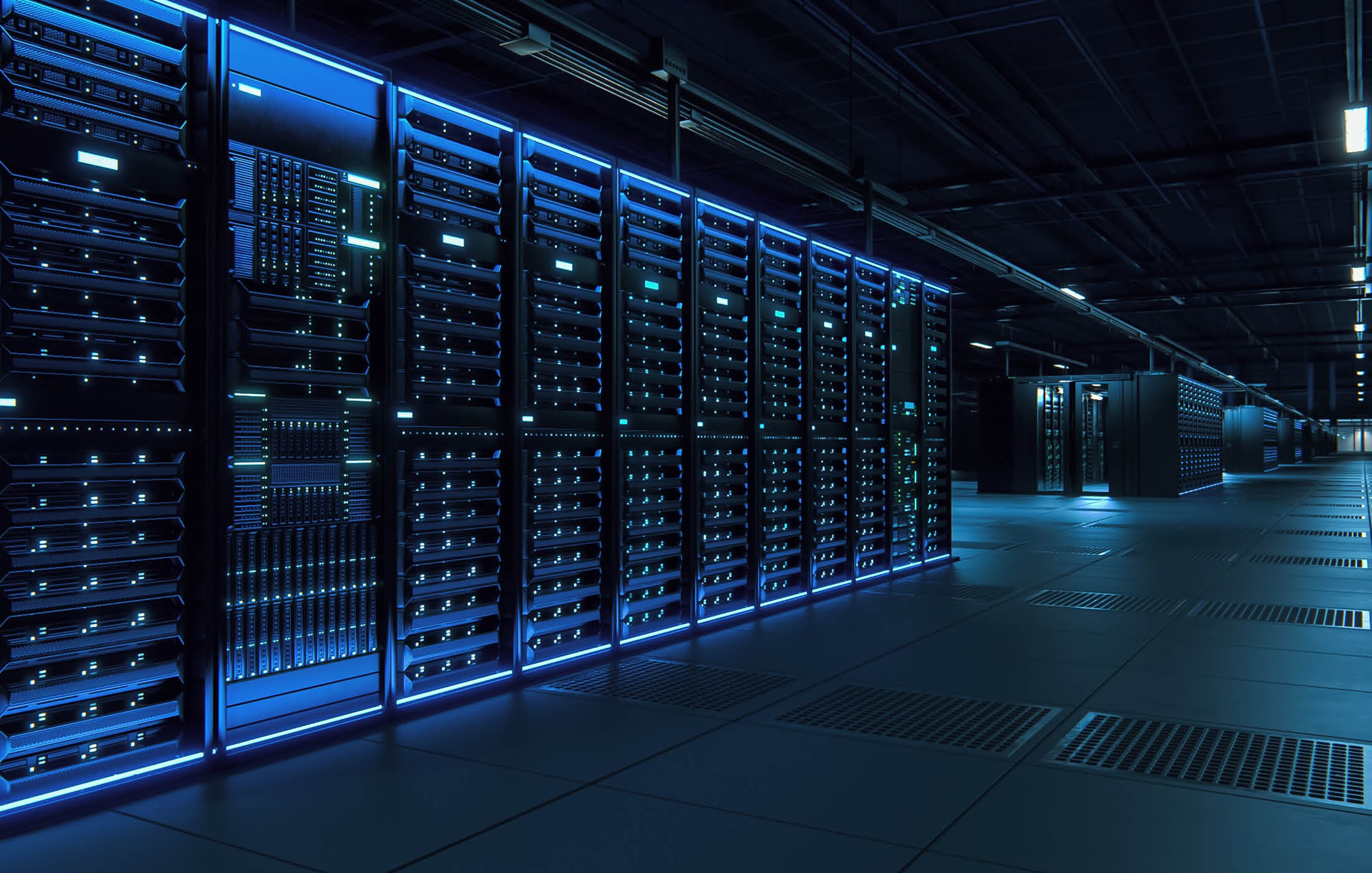
AI data centers do not just need more of everything. They need more of a specific thing that the grid and the supply chain were not built to deliver. A rack of AI accelerators can draw several times the power of a traditional server rack, and that power has to arrive clean, stable, and converted to exactly the right voltages. Then the resulting heat has to be moved out before it fries the hardware.
That is Axiom's business. The company sells power conversion equipment, thermal management (including liquid cooling technology Flex picked up through its JetCool acquisition), and rack-level integration for data center operators. EPC Power, the $4.4 billion acquisition the new financing helps fund, adds power conversion equipment to the portfolio and is expected to close in the fourth quarter of 2026.
The logic of the moment is straightforward. Hyperscalers and neoclouds are racing to build capacity, but projects stall or slow when power infrastructure cannot keep up: transformers, switchgear, cooling systems, and the engineering to integrate them. The constraint on the AI buildout is not always chips anymore. Increasingly, it is megawatts.
Flex's playbook
The Axiom Deal at a Glance
Key terms of the October 2026 investment in Flex's cloud and power infrastructure business.
Note: Figures from the companies' October 2026 announcements; deal subject to regulatory approval.
For Flex, the spin-off is a portfolio cleanup with upside. Flex is an electronics manufacturing services company, one of the largest in the world, and the cloud and power infrastructure business has been growing faster and carrying bigger capital requirements than the core manufacturing operations. Carving it out as Axiom lets each business be valued, funded, and managed on its own terms.
The $37.5 billion valuation tells you what investors think those terms are worth. Axiom enters life with an advantage most infrastructure startups would kill for: Flex's manufacturing scale and supply chain, already running, already global. That means it can bid on large data center programs from day one instead of spending years building production capacity.
The competition is established and serious. Vertiv, Schneider Electric, and Eaton all sell into the same data center power and cooling market, and they have deep customer relationships. Axiom's pitch is that it is purpose-built for the AI era's density and thermal demands, backed by manufacturing muscle, and capitalized for the acquisition pace the market requires. EPC Power is the first proof point; the deal structure suggests it will not be the last.
What to watch
Three things determine whether this becomes the defining infrastructure company of the AI era or an expensive cautionary tale. First, execution on the spin-off: the Q1 2027 target is aggressive for a separation of this complexity, and the redemption guarantee gives Flex a hard deadline with real cost. Second, the EPC Power integration: $4.4 billion acquisitions have to earn their premiums, and the financing structure, bridge loans plus this preferred round, means the balance sheet is engineered for it, not forgiving of mistakes.
Third, and most important, the demand thesis itself. The entire $37.5 billion valuation rests on the idea that AI data center construction continues at a pace that keeps power and thermal infrastructure in structural shortage. If AI capital spending cools, the best power company in the world becomes a very expensive bet on a smaller market. If it does not, Axiom will have raised its war chest at exactly the right moment, and the quiet company nobody had heard of will be hard to ignore.
0 Comments