
The memory business has a rhythm: every few years, someone claims a shortcut past the physics wall. This weekend, at the 4th Integrated Chip and Chiplet Conference in Shanghai, ChangXin Memory Technologies (CXMT) made one of the boldest claims yet. Its president, Cao Kanyu, said the Chinese DRAM maker will introduce a DDR5 registered DIMM based on a next-generation 4F² memory cell architecture before the end of 2026. That is roughly two years ahead of Samsung's roadmap for the same architecture, and the market noticed immediately: US memory stocks slid more than 2 percent in pre-market trading on Monday.
The announcement caps a sprint. In September, CXMT put its fifth-generation DRAM platform, G5, and its LPDDR6 chips into mass production. TrendForce data shows CXMT already ranked fourth in global DRAM revenue in the second quarter of 2026, with its share climbing from 7.6 percent to 9.5 percent in a single quarter, trailing Samsung (39.4 percent), SK hynix (24.9 percent), and Micron (23.3 percent). A decade ago, Chinese DRAM was a rounding error. It is now one company away from the podium.
What 4F² actually means
A DRAM cell is a transistor plus a capacitor, one pair per bit. In current designs, each cell sprawls across a footprint of six times the square of the minimum feature size, the so-called 6F² layout. CXMT's 4F² design stacks the components vertically instead of laying them flat, shrinking the cell's surface footprint to a perfect square: four times the feature size squared, served by exactly two bitlines and two wordlines.
The payoff is density. Fitting cells into less area can raise the number of bits per chip by 30 to 50 percent, according to industry estimates reported by MyDrivers, without waiting for lithography shrinks. That is why the whole industry is chasing this geometry: DRAM has been running out of easy horizontal room for years, and going vertical is the obvious escape hatch.
The transistor at the center
Enjoying this story?
Get the five most important stories in tech, every morning. Free.
The centerpiece of CXMT's approach is a Vertical Surrounded Gate transistor, or VSG. As Chinese outlet Yicai reports, the design wraps the gate around the vertical channel, improving electrostatic control while cutting leakage current and short-channel effects, the classic headaches of tiny transistors. Around that core, CXMT is also separating the memory cell-array fabrication from the peripheral CMOS logic, then stitching the two together with wafer-level hybrid bonding, a high-speed interconnect technique more associated with advanced processors than memory.
Cao says the company holds more than 300 published patent families covering 4F² technology, which he described as an industry-leading portfolio. That number matters, because patent depth is how DRAM makers license their way out of lawsuits and into one another's fabs.
DRAM has been running out of easy horizontal room for years. Going vertical is the industry's escape hatch, and CXMT just jumped first.
Why the incumbents are nervous
CXMT’s DRAM Ascent
Global DRAM revenue share, 2Q26. Bars scaled to the leader.
Note: Share figures are verified TrendForce 2Q26 data. The 4F² density gain (30 to 50 percent) is an approximate industry estimate.
Samsung, the market leader, has been careful. At ISSCC 2026 it showed a 16-gigabit prototype combining 4F² cells with wafer-to-wafer hybrid bonding, but reports from Korea's Economy Tribune say the company is prioritizing hybrid bonding for commercialization and does not expect to ship 4F² products before 2028. Wccftech reports Samsung is eyeing 4F² for its B1b process (reportedly renamed D0a), while SK hynix is advancing its own vertical-gate 4F² DRAM. Nobody is sitting still; they are just moving slower.
That gap is exactly why Monday's pre-market reaction mattered. After CXMT's weekend announcement, Micron, SanDisk, and Western Digital fell more than 2 percent in early trading, and the Roundhill Memory ETF had already logged a 7.4 percent weekly drop, its worst in nearly three months, according to TradingKey. Some of that is profit-taking after the sector's AI-driven run. But some of it is the market pricing in a future where server memory pricing has a fourth negotiator at the table.
Server memory is a different sport
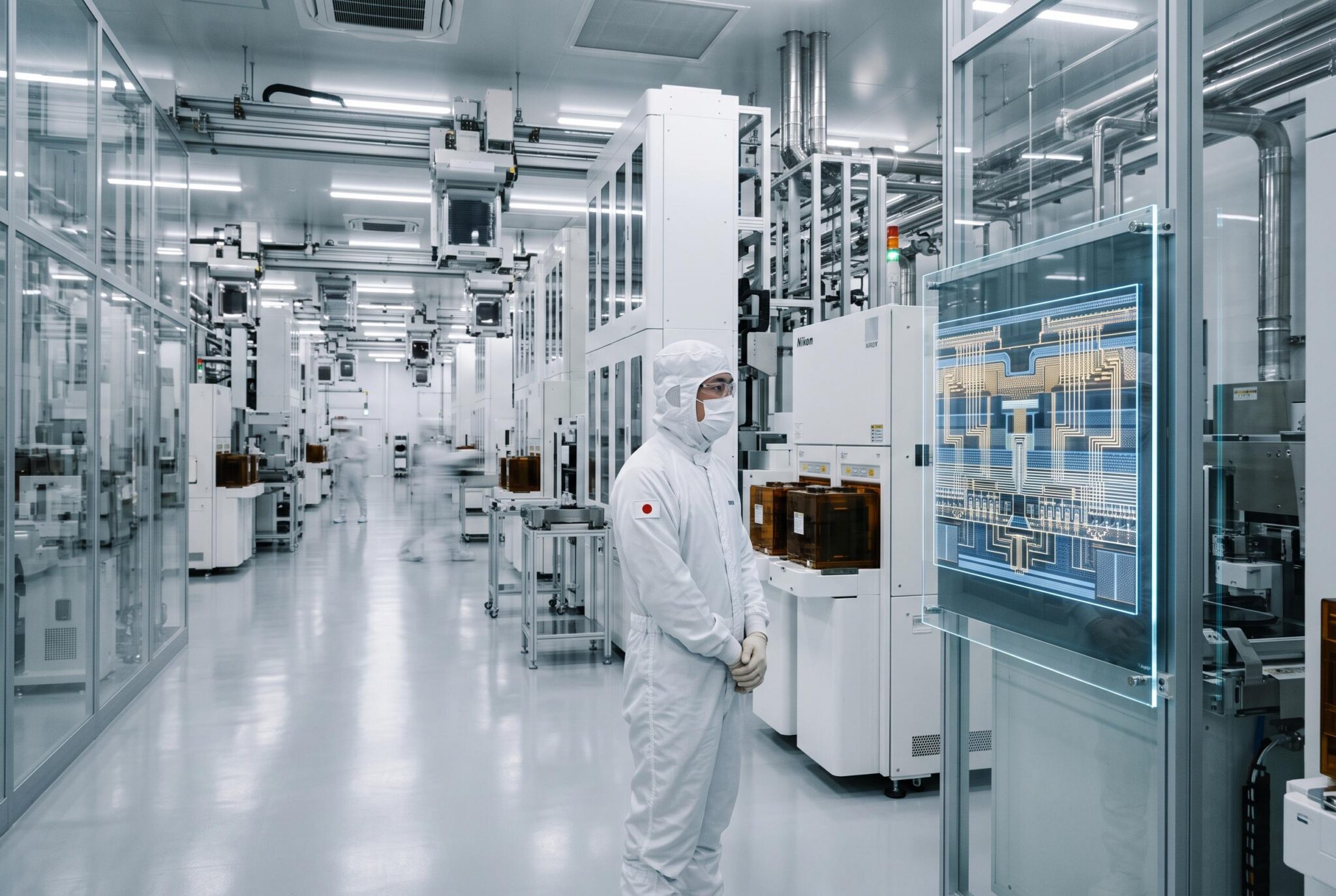
There is a reason CXMT is aiming its first 4F² product at DDR5 RDIMMs for servers rather than consumer sticks. Server memory runs around the clock at punishing temperatures, and hyperscalers validate parts for months before buying a single one. As Yicai notes, CXMT built its reputation in consumer electronics; enterprise DRAM demands a different level of reliability, and qualifying a new architecture with data-center customers is a marathon, not a launch event.
Ambition is not the same as volume. Money Today reports that CXMT's upcoming products may only partially adopt 4F² technology, and reaching high-volume production is a separate hurdle from announcing a launch. TrendForce's analysts make the same point: commercial availability does not necessarily signal readiness for high-volume production.
What it means for the AI buildout
The timing is not accidental. AI servers are devouring high-bandwidth memory, DRAM, and enterprise NAND faster than fabs can install capacity; global chip sales crossed $1 trillion through August this year, according to the Semiconductor Industry Association, with memory prices climbing. Any supplier that can put more bits on less silicon into a market this hungry gets a hearing from every hyperscaler procurement team on Earth.
China's self-sufficiency drive adds a political dimension. CXMT's advance is happening despite ongoing US export controls, and Beijing treats semiconductor independence as strategic infrastructure. Whether CXMT's year-end RDIMM ships in volume or mostly ships headlines, the message is calibrated: the four-player DRAM oligopoly is becoming a question, not a fact.
References
- TrendForce, CXMT Accelerates 4F² DRAM Push, Eyes Year-End Server DDR5 RDIMM Launch, October 12, 2026.
- Wccftech, CXMT To Leapfrog Samsung By ~2 Years With 4F² DDR5 RDIMM Product Before Year-End, October 2026.
- Digitimes, CXMT Targets 2026 Debut of 4F² DDR5 RDIMM in Bid to Challenge Server DRAM Rivals, October 11, 2026.
- TradingKey, US Memory Stocks Slide Pre-Market as CXMT Tech Progress Sparks Competition Concerns, October 12, 2026.
- Semiconductor Industry Association, Year-to-Date Global Semiconductor Sales Top $1 Trillion Through August, October 5, 2026.
0 Comments