
On Thursday morning, at 8:34 Pacific time, a white-and-orange capsule fell out of the sky and into the Pacific Ocean off the coast of Los Angeles. Inside it were four people who had spent the last eight months circling the Earth, working in a laboratory that never stops moving at 17,500 miles per hour. They had been gone since February.
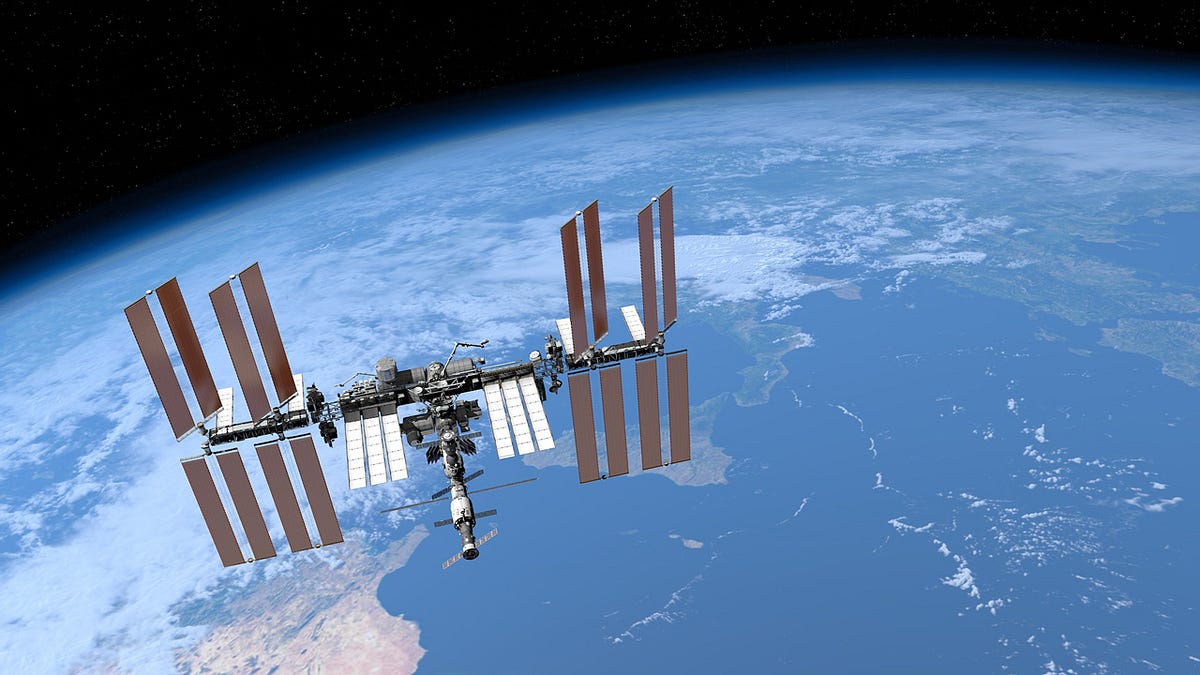
NASA's SpaceX Crew-12 mission is over. Jessica Meir, Jack Hathaway, Sophie Adenot, and Andrey Fedyaev are home, after 237 days aboard the International Space Station and more than 100 million miles of travel. A news conference with the crew is scheduled for October 15 at NASA's Johnson Space Center in Houston. And then, for the rest of us, the strangest thing will happen: almost nothing.
That is the point of this story. Twenty years ago, a four-person crew returning from eight months in orbit would have been a spectacle. Today it barely made the front page. Commercial crew rotation has become routine, and routine is exactly what spaceflight needed to become.
The mission, by the numbers
The Crew-12 flight was the 20th time SpaceX has carried humans into orbit. The crew launched in February aboard a Falcon 9 rocket from Cape Canaveral, Florida, in the Crew Dragon capsule Freedom, and docked with the station the next day. Eight months later, they undocked on Wednesday, spent roughly 27 hours in transit, and splashed down Thursday at 11:34 a.m. Eastern time.
Commander Jessica Meir now has 440 total days in space across her two long-duration flights, which NASA says places her in the agency's top ten for cumulative time in orbit. The mission was the first spaceflight for pilot Jack Hathaway and ESA mission specialist Sophie Adenot, and the second for Roscosmos cosmonaut Andrey Fedyaev.
Meir logged more than 27 hours across four spacewalks during the mission, work NASA described as maintenance and upgrades to the aging station. Recovery went according to script: two fast boats secured Freedom, the capsule was hoisted onto the recovery ship's main deck, and the crew exited after medical checks. For a machine returning from 100 million miles, the final act was almost boring. That is a compliment.
The extraordinary thing about Crew-12 is how ordinary it has become. That ordinariness took two decades to build.
The science they brought home
Enjoying this story?
Get the five most important stories in tech, every morning. Free.
During nearly eight months aboard the station, the crew carried out dozens of experiments, NASA said, including studies of stem cells, how crystals grow in microgravity, and bone loss in orbit. These are not prestige projects. Stem-cell research in microgravity could change how scientists understand cell differentiation. Crystal growth in space has already produced protein structures too perfect to form under Earth's gravity, with implications for drug design. Bone-loss studies matter because the human skeleton sheds mass in weightlessness, a problem that stands directly between us and a crewed Mars mission.
The payoff from this research arrives slowly, in papers and drug pipelines rather than headlines. But the station's research portfolio is one of the quietest high-yield scientific investments on the planet, and Crew-12 added eight months to it. Every rotation of crew is also a rotation of data: blood samples, tissue studies, materials returned to Earth for analysis that cannot be done in orbit.
The quiet geopolitics of a shared ride
Crew-12 by the Numbers
The mission that brought four astronauts home after eight months in orbit.
Days in orbit, miles, and crew records verified from NASA reporting; reentry figures such as heat-shield temperature are reported by NASA and approximate.
It is worth pausing on the crew manifest. A NASA commander, an ESA astronaut, and a Roscosmos cosmonaut flew up together, lived together for eight months, and came home together in an American commercial capsule. Crew seat swaps between NASA and Roscosmos have continued through years when almost every other form of cooperation between the United States and Russia has collapsed.
Space is one of the last domains where the international machinery still turns. The space station program, which NASA officials now describe as being in its final years, was built on the premise that some projects are too big and too expensive for any one nation, and that interdependence is itself a feature. Every crew rotation that includes a Russian cosmonaut is a small proof that the premise still holds. NASA Administrator Jared Isaacman credited the return to, in his words, the extraordinary expertise and competence of thousands across NASA, SpaceX, and international partners. The international part of that sentence is doing real work.
What eight months in orbit costs
The human side of these missions rarely gets the attention the technology does. Before the crew departed the station, Meir told a pre-departure news conference that she could not wait to be reunited with her three-and-a-half-year-old daughter. Consider what that means: this was her second long-duration flight, and her cumulative 440 days in orbit add up to well over a year of her daughter's short life spent with a parent in space.
That is the unglamorous truth behind the statistics. Long-duration spaceflight is not just an engineering problem. It is eight months of missed birthdays, managed through video calls and ninety-minute sunrises. The astronauts volunteer for it, and they are celebrated for it, but the cost is real and it is paid in ordinary time. No heat shield protects against that.
A rehearsal for what comes next
Here is why Crew-12 matters beyond its own statistics. Everything the crew practiced, long-duration life support, in-orbit maintenance, international coordination, the management of human bodies in weightlessness, is the rehearsal for the next era. The Artemis program aims to put astronauts back on the moon for months at a time. A Mars mission would keep a crew away for years. None of that happens without the accumulated knowledge of missions like this one.
The station itself is aging, and NASA's plan for its final years is to squeeze maximum value out of the time remaining. Crew-13 arrived last week to begin a six-month rotation, and the baton passes continue. Each rotation is a data point: what breaks, what holds, what the human body can take, what the politics can survive.
Isaacman said that building the capability to do this repeatedly is what will allow humanity to go farther. He is right, and it is worth noting what "repeatedly" means here. It means the spectacle is over. What remains is the work: the science, the maintenance, the slow accumulation of know-how that turns a stunt into an infrastructure.
Two hundred and thirty-seven days, more than 100 million miles, four people, and a gentle splashdown off the California coast. The headline is that it worked, again, and nobody is surprised anymore. Building that lack of surprise was the actual achievement.
References
- NASA, "NASA's SpaceX Crew-12 Dragon Splashes Down at 11:34 a.m. EDT," NASA Space Station blog, October 8, 2026.
- NPR, "4 people on NASA's Crew-12 mission return to Earth after 8 months in space," October 8, 2026.
- SciTechDaily, "NASA's SpaceX Crew-12 Splashes Down After 237 Days and 100 Million Miles in Orbit," October 2026.
0 Comments