
The most important AR glasses announcement this week is not a product you can buy. Japanese optics company Cellid announced that it has joined Qualcomm's Snapdragon START program, a development initiative for personal AI devices, and will demonstrate "Crux," a binocular, full-color AR glasses reference design, at the Augmented Enterprise Summit in Atlanta, October 13 to 15. Crux pairs Qualcomm's Snapdragon AR1+ Gen 1 platform with a glass waveguide, and it targets the part of the industry that rarely makes headlines: device manufacturers that need a proven template before committing millions to tooling and production.
Crux, in plain terms
A reference design is not a shipping product. It is a working blueprint other companies license or copy: optics, electronics, enclosure, and software engineered to work together so a manufacturer can move from prototype to product faster. Crux targets high-end uses such as advanced AR projects and XR platform development, and Cellid will demo it live in a dedicated meeting room, pitching enterprise customers exploring business applications of AR glasses.
That framing is deliberate. The summit centers on AI, XR, and digital twins, the stack behind industrial training, remote maintenance, logistics, and field service. Those buyers place five-figure purchase orders before a product ever reaches a shelf, and they care whether the device works, not how it looks.
The reference-design playbook
Enjoying this story?
Get the five most important stories in tech, every morning. Free.
This is how the AR industry actually scales. Snapdragon START, short for Snapdragon Scalable Turnkey AI-Ready Toolkit, pairs Snapdragon hardware modules with a model-agnostic software stack, so participants can focus on product design and user experience instead of reinventing radio firmware and camera pipelines. Cellid brings the parts almost nobody else can build: wide field-of-view waveguides, display modules, optical engines, enclosure design, and its own SDKs. The pitch: take Crux, customize the frame, and ship, without spending two years debugging optics.
The company that finally puts AR glasses on a billion faces may not be the one whose logo is on the frames. It may be the one that sold the lenses.
Cellid is not a household name, but it has done this job since its founding in October 2016. The Tokyo-based company, with offices in California and Taiwan, designs waveguides by nanoimprint lithography and specializes in diffractive optical elements, the etched patterns that steer light into the eye. Its glass waveguides reach up to 60 degrees of field of view; its plastic waveguides weigh under 4 grams, targeting 3. It has worked with partners including Jorjin, Pegatron, and Jig.jp. Chief executive Satoshi Shiraga, a former particle physicist who did research at CERN and Fermilab, frames the problem bluntly: "For AR glasses to become a technology that people use every day, it is essential to have a platform that integrates not only advanced optical technologies, but also the processing power, connectivity, and AI capabilities needed to deliver a seamless experience in an eyeglass-sized form factor."
The chip doing the heavy lifting
The AR glasses bet, in numbers
Display-free AI glasses dominate today; display AR is the 2027 play
Market figures via industry reporting citing Counterpoint Research; optics and chip figures per Cellid and Qualcomm. Bar widths are illustrative across mixed units. Samsung's price ($349-$499) is reported, not confirmed.
The AR1+ Gen 1 is the second half of the Crux equation. Qualcomm says the chip is 26 percent smaller than its predecessor, with better power management for slimmer frames. Dual image signal processors enable 12-megapixel photo and 6-megapixel video capture from the glasses, with better low-light performance and stabilization, alongside Wi-Fi 7, Bluetooth 5.3 and 5.2, and support for up to eight microphones.
The more consequential spec is the neural processor. The third-generation Hexagon NPU runs small language models entirely on the glasses, no phone required; Qualcomm demoed hardware running Meta's Llama-3.2-1B locally, so voice assistants and translation work without a cloud round trip. The platform supports binocular displays at 1280 by 1280 pixels per eye at 60 frames per second, the configuration Crux uses. The base AR1 Gen 1 already powers the best-selling smart glasses, and HTC's $499.99 Vive Eagle, which offers both Gemini and GPT on board, shows how quickly the category is commoditizing around Qualcomm silicon.
Optics is the real bottleneck
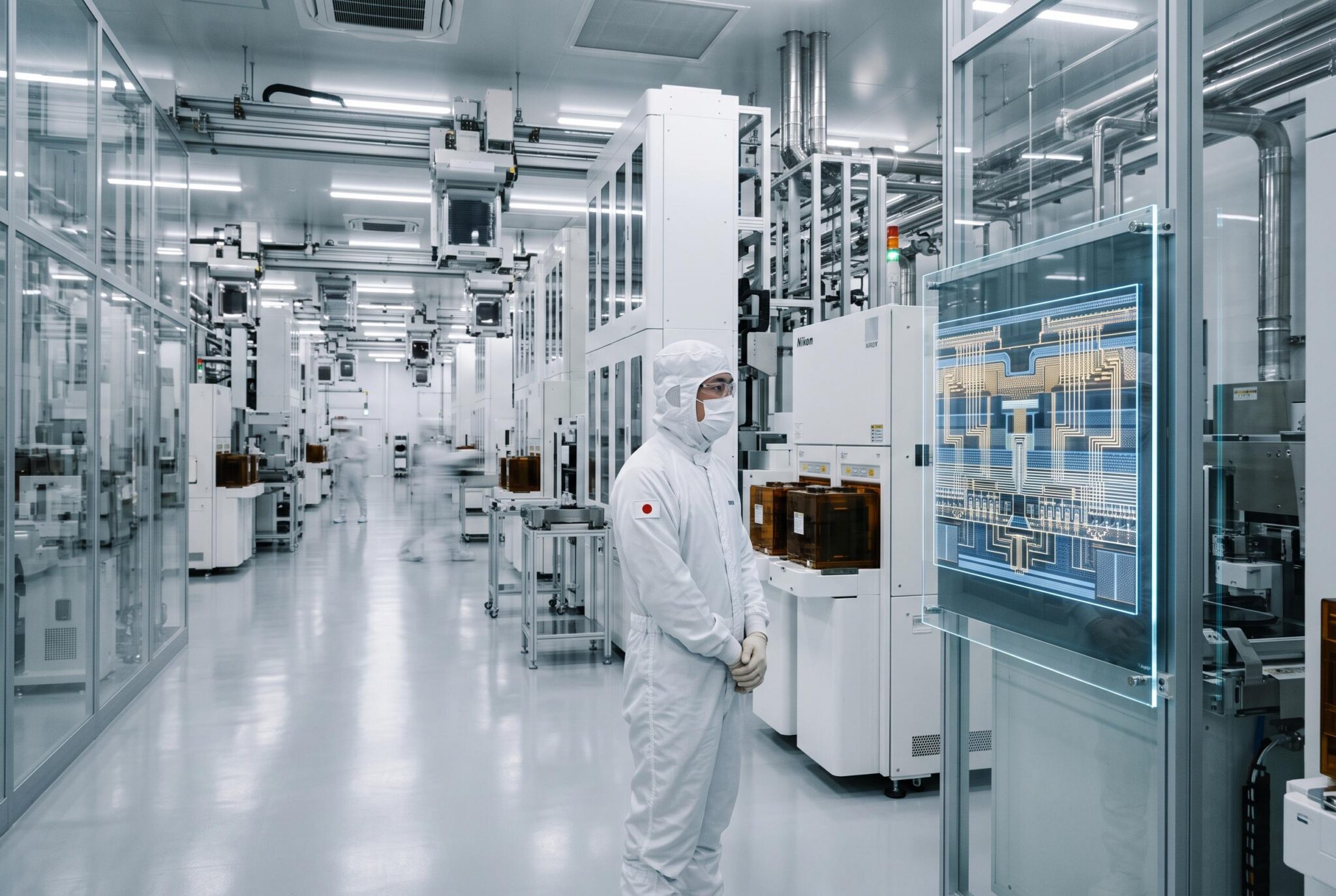
Chips were never the hard part. True AR glasses, with images overlaid on the world rather than piped through a phone, keep slipping into the future because of the waveguide: a piece of glass or plastic that must be thin, light, bright, and cheap at once. Waveguides fight rainbow artifacts and color fringing, and every brightness gain costs something in thickness, weight, or manufacturability. Cellid's decade-old bet is that proprietary optical simulation and production can push all four variables at once, which is why its "world's largest field of view in waveguide technology" claim (the company's wording, not an independent test) is the spec to watch in the demos.
The glass-plastic split maps onto the market split. Plastic waveguides are lighter and cheaper, suited to notification glasses showing directions and translations. Glass is sharper and brighter, suited to the high-end visual AR Crux represents. Both face the same skepticism: waveguide specs announced on a show floor often soften by mass production, where yield rates and cost decide what ships.
Enterprise first, consumer later
Crux lands in a market that has already chosen its first winner, and it is not a waveguide product. Industry reporting citing Counterpoint Research puts global AI-glasses shipments up 263 percent year over year in the first half of 2026, with 96 percent having no display, and Meta holding about 94 percent of that display-free segment after selling more than 7 million pairs in 2025. Samsung enters in November with camera-equipped Intelligent Eyewear, reportedly priced $349 to $499 and about 5 grams lighter than the 51-gram Ray-Ban Meta, with recording-indicator LEDs meant to defuse the privacy concerns Korea's data protection commission has raised.
Crux is playing a longer game. Google has signaled that display-equipped Android XR glasses are a 2027 story, making this week's Atlanta demos a dress rehearsal for next year's products. Qualcomm's Sahil Bansal, senior director of product management, put it in ecosystem terms: "Cellid's industry-leading waveguide, display and optical technologies makes them an ideal ecosystem solution provider as we work to accelerate the development and commercialization of AI-powered smart glasses." Translation: Qualcomm wants every plausible glasses maker building on its stack before the display wave arrives.
What to watch
Three questions decide whether Crux matters. Does any device maker actually pick up the design, or does it join the shelf of impressive reference hardware that never shipped? Do the demos hold up on brightness and field of view, the specs that define a waveguide's worth? And how much does Snapdragon START actually compress development cycles, the metric Qualcomm is selling as much as any chip? The answers will arrive quietly, in supplier announcements and enterprise purchase orders, long before they reach a store. That is the point. If the AR revolution comes, it will not be launched on a stage. It will be licensed, one reference design at a time.
0 Comments