
The AI boom has a new scoreboard, and it sits in the Netherlands. ASML, the only company in the world that builds the extreme ultraviolet lithography machines needed to print the most advanced chips, reported record third quarter results on Wednesday, and buried in the numbers was a striking admission: even its most ambitious production plans will fall short of what customers want.
For the quarter ended September 30, ASML posted net sales of €11.7 billion and net income of €5.0 billion, both records. Revenue jumped roughly 55 percent from the same quarter of 2025, when the company booked €7.5 billion. Earnings per share reached €12.93, up 136 percent year over year and well ahead of the €11.01 consensus. Gross margin came in at 57.5 percent, above the company's own guidance range of 55 to 57 percent.
Investors responded in kind. Shares rose about 3 percent in Amsterdam trading and nearly 2 percent in New York premarket dealing, extending a year to date rally of close to 70 percent. But the stock move was not really about one quarter. It was about what chief executive Christophe Fouquet said about the next several years.
The order book that stretches to 2030
ASML's customers, the chipmakers building the foundries that feed the AI data center buildout, keep raising their short and medium term equipment forecasts. On the earnings call, Fouquet told analysts that conversations once centered on 2027 have moved decisively further out: a lot of order intake is now for 2028, and some customers are expressing interest in placing orders for 2029 and even 2030.
That kind of visibility is unprecedented in an industry famous for boom and bust cycles. Lithography machines are the most complex manufacturing tools ever built, with each EUV system taking years to assemble from thousands of components sourced across dozens of countries. Customers are locking in slots years ahead because they have seen what happens when they do not: a single bottleneck at one supplier can stall a multi billion dollar fab.
ASML sold 113 new lithography systems in the quarter, up from 86 in the preceding quarter. Net system sales totaled €8.4 billion, split between €4.1 billion from EUV machines and €4.3 billion from non EUV tools. Sales tied to its installed base, meaning service contracts and productivity upgrades for machines already in the field, reached €3.3 billion, beating guidance by nearly €0.4 billion as chipmakers squeezed more output from existing equipment.
A capacity plan that is already out of date
Enjoying this story?
Get the five most important stories in tech, every morning. Free.
Last July, ASML announced plans to increase output by 30 percent in 2027 and another 30 percent in 2028. Fouquet now says those targets will not be enough. In the earnings release, he was explicit:
With such strong visibility and an order book momentum that continues to increase quarter on quarter this year, we now expect that our supply as currently planned for both 2027 and 2028 will not fully meet the demand of our customers.
The company is now exploring ways to lift 2028 capacity beyond the 30 percent it previously stated, and it has begun construction on a second major campus in the Netherlands' Brainport region to add manufacturing space. Fouquet said customers are basing their forecasts on expectations that AI related investment will be large and long lasting, a view that shows no sign of fading.
ASML raised the lower end of its full year 2026 sales guidance to a range of €44 billion to €45 billion, implying roughly 36 percent annual growth, driven by more than 45 percent growth in EUV sales and around 75 percent growth in memory related system sales. For the fourth quarter, it guided net sales of €14.2 billion to €15.2 billion with gross margin around 57 percent. It also lifted its gross margin forecast for the year to approximately 56 percent.
Why ASML is the choke point
ASML Q3 2026, by the numbers
All figures reported by ASML on October 14, 2026, for the quarter ended September 30.
To understand why one Dutch company can command a six to twelve month waiting list stretching into the next decade, consider what EUV lithography actually is. Printing a transistor a few nanometers wide requires generating plasma hotter than the surface of the sun, striking it with a laser 50,000 times per second, and focusing the resulting ultraviolet light with mirrors so smooth that expanding a single one to the size of Germany would leave its tallest bump under a millimeter. Nobody else on the planet can do it. ASML ships every one of these systems worldwide, and each one sells for well over €100 million.
That monopoly position gives ASML unusual pricing power, and the margin profile shows it. The high margin contribution of its upgrade business, selling software and hardware enhancements to chipmakers that already own its machines, helped push third quarter gross margin above guidance. Net income also included a gain tied to the company's investment in Mistral AI, a reminder of how deeply the lithography maker is now intertwined with the AI ecosystem it supplies.
The strength is broad based, too. Demand is coming from both logic chipmakers, which make processors for AI accelerators, and memory chipmakers, where ASML sees system sales growing about 75 percent this year. When both halves of the industry are ordering at once, the equipment supply chain feels it everywhere.
What this means for the AI buildout
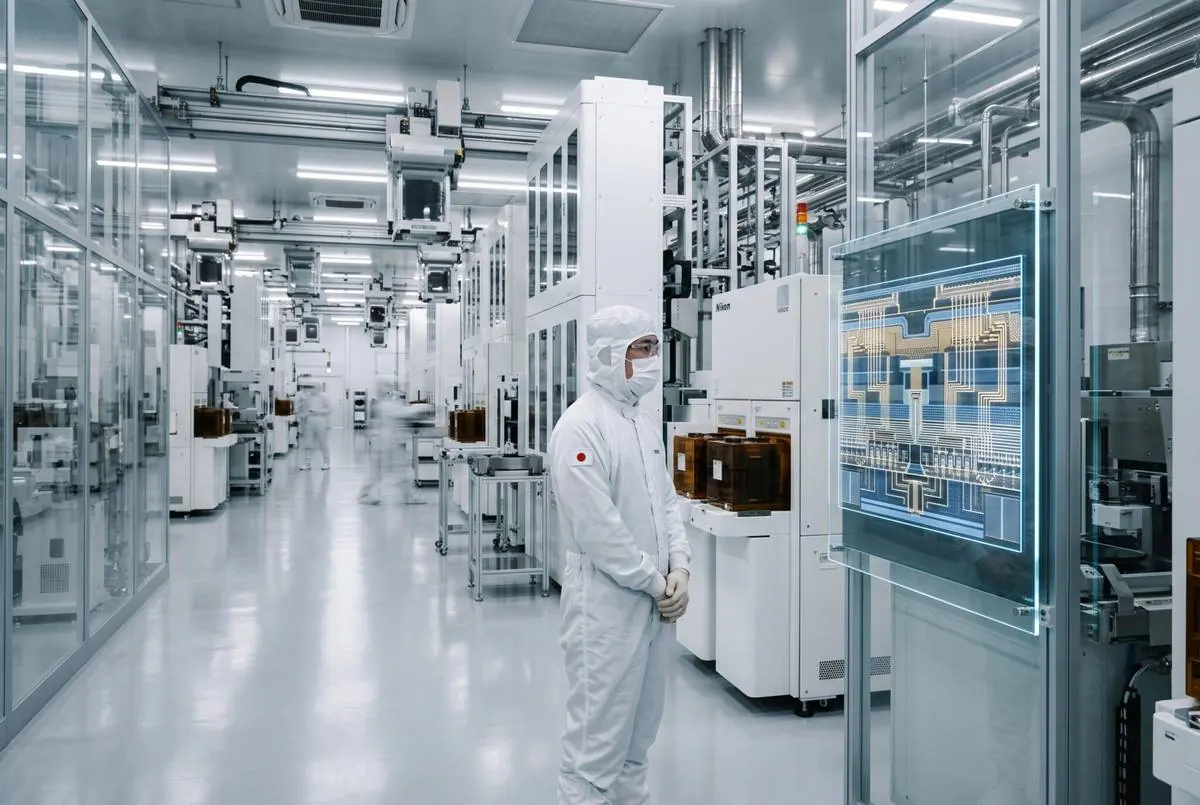
ASML's results are best read as a leading indicator for the entire semiconductor industry. Lithography orders are placed years before chips roll off the line, so customer willingness to commit to 2029 and 2030 deliveries is a bet that AI compute demand will keep compounding through the end of the decade. Chipmakers do not reserve EUV capacity for fun: each machine consumes an entire fab's worth of planning and capital.
The supply shortfall also reshapes the competitive picture among chipmakers. When machines are scarce, allocation favors the biggest and earliest buyers. The foundries that secured ASML slots years ago will have a structural advantage over rivals trying to build advanced capacity now, which helps explain the urgency: nobody wants to be the chipmaker still waiting for lithography tools in 2029.
There are caveats, as always with capital equipment. This industry has a long history of overordering followed by sharp corrections, and ASML's own guidance describes management expectations, not guaranteed customer orders. Export controls and geopolitical friction around advanced chip manufacturing remain live risks for the whole sector. But for now, the message from Veldhoven is unambiguous: the machines that make the AI era possible are themselves in short supply, and the shortage is getting bigger, not smaller.
0 Comments