
One of the most ambitious consolidation plays in aviation cleared an important regulatory checkpoint this month. Archer Aviation announced that the Hart-Scott-Rodino antitrust waiting period has expired for its planned acquisition of three Boeing subsidiaries: eVTOL developer Wisk Aero, airspace software company SkyGrid, and military drone maker Insitu. The expiry removes a key deal obstacle and moves Archer closer to its target of closing the acquisition before the end of 2026.
The announcement landed in a week of unusually busy trading in eVTOL stocks. Barclays raised Archer to Overweight and lifted its price target to $8 from $4.50, while Cathie Wood's ARK Investment Management bought 2.57 million shares of Archer in a single day and then added another 149,000 shares in a later session. Shares rose about 5 percent on the news flow on October 9.
Yet the fundamental state of electric flight has not changed: no American company holds a completed FAA type certificate for a passenger eVTOL. The finish line is certification, not consolidation.
What the Boeing deal actually buys
Archer announced the all-stock deal in August 2026. Under the terms filed with the SEC, Archer will issue Boeing Class A shares equal to 19.75 percent of Archer's Class A shares outstanding just before closing, along with two warrants exercisable between 12 and 48 months after closing. Boeing also agreed not to sell its shares for twelve months after the deal closes.
What Archer gets in return is three distinct businesses. Wisk Aero is an eVTOL developer that has built six generations of electric aircraft and completed more than 1,700 flight tests. SkyGrid makes software for managing automated airspace and coordinating aircraft traffic, the unglamorous infrastructure an air taxi network will need. Insitu builds uncrewed surveillance aircraft and already generates more than $200 million in annual revenue. Combined, the three businesses have nearly 2 million flight hours.
Insitu matters most in the near term. Archer booked just $5.0 million in revenue last quarter while spending $186.0 million on R&D alone. An operating business with $200 million in annual revenue gives Archer actual cash-generating operations while it burns toward certification. Archer also raised $430 million in equity after announcing the deal and holds roughly $1.56 billion in cash and short-term investments against minimal debt.
Boeing is not walking away. The companies signed a collaboration and technology-sharing agreement, and Boeing keeps access to Wisk's autonomous flight technology. The deal reads less like Boeing exiting advanced air mobility and more like Boeing handing execution risk to a faster-moving operator while keeping a seat at the table.
Where certification actually stands
Enjoying this story?
Get the five most important stories in tech, every morning. Free.
The acquisition will not matter if the underlying aircraft never gets certified, so it is worth stating the real scoreboard as of October 2026.
Joby Aviation remains the furthest along. Its S4 has flown more than 1,000 test flights, with over 850 piloted flights in 2025, and it entered the fifth and final stage of FAA type certification this summer. As of July 31, Joby had completed about 20 percent of its own work in that final stage, with the FAA formally accepting 10 percent. Joby still targets its first paying passengers before the end of 2026 with Delta Air Lines, which has invested up to $200 million and is building vertiport infrastructure at JFK and LAX. Joby holds around $2.5 billion in cash.
Archer's Midnight became the first eVTOL to close Phase 3 of the FAA's four-phase certification process in April, per the company's account. Phase 4 is harder: formal flight testing where Midnight must demonstrate compliance with airworthiness requirements, not just have its plan approved. Archer flies piloted VTOL and conventional sorties nearly daily out of Hawthorne Airport in Los Angeles. The gap investors keep flagging: as of June, Archer had still not publicly flown a piloted transition flight, the shift from vertical lift to wing-borne flight with a pilot aboard, generally seen as necessary before certification testing can close out.
Beta Technologies is running a more conservative third track. Its H500A electric engine was over 96 percent through compliance planning and 43 percent through implementation as of its second-quarter update. The CX300, a conventional takeoff-and-landing electric aircraft sharing roughly 80 percent of its systems with Beta's actual eVTOL, the Alia A250, is expected to reach FAA certification in late 2026 or early 2027, with the A250 following about a year later. Beta raised close to $1 billion in its IPO to fund the runway.
The real story in 2026 is not which company flies first. It is which company still has enough cash left to reach certification at all, since all three are burning hundreds of millions of dollars a year to get there.
Why timelines keep slipping
The eVTOL certification scoreboard, October 2026
Bar width = share of the final certification stage complete. Archer's 3-of-4-phases bar marks phase completion, not within-phase progress.
Readers of eVTOL coverage should treat milestone language with care. Several outlets reported earlier this year that Joby had completed FAA Stage 4, and at least one issued a formal correction in July after Joby's own filing showed Stage 4 work was only 15 percent complete on its side and 6 percent accepted by the FAA. Several real but smaller milestones had landed close together: first flight of a conforming test aircraft, a completed System Review audit, entry into the final test phase. None of those individually equals a completed stage.
The industry's graveyard makes the caution concrete. Lilium and Volocopter, two companies that also had flight-hour totals and airshow demonstrations, went insolvent chasing the same certificate Joby, Archer, and Beta are chasing now. "Later this year" has been the standard eVTOL timeline for close to a decade, and as of this writing, no US company holds an actual type certificate.
None of this means the technology is stuck. The flight-hour numbers are real, the federal government's eVTOL Integration Pilot Program is backing multiple operators, and Archer's plan for an interoperable eVTOL charging network across Texas, targeting up to 250 air taxi sites nationwide under that program, shows serious infrastructure planning rather than concept videos. The Midnight air taxi is also scheduled to fly publicly at the 2026 California International Air Show as part of Archer's "No Roads" demo tour. But infrastructure and demos are not certification, and the FAA says schedules depend on applicant performance, not a fixed calendar.
What to watch next
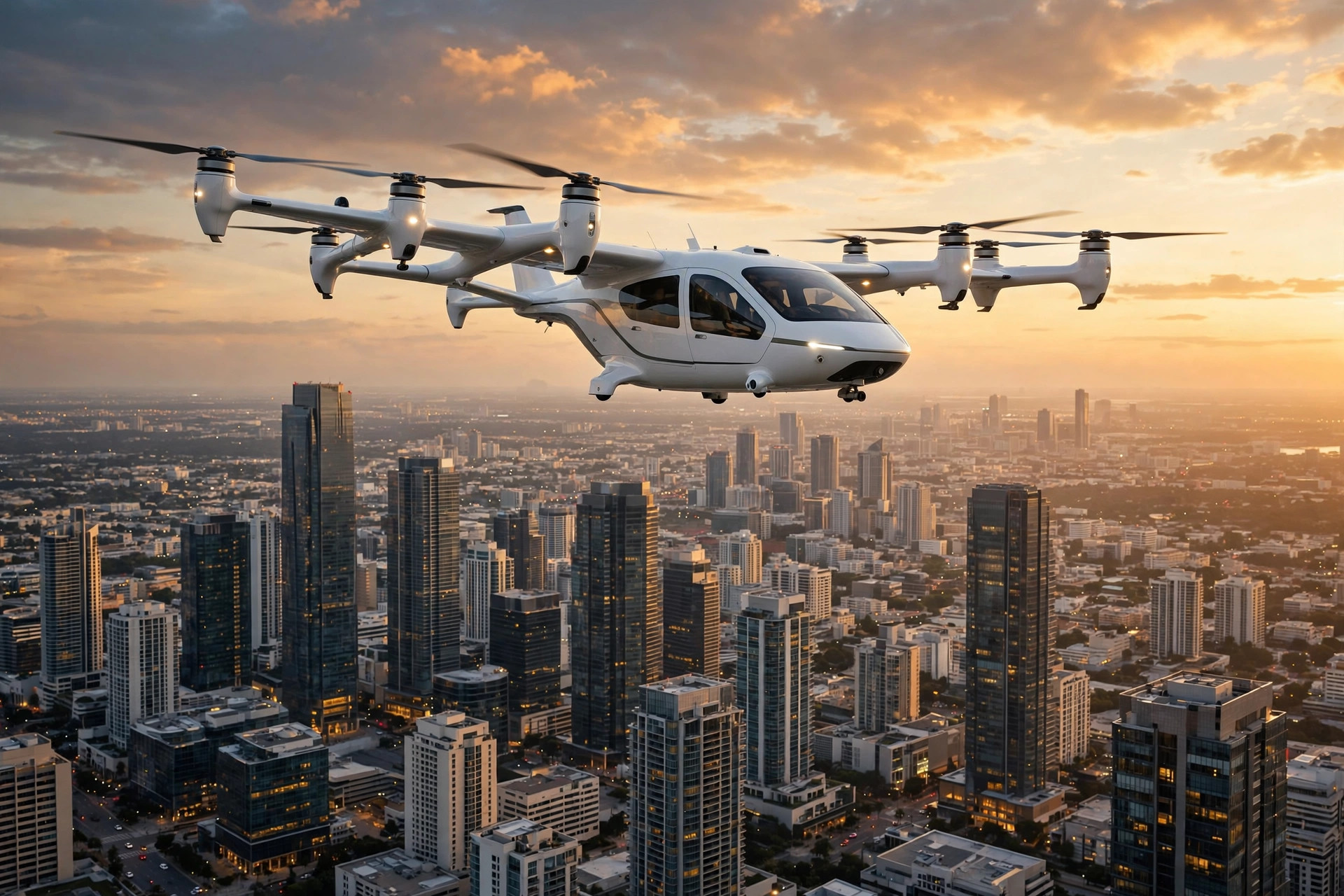
The rest of 2026 has a clear checklist. Joby continues for-credit Stage 5 testing, with a type certificate, if it comes, arriving late. Archer needs a public piloted transition flight before its Phase 4 work reads as complete, and the expected year-end close of the Boeing deal is the nearer corporate catalyst. The CX300 certification, targeted for late 2026 or early 2027, is the next marker on the conservative path.
Archer's defense business is the wildcard the market is pricing in. Beyond Insitu, Archer holds defense contracts worth up to $142 million through the Air Force AFWERX Agility Prime program to assess the Midnight aircraft, and it unveiled the Thunder autonomous hybrid VTOL platform with Anduril. Defense revenue is an alternative cash-flow source while certification grinds on, exactly what a pre-revenue company burning $186 million a quarter on R&D needs.
The honest version of the eVTOL story in October 2026: consolidation is accelerating, capital is flowing, the certification pipeline is genuinely moving, and the FAA has still not stamped a single passenger eVTOL. Everything before that stamp is progress. The stamp is the product.
0 Comments