
On Thursday evening, with the five o'clock bugle call still fading across Vandenberg Space Force Base, a SpaceX Falcon 9 rose from Space Launch Complex 4 East carrying a payload the United States military will not describe. Liftoff for USSF-481 came at 5:01 p.m. Pacific time (8:01 p.m. Eastern). A little over eight minutes later, the rocket's first stage touched down on a droneship in the Pacific Ocean, its 28th career flight, and the mission disappeared behind the standard veil of classification: no second-stage video, no fairing camera footage, no cargo manifest.
Classified launches are nothing new. What is new is how openly the military now flies them, with livestreamed countdowns, public launch windows, and reused boosters pulling routine commuter duty for the Pentagon. The secret is what rides inside the fairing. Almost everything else is now an open book.
What actually happened on Thursday
The details of the flight are a matter of public record. USSF-481 took a southerly trajectory out of Vandenberg, and navigation hazard warnings suggest the payload is headed for low Earth orbit at an inclination of roughly 80 degrees from the Equator. That near-polar path means the satellite, whatever it is, will sweep over nearly the entire planet as the Earth rotates beneath it.
The rocket flew with booster B1081, a veteran of 28 launches: four NASA missions (including Crew-7, the CRS-29 cargo run, and the PACE Earth-science mission), three prior national security flights, two Transporter rideshares, two European missions, and 16 Starlink deployments. It landed on the droneship Of Course I Still Love You, the vessel's 228th recovery and the 671st successful Falcon booster landing overall, according to Spaceflight Now's launch-day tally. The Department of the Air Force did not respond to questions about the payload before launch.
The TH-2 designation: a pattern emerges
Enjoying this story?
Get the five most important stories in tech, every morning. Free.
The most interesting clue is bureaucratic. In public notices, USSF-481 is also referenced as TH-2, and it is the second TH mission launched in as many months. The first, USSF-259 (TH-1), flew from Vandenberg on Sept. 16. According to Tech Times' reporting on public launch schedules, the missions are task orders under the Space Force's $1.6 billion Space-Based Sensing and Targeting (SBST) contract, which guarantees at least 18 classified sensing-payload launches from Vandenberg through 2027.
Independent launch trackers add another layer. Analysts at keeptrack.space note that the flight profile and stage drop zones line up with earlier Space Development Agency Transport Layer launches, which has led to speculation that the payload could be a batch of military satellites built on SpaceX's Starshield bus. That remains unconfirmed, and it should be treated as informed guesswork rather than fact: the Space Force confirms nothing about the cargo.
A classified rocket launch is the most public thing the military does with its secrets: the payload is hidden, but the trajectory, the hardware, and the cadence are all on the record.
Reuse is now the Pentagon's default
USSF-481 by the Numbers
The flight stats SpaceX and the Space Force actually publish.
Note: Payload details remain classified. Figures from Spaceflight Now, DVIDS, and SpaceX.
Five years ago, flying a national security payload on a booster that had already launched 27 times would have been a headline on its own. Now it barely registers. B1081's flight history reads like a tour of the modern space economy, crewed NASA missions, cargo resupply, European payloads, missile-warning experiments, and dozens of Starlink launches, and the Space Force keeps booking it.
That trust was earned, not granted. SpaceX's 671 booster recoveries form the largest empirical database of reusable-rocket hardware in history: turnaround times, refurbishment costs, thermal and structural loading on flown hardware. Every flight of B1081 is simultaneously a Pentagon mission and another data point proving that reuse economics scale, which is exactly the engineering case SpaceX needs for Starship's far larger ambitions.
Vandenberg's record year
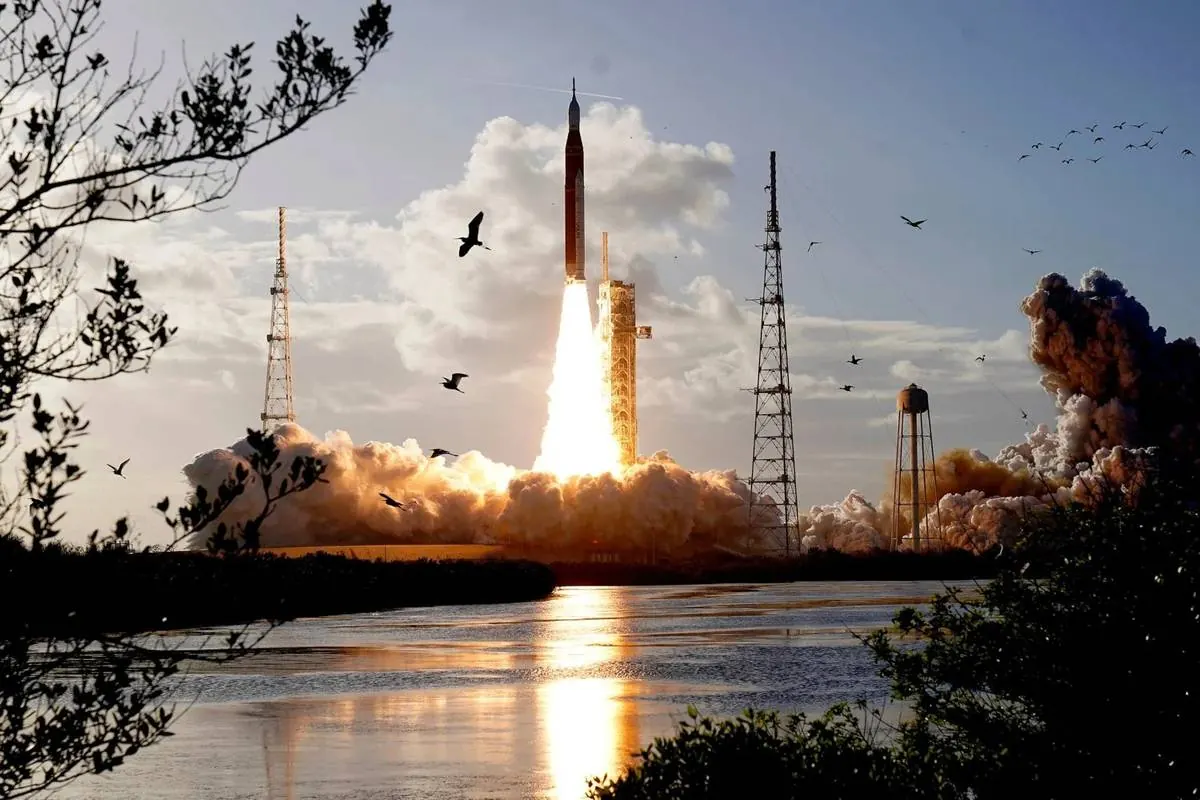
USSF-481 was the 70th launch supported from Vandenberg Space Force Base in 2026, per the installation's Space Launch Delta 30. The West Coast range has become the busiest military spaceport on the planet, serving polar and near-polar trajectories that are unreachable from Florida's Cape Canaveral without costly maneuvers.
SpaceX, meanwhile, is tracking toward roughly 114 Falcon 9 launches in 2026, which would surpass its own annual records. Classified national security missions are a growing share of that manifest, and contracts like SBST give the company a revenue floor that does not depend on the commercial Starlink schedule. For the Space Force, the appeal is symmetric: proven hardware, flown on a cadence no other launch provider can match, with the data to prove it.
Why this mission matters
The real story of USSF-481 is not a secret satellite, which will presumably do whatever secret satellites do. It is the normalization of a model that would have seemed impossible a decade ago: the most secretive missions in the American space program flying on hardware that launches twice a month, tracked by livestream, cheered by thousands of Californians hoping for a sunset jellyfish plume. The veil of classification is thinner than it looks, and what it covers is no longer the rocket science. It is only the cargo.
0 Comments