
Somewhere in the world's oceans drifts a cell that has pared life down to something close to its absolute minimum. (The oceans have been generous with surprises lately: a swimming sea cucumber is rewriting the ocean's carbon budget.) Scientists have now read its full genetic blueprint, and it is the smallest archaeal genome ever found: just 189 protein-coding genes packed into 238,000 base pairs of DNA. That is less than half the size of the smallest archaeal genome previously known, and it forces a fresh look at how little machinery a cell actually needs to be alive.
The microbe has been named Candidatus Sukunaarchaeum mirabile, or Sukunaarchaeum for short. The name honors Sukuna-biko-na, a small deity from Japanese folklore, and adds the Latin word for extraordinary. An international team including researchers at the University of Nottingham in Britain and the University of Tsukuba in Japan found the organism while sequencing DNA from individual marine plankton cells. The findings were published in the journal Current Biology.
What it kept, and what it threw away
The story of Sukunaarchaeum is really a story about subtraction. Most cells carry genes for hundreds of processes: sensing the environment, harvesting energy, building the molecules they need, repairing damage, moving, dividing. Sukunaarchaeum has thrown almost all of that away.
What remains is the replicative core: the genes needed to copy DNA and to turn genetic information into proteins. The cell still encodes its own ribosomes, the molecular machines that build proteins, which is one of the key features that makes it a cell rather than something else. It also keeps a few transport proteins, molecular doorways that presumably let it import supplies from its surroundings.
What it has lost is nearly everything related to making a living. Almost all the genes needed to produce nutrients and generate energy are gone. A cell that cannot feed itself must be fed, and the researchers believe Sukunaarchaeum depends entirely on a host organism for its resources.
One clue to that relationship hides in the genome itself. About a quarter of its genes code for unusually large membrane proteins whose functions are still unknown. Similarly large membrane proteins show up in some parasitic archaea, which raises the possibility that Sukunaarchaeum lives as a parasite inside or alongside another microbe. The catch is that nobody has actually seen it yet: the organism has been identified only from its DNA, and its host has not been found.
It is a cell that exists to do one thing: copy itself. Everything else, it borrows.
The shrinking minimum
Enjoying this story?
Get the five most important stories in tech, every morning. Free.
Biologists have spent decades trying to work out the smallest set of genes a cell can get by with. The most famous attempt is JCVI-syn3.0, a bacterium engineered in 2016 by the J. Craig Venter Institute, which runs on just 473 genes and 531,000 base pairs of DNA. It is the closest thing to a minimal free-living cell ever built.
Sukunaarchaeum undercuts those numbers by more than half: 189 genes, 238,000 base pairs. The difference is that JCVI-syn3.0 was designed to survive on its own in a rich laboratory broth, while Sukunaarchaeum outsources its entire metabolism to a host. The lesson is that the minimum genome is not a single number. It depends on context. The more completely a cell can offload its dependencies, the smaller it can become.
This raises an obvious question: at some point does a cell this stripped down stop being a cell and become something more like a virus? The researchers argue no. Viruses cannot replicate without hijacking a host cell's ribosomes and translation machinery. Sukunaarchaeum encodes its own ribosomes and carries out replication with its own proteins. That genetic independence is what keeps it on the cell side of the line, even though its metabolic dependence is as extreme as anything known.
A lineage hiding in plain sight
How Small Is 189 Genes?
Protein-coding gene counts from published genome annotations.
Note: Bar lengths illustrative; gene counts are published figures.
The discovery came from single-cell genomics: sequencing the DNA of individual plankton cells and finding, alongside the expected genomes, a tiny circular one that matched nothing known. When the team searched global environmental DNA databases, they found related sequences in marine samples from around the world, suggesting that Sukunaarchaeum belongs to a much larger group of organisms that has so far gone largely unnoticed.
Analyses place the microbe within the DPANN archaea, a loose collection of ultra-small archaeal lineages that are generally thought to live as symbionts clinging to the outside of larger microbes. Sukunaarchaeum appears to have branched off early, taking its own evolutionary journey toward extreme simplification.
What happens next is a search. The team plans to track down where the organism actually lives, identify its host, and work out how the two interact. Until someone observes it directly, key questions about its lifestyle remain educated guesses based on the genes it carries and the ones it has lost.
Why it matters beyond the ocean
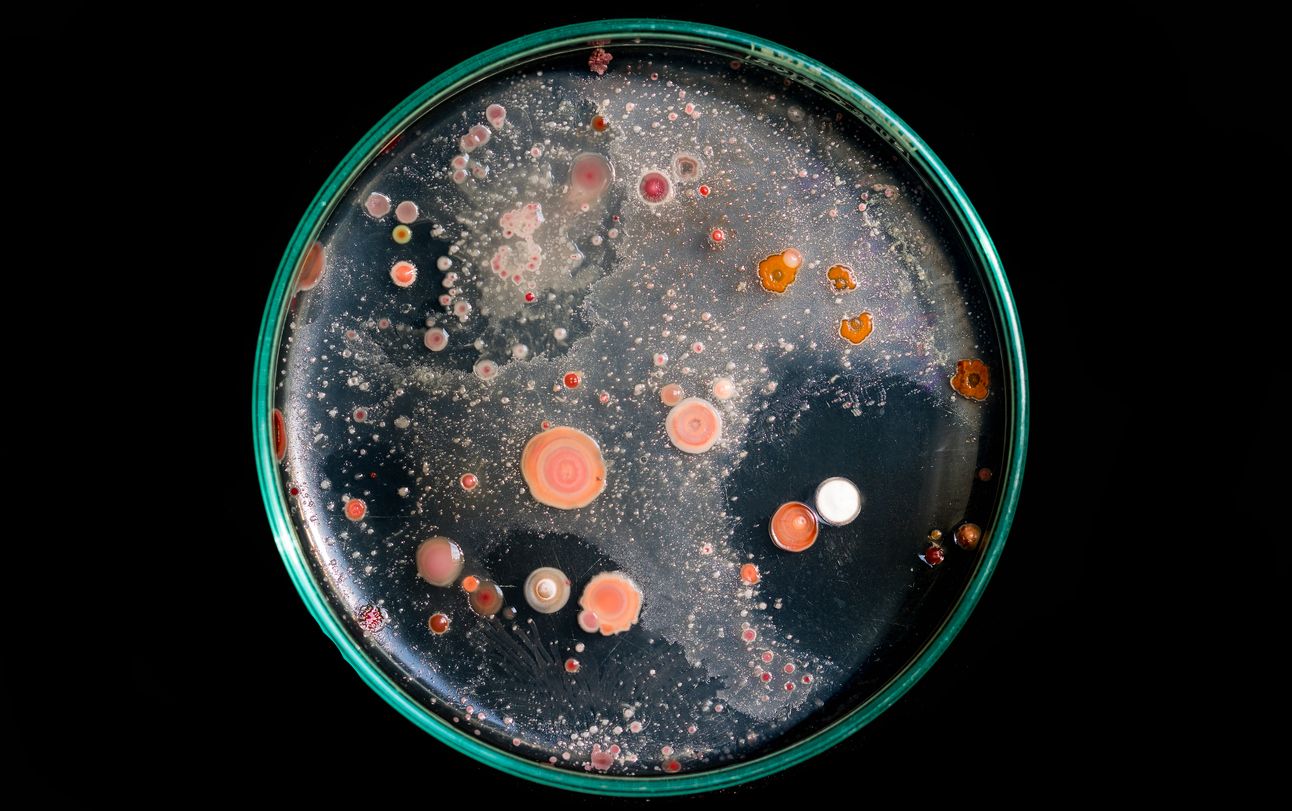
The discovery has implications that reach well past marine biology. If life can function with fewer than 200 genes, then our assumptions about the complexity life requires may be too conservative. That matters for astrobiology: the simpler life can be, the more places it might plausibly exist. It also sharpens the toolkit of synthetic biology, where engineers designing minimal genomes want to know which parts are truly indispensable.
It also revives one of biology's oldest questions: what counts as alive? Sukunaarchaeum satisfies the standard criteria for cellular life: it has genetic material, a boundary membrane, and the machinery to replicate itself autonomously. The one criterion it has abandoned is metabolic self-sufficiency. That trade-off suggests cells and viruses are not two cleanly separate categories but points on a continuum of dependence.
For now, the smallest known genome belongs to a microbe nobody has seen, living on a host nobody has identified, in oceans full of DNA we have barely begun to read. There may well be smaller ones still down there.
References
Reporting for this article drew on Phys.org's coverage of the Current Biology study (October 9, 2026), Tech Times' reporting on the smallest-ever archaeal genome (October 10, 2026), and the study itself: "A hidden archaeal lineage with an ultra-reduced genome retaining only its replicative core," Current Biology (2026), DOI 10.1016/j.cub.2026.09.042.
0 Comments