
A quantum computer that can only use one qubit at a time is not much of a computer. That sounds obvious, and yet for silicon spin qubits, one of the technologies with the best shot at a truly scalable machine, parallel operation has been a stubborn failure mode. Drive several qubits at once and their accuracy quietly degrades. This week, researchers at Japan's RIKEN institute showed why it happens, fixed it with a calibration trick that scales, and posted numbers that put silicon firmly back in the race toward fault-tolerant quantum computing.
The study, published in Nature Physics under the title "Simultaneous high-fidelity single-qubit gates in a spin qubit array," reports on a five-qubit silicon array driven through a single shared microwave line. Operated one by one, each qubit delivered primitive pi/2 gate fidelities well above 99.99 percent, with the best approaching 99.999 percent. With three qubits firing simultaneously, fidelity stayed above 99.99 percent. With all five going at once, it held at about 99.9 percent, a level the researchers describe as close to the practical requirements of fault-tolerant quantum computing. The experiments were carried out by first author Yi-Hsien Wu as part of PhD research, supervised by co-first author Leon Camenzind, a research scientist at RIKEN.
Why parallel operation kept breaking
Silicon spin qubits store information in the spin of a single electron trapped in a silicon quantum dot. They are manipulated with microwave pulses, and the shared control line that makes the architecture scalable is also what causes the trouble. When a microwave pulse addresses one qubit, its neighbors feel off-resonant fields that subtly shift their energy levels. This is the AC Stark shift, and it changes the phase of each neighbor's quantum state just enough to corrupt the operation. Drive several qubits at once and the shifts stack and interfere, which is why accuracy used to fall apart under parallel control.
This crosstalk was not news. What was new is pinning it down as the dominant source of error during simultaneous operation, rather than one nuisance among many. Once the team knew the enemy was phase shifts from off-resonant drive fields, the fix became a calibration problem instead of a device problem.
A calibration trick that scales
Enjoying this story?
Get the five most important stories in tech, every morning. Free.
The team's mitigation protocol is deliberately boring, and that is its strength. Instead of running a separate calibration for every possible combination of simultaneously driven qubits, a procedure whose cost explodes as arrays grow, the researchers calibrate only pairs of qubits. Those pairwise phase calibrations are enough to compensate for the unwanted shifts, and the method scales because the number of pairs grows far more gently than the number of combinations. The paper describes it as a protocol based solely on pairwise phase calibrations.
To be precise about what was measured: the gates in question are single-qubit primitive pi/2 gates, the basic building blocks of quantum operations. Two-qubit entangling gates, which are harder and which fault tolerance also demands, were not part of this demonstration. That is a real limit, and the researchers do not pretend otherwise.
The numbers, and the one that still lags
Gate fidelity under parallel operation
Primitive pi/2 single-qubit gate fidelities measured by the RIKEN team
Note: For illustrative purposes only.
The headline figures: above 99.99 percent fidelity for each qubit individually, preserved above 99.99 percent when up to three qubits run at once, and about 99.9 percent for all five in parallel. The individual numbers surpass previously reported fidelities in silicon spin qubits, according to the paper.
The remaining shortfall has a known cause too. Pushing five qubits through one microwave line requires more drive power, and that extra power introduces decoherence, a genuine loss of quantum coherence rather than a mere phase shift. The team attributes the dip from 99.99 to 99.9 percent to this drive-induced decoherence and says it can be mitigated with improvements at the device level. It is an honest accounting: the calibration fix handled the phase errors, but brute-force power is a separate bill to pay.
Five qubits firing at once, each still landing within a hair's breadth of perfect: that is the difference between a laboratory curiosity and a machine that can actually be built.
Why silicon still matters
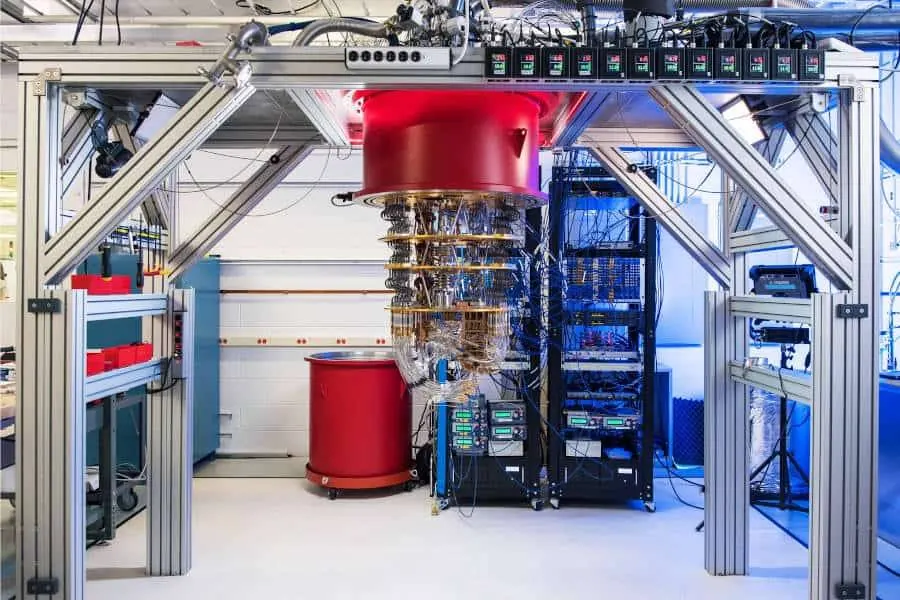
The reason anyone cares about silicon spin qubits is manufacturing. They are built with the same semiconductor processes used for ordinary computer chips, which means a path to millions of qubits could, in principle, run through existing chip factories. Superconducting and trapped-ion machines have posted more spectacular results, but they do not come with a fabrication ecosystem like the one silicon does. The qubits are tiny, the control lines can be shared, and now the sharing demonstrably works.
Seigo Tarucha, who leads a silicon quantum computing project under Japan's Moonshot Goal 6, framed the long game plainly: the goal is a fault-tolerant quantum computer built on silicon spin qubits, and reliable parallel control is an essential step. The collaboration behind this result spans RIKEN, National Taiwan University, ETH Zurich, and QuTech at Delft University of Technology, a reminder that silicon quantum computing is a global, multi-lab effort rather than a single-company race.
None of this means a useful silicon quantum computer is imminent. Five qubits is a long way from the thousands needed for error-corrected logical qubits, and single-qubit gates are only part of the story. But one of silicon's most cited weaknesses just got a credible answer, and the answer fits on a control line that already exists. For a technology whose whole pitch is practicality, that is exactly the kind of progress it needed.
0 Comments