
At some point on the evening of October 2, 2026, a segment of the C2C submarine cable system linking the Philippines to Singapore went dark. A second segment, running toward Hong Kong, was affected in the same window. There was no alarm most internet users could hear. What people noticed instead was a kind of sluggishness: overseas websites loading slowly, video buffering, intermittent drops, especially for anything hosted outside the country.
The numbers were blunt. PLDT, one of the Philippines' largest carriers, confirmed the cut removed roughly 300 gigabits per second of international capacity from its network. The Department of Information and Communications Technology opened an investigation into the cause, and no official explanation has been published. Within days, the Philippine-Singapore segment was restored. InfiniVAN, a Japanese-Filipino carrier, issued an advisory on October 3 at 3:11 p.m. confirming the link was fully back and being monitored for stability. PLDT declared services fully normalized nationwide on October 4.
What happened in between is a quieter story, and arguably the more interesting one. The internet did not go down for the Philippines. It bent, shifted its weight, and kept walking. This is the story of how it does that.
The internet is a map of agreements, not wires
When people imagine the internet, they picture one thing: a cloud, a cable, a glowing line across an ocean. In reality, the internet is tens of thousands of independent networks, called autonomous systems, stitched together by agreements to carry each other's traffic. Your home connection, your phone carrier, a university network, a cloud provider: each is its own network, and the glue between them is a protocol called BGP, the Border Gateway Protocol.
BGP is, at its heart, a gossip protocol. Every network tells its neighbors which destinations it can reach and how far away they are. When a path dies, the news spreads: routers update their tables, withdrawals propagate, and traffic flows around the damage the way water flows around a rock. Nobody needs a central command. The system heals by design, not by emergency response.
That is what happened in the Philippines on October 2. The moment the C2C segments failed, carriers stopped announcing routes through the dead paths and shifted traffic onto other cables. Globe, PLDT, and Converge all rerouted international traffic through alternative submarine systems. Converge leaned on two newer assets it had invested in: the Bifrost cable, a 20,000-kilometer trans-Pacific system linking the Philippines with Singapore, Indonesia, Guam, and the United States with a design capacity of 240 terabits per second, and SEA-H2X, a 6,000-kilometer system connecting Hong Kong, Lingshui in Hainan, the Philippines, Thailand, and Singapore at more than 200 terabits per second. Converge's chief executive said the newer cables limited disruption for its customers to "none to minimal."
Why rerouting feels like a slowdown
Enjoying this story?
Get the five most important stories in tech, every morning. Free.
If the internet simply routed around the damage, why did anyone notice? Because backup capacity is not free capacity. The backup routes were longer, or they were shared with more users, or both. Network monitoring platform CableStatus measured latency on the Philippines-to-Singapore route at roughly 177 milliseconds during the disruption, against a recent baseline of about 53 milliseconds, based on readings from 28 independent RIPE Atlas anchors. Packets were still getting there. They were just taking a longer road, and sharing it with everyone else.
The UP Diliman Network Helpdesk, which spotted the outage early, warned of increased latency and intermittent performance, particularly for overseas-hosted sites. That pattern is the signature of a rerouting event: domestic traffic is unaffected, and the pain concentrates on international destinations. Your email to a local address flies. Your video call to a server in Singapore stutters.
This also explains why the carriers kept saying two things at once: services are being rerouted and restored, and repairs will take several weeks. Rerouting is a software act that takes minutes to hours. Repairing a severed cable on the ocean floor is a shipping act: a cable repair vessel must sail to the fault location, retrieve the cable from the seabed, splice in a replacement section, and re-lay it. Globe said repairs to the damaged fiber could take weeks even as normal service resumed.
Rerouting is a software act that takes hours. Repairing a severed cable on the ocean floor is a shipping act that takes weeks. The internet survives the gap between the two by design.
The mesh gets stronger with each new cable
The October 2 Cut in Numbers
What happened, what replaced it, and what the backup cables can carry.
Note: 300 Gbps loss per PLDT; latency measured by CableStatus from 28 RIPE Atlas anchors. Restored Oct 3 (PH-Singapore segment, InfiniVAN advisory); full carrier service normalization reported Oct 4.
There is a broader lesson in why the Philippines weathered this at all. Every new submarine cable that lands in a country does more than add raw capacity. It adds an alternate path, which means every future failure has one more way to be routed around. Converge's claim after the outage, that its international network was the youngest and most resilient among Philippine operators, was essentially a claim about having more paths, not just more bandwidth.
This is the compounding logic of internet infrastructure. The first cable to a country is a lifeline. The fifth is insurance. The tenth starts to make individual cable failures a background event, noticed as a slow evening rather than a national emergency. The Philippine experience in October shows a country partway along that curve: the disruption was real and measurable, and no critical infrastructure was significantly affected.
None of this means the system is invulnerable. Chokepoints still exist where many cables share narrow geography, and a coordinated or simultaneous failure across paths is a different class of problem. The investigation into what severed the C2C segments has not produced a public answer, and scenarios from anchor drags to deliberate sabotage remain on the table. Resilience is real, but it is relative, not absolute.
What your packets did that night
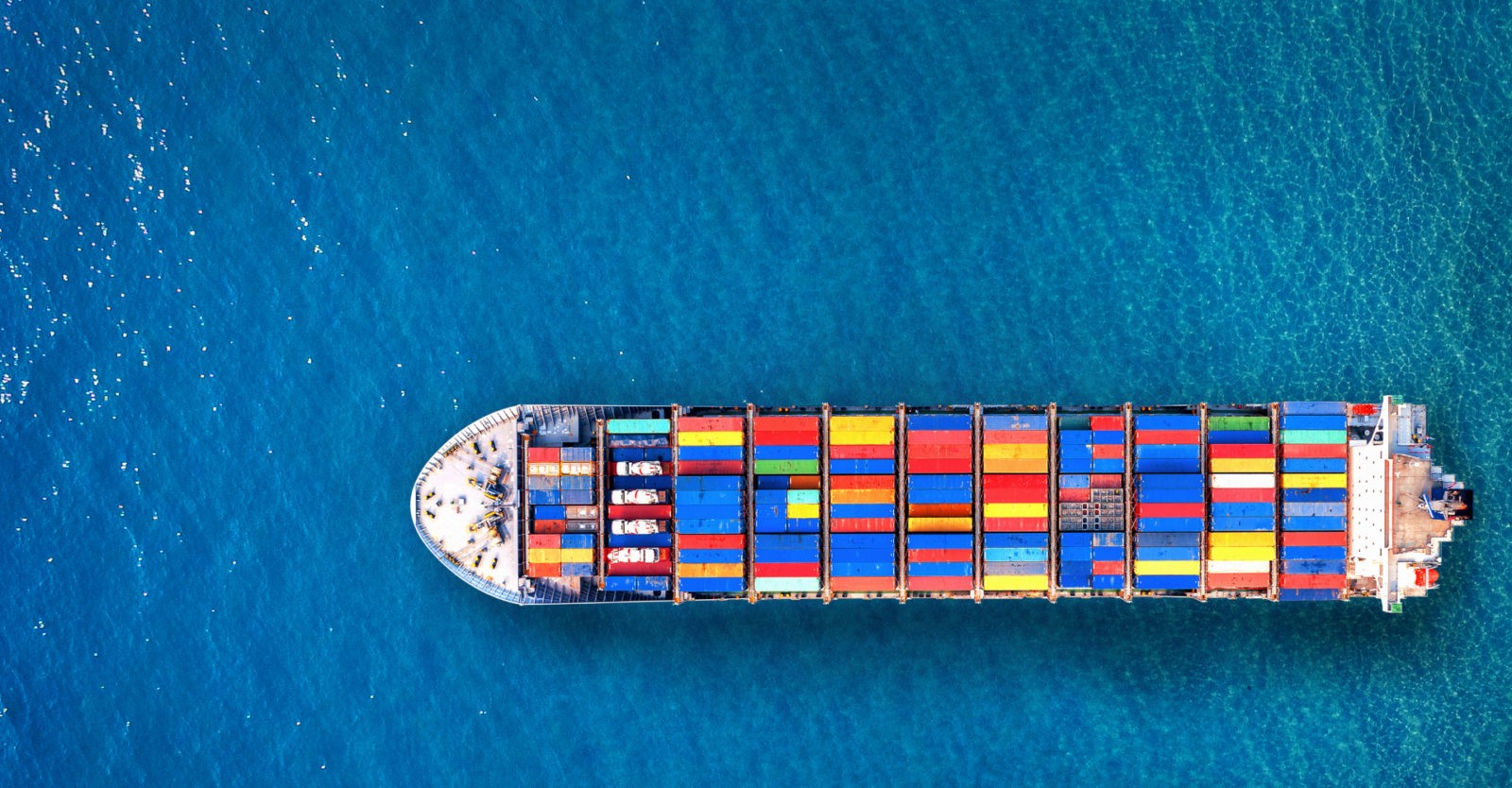
The next time an overseas website loads slowly for an hour, consider what is actually happening under the hood. Somewhere, a router noticed a path had gone quiet, withdrew it from its announcements, and handed your traffic to a longer route. A carrier engineer reweighed traffic across links, probably without touching a physical device. Undersea, a ship may have begun sailing toward a fault.
None of that required you to do anything, and that is the point. The internet's defining trait is not speed. It is the ability to lose a piece of itself and keep going, rerouting around the damage while the repairs sail out to meet it. On October 2, 300 gigabits vanished from the floor of the sea. Almost nobody lost their connection. That gap between what broke and what you noticed is the whole story of how the internet works.
0 Comments