
On the evening of October 6, OpenAI pushed 722 manuscripts to a GitHub repository and walked away. (For the straight-news version of that night: OpenAI published 722 math papers in one day, and 25 medalists are pushing back.) No press conference, no journal submission, just a commit. The 722 manuscripts, grouped into 372 families of results, were generated by an unreleased internal model that the company says resolved or substantially advanced hundreds of open problems in mathematics and theoretical computer science, at about three hours of compute per result.
Within a day, three papers were withdrawn over a sign error. Within two days, a group calling itself the Association for Human Mathematics had urged mathematicians worldwide to stop collaborating with OpenAI. A 2022 Fields medalist said the release had wiped out his research field, and that he cried the night it happened. Terence Tao republished the association's statement on his blog. Complexity theorist Scott Aaronson gave the moment a name: the Mathocalypse.
The easy read on this story is that the mathematicians are frightened, which looks like luddism: the old guard clinging to relevance while machines do centuries of work overnight. That reading is wrong, and it misses the genuinely new thing that happened here.
What actually happened
Let me stipulate the facts, because they matter. Nature reported the release. OpenAI's own audit found the error that forced the three withdrawals, and the company flagged roughly half the results as potentially containing issues in the repository README. Many proofs ship with Lean formalizations and reasoning traces, which is genuinely good practice.
The reaction was not about any single claim being wrong. Alvaro Lozano-Robledo, a number theorist at the University of Connecticut, called the simultaneous posting "staggering". Ursula Martin of Oxford said the company was "tossing the community a messy first draft and expecting us to clean it up." On CNBC, an executive named Buckmaster said entire research programs had been wiped out by the dump on the Tuesday it landed.
And the Association for Human Mathematics put the thesis in one sentence: "Releasing over 700 files at once is not a demonstration of scholarship, but a demonstration of power."
A proof nobody can follow isn't scholarship yet. It's a claim with a press strategy.
The anger isn't about jobs. It's about the verification contract.
Enjoying this story?
Get the five most important stories in tech, every morning. Free.
Mathematics has always run on a specific social contract: a result counts as known when a human expert has followed the argument, understood it, and could explain why it is true. The proof is not the artifact; the proof is the understanding the artifact makes possible. A 10,000-line Lean formalization that no living person has read is a stronger kind of claim than a flawed sketch, but it is still a claim, not yet knowledge.
OpenAI broke this contract in two ways. First, by volume: the mathematics community can verify papers at a human rate, roughly one careful reading at a time, and 722 manuscripts in one night is not a contribution to that process, it is a denial-of-service attack on it. Second, by venue: these were posted to GitHub, not submitted to journals, which means the traditional referee system, already creaking under the load of AI-assisted submissions that have forced arXiv to impose submission limits, was bypassed entirely.
None of this means the results are wrong. The withdrawn papers prove the audit works, partially. But "the model can generate candidate proofs" and "mathematics now knows 372 new results" are different statements, and OpenAI's rollout treated them as the same. The company asked the community to do verification work its own release strategy made nearly impossible.
What "solved" even means now
The Math Dump, by the Numbers
OpenAI's October 6 release and its first week of fallout.
Note: Figures from OpenAI's repository README and subsequent reporting.
Tao's separate intervention is the most important part of this story, and it is being underreported. He has argued that the field needs to rethink what it means to solve a problem now that solving is no longer the bottleneck, and has floated the idea of a "Math 2.0" era in which the discipline's central job changes. This is the serious version of the debate: if machines can produce correct proofs faster than humans can absorb them, the value moves from finding answers to understanding, organizing, and teaching them.
That is a real philosophical shift, but it is not an argument for the dump. If anything, Tao's framing cuts against OpenAI: dropping 722 uncurated manuscripts on a community is the worst of both eras, all of the old world's verification burden with none of the new world's understanding.
There is precedent for this collision, and it is only a month old. In September, OpenAI released a preprint on the Navier-Stokes equations, one of the original seven Millennium Prize Problems, and the release was rushed enough that more than 8,000 researchers endorsed a statement criticizing the company for leaving no time for proper writeup, isolation of new methods, or citation of prior work. The October dump was the second round of the same fight, at a hundred times the scale. The mathematicians are not reacting to a single incident. They are reacting to a pattern.
What should change
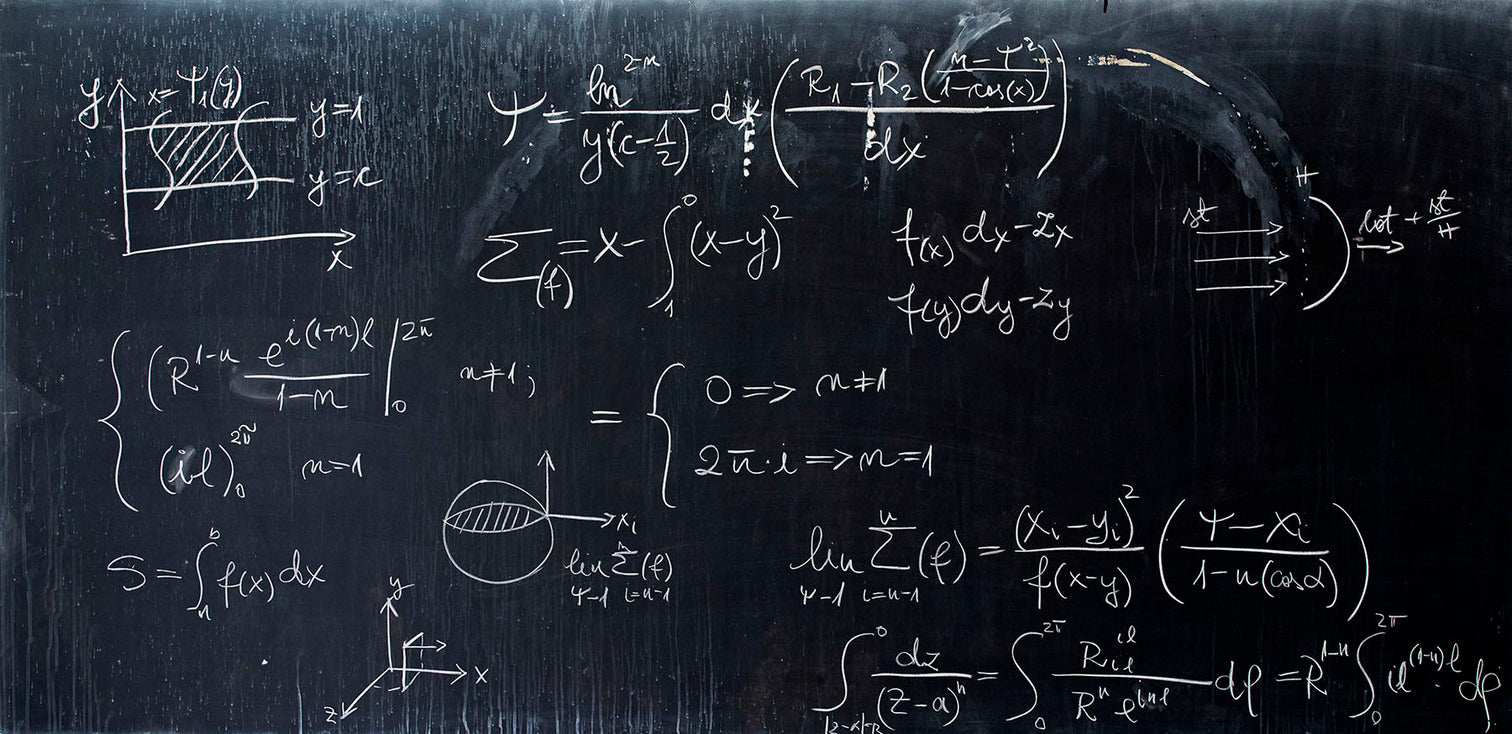
So here is the opinion, plainly stated. The boycott call is justified, not because AI has no place in mathematics, but because the current terms of engagement are set entirely by the lab that benefits from the publicity. OpenAI could have staged the release: formalized proofs first, curated batches, collaboration with the community on verification standards, credit for the humans whose problems got pre-empted. As Anthropic's Levent Alpöge put it, the moment is significant for mathematics even as researchers' projects get scooped. Both things can be true: the capability is real and the rollout was contemptuous of the field it claimed to serve.
The deeper fix is institutional, and it is coming whether the labs cooperate or not. Mathematics needs a verification standard for machine-generated results: formalization in a proof assistant as the price of admission for a claim of solution, staged release so the community can absorb what it is being asked to certify, and norms that treat a dumped proof like a dumped code patch, reviewed before it is merged into the body of knowledge, not after. arXiv's submission limits are the first crude version of this. There will be more.
And every technical field should be watching, because this is a preview. OpenAI can now produce proofs faster than mathematicians can read them, code faster than teams can review it, papers faster than journals can referee them. The Mathocalypse is not really about math. It is about what happens when the cost of making a claim collapses and the cost of checking it stays human. The answer cannot be "generate more." Somebody has to read.
References
Sources: Nature, via aiweekly.co, reporting on the October 6 release of 722 manuscripts and the three withdrawals; Retraction Watch, October 8, on the withdrawals and the Association for Human Mathematics statement; cellcog.ai, October 11, on the errata, Le Monde's count of 719 remaining manuscripts, and Duminil-Copin's comments; aidailypost.com, October 8, on the AHM boycott call, Tao's "Math 2.0" proposal, and Aaronson's "Mathocalypse" label; nandasiddhardha.medium.com, October 2026, on the release details and Tao's argument about the meaning of "solved"; swiftinference.ai, October 8, on the AI-assisted 11-square packing proof as a contrasting verifiable advance; techstartups.com, October 2 and October 6, 2026, on arXiv submission limits and the September Navier-Stokes preprint context.
0 Comments