
Japan’s Omron announced Tuesday that it will acquire OnLogic, an American maker of industrial computers, along with its parent company Interlogic, for $675 million on an enterprise value basis. The all-cash deal, announced in Tokyo on October 13, is the centerpiece of Omron’s effort to remake its industrial automation business around what the company calls physical AI: artificial intelligence that senses and acts in the physical world, rather than answering questions on a screen.
The acquisition agreement was signed on October 10, Japan time. Omron plans to use a reverse triangular merger, a structure in which a US subsidiary of Omron is absorbed into Interlogic so that all shares can be acquired in a single transaction. Closing is expected around January 2027, subject to regulatory approvals and other customary conditions. Omron said the purchase price will be funded primarily from cash on hand.
The deal, on paper
At $675 million, the deal is a midsize bet for a company of Omron’s scale, and it is structured for a clean handoff. Interlogic will become a wholly owned subsidiary of Omron, and OnLogic along with the group’s other companies will become indirect subsidiaries. The sellers are OnLogic’s founders, Roeland Groeneveld and Lisa Groeneveld, together with 167 employee shareholders, which means the transaction concentrates ownership that had been spread across the people who built the company.
OnLogic is keeping its name, its management, and its way of doing business. The company will continue to operate as an independent business, retaining its build-to-order direct sales model and the OnLogic brand, and chief executive Sean Larkin is expected to stay on and keep leading operations. Omron said the acquisition’s impact on its consolidated results for the fiscal year ending March 2027 will be minimal, a signal that the deal is about strategy, not this year’s numbers. Investors took it in stride: Omron shares were roughly flat in Tokyo trading on the day of the announcement, even as the benchmark Nikkei 225 fell about 2.2 percent.
The strategy: physical AI moves to the factory floor
Enjoying this story?
Get the five most important stories in tech, every morning. Free.
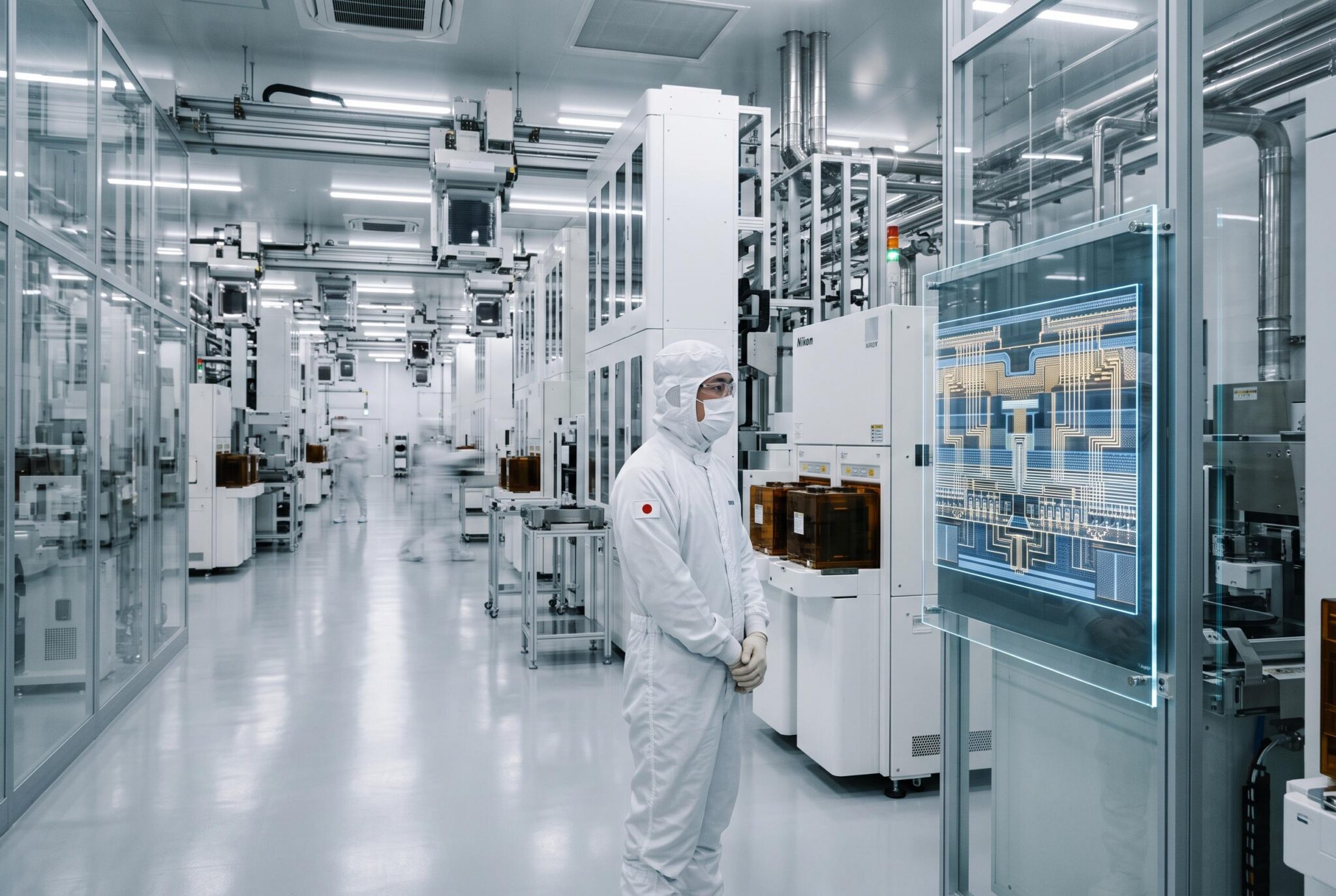
Omron’s stated ambition is to evolve its control equipment business from a traditional factory automation equipment manufacturer into what it calls a “GEMBA DX x Physical AI company,” using data collected from field devices. The logic is straightforward. Omron already makes the sensors and precision control systems that run production lines. What it lacks is the computing layer where AI models can run at the edge, close to the machines, turning streams of sensor data into decisions in real time. OnLogic makes exactly that layer: highly configurable, rugged industrial PCs engineered to survive harsh environments and sold without intermediaries.
By combining OnLogic’s computers with its own high-precision control technology, Omron wants to build an integrated platform that handles everything from data collection to analysis to control, all on the factory floor. The two companies are also exploring joint development of solutions that pair Omron’s sensing and robotics equipment with OnLogic’s machines. This is not Omron’s first move in this direction. In May 2026, its US subsidiary Omron Robotics signed a partnership with Italian automation company Comau to develop automation services for industrial manufacturing, part of the same restructuring centered on physical AI.
The prize is not the computer. It is where the computer sits: on the factory floor, between the sensor and the actuator, where AI can finally touch the physical world.
The math: what $675 million actually buys
The Omron-OnLogic Deal, by the Numbers
Deal terms and Interlogic group financials as reported October 13, 2026.
Note: EBITDA is earnings before interest, taxes, depreciation, and amortization. Bars scaled linearly to the highest value.
The Interlogic group reported consolidated revenue of $154.2 million and EBITDA of $22.6 million for the fiscal year ended December 2025. A year earlier, the figures were $122.3 million in revenue and $11.6 million in EBITDA. That means revenue grew about 26 percent year over year while EBITDA nearly doubled, pushing the EBITDA margin from roughly 9.5 percent to about 14.7 percent. At $675 million, Omron is paying approximately 4.4 times trailing revenue for a growing, profitable business, which is a full but not extravagant multiple for industrial technology assets that investors have started to price like AI infrastructure.
For that money, Omron also gets distribution. More than 90 percent of OnLogic’s revenue comes from the Americas and Europe, markets where Omron wants a bigger footprint, and the company says it will use that customer base to cross-sell both companies’ products. OnLogic’s footprint is substantial for a niche hardware maker: 301 employees as of March 2026, seven locations including two manufacturing sites, and a history that stretches back to its 2003 founding as Logic Supply. The company counts more than 70,000 customers served over its history, and it built a $60 million, 140,000-square-foot headquarters in South Burlington, Vermont, that opened in 2023 after years of averaging about 30 percent annual growth.
The risks, and what the deal signals
The near-term risks are mostly procedural. The deal needs regulatory approvals, the reverse triangular merger has to close on schedule, and Omron will have to deliver on the perennial promise that an acquired company can stay independent inside a conglomerate. The founders and 167 employee shareholders cashing out also removes the ownership structure that built the company, so retaining talent, including the leadership team Omron says will stay, will matter more than the press release suggests.
The read-through is bigger than the transaction. Physical AI has become the industry’s shorthand for the next phase of artificial intelligence, and the money is moving accordingly: the valuable assets are no longer just the models, but the rugged computing, sensing, and control layers that let AI act in the physical world. Omron’s willingness to pay cash from its balance sheet, with no financing contingency, says the company sees this window as time-sensitive. Whether the multiple was right will be judged years from now, but the direction of travel is no longer in question. The AI buildout is leaving the data center and heading for the factory.
Sources: Reuters, “Japan’s Omron to buy US industrial PC firm Onlogic for $675 million in physical AI push,” October 13, 2026. BigGo Finance, “Omron to Acquire U.S. Industrial PC Maker OnLogic for $675 Million to Bolster Physical AI,” October 13, 2026.
0 Comments