
When Japan's Ministry of Internal Affairs and Communications (MIC) approved a new round of subsidies on October 14, the announcement read like routine telecom bureaucracy. Four companies, SoftBank, IPS Corporation, IPS Pro, and Shikoku Electric Power, would get government money to build cable landing stations and undersea branch lines in places far from Japan's usual internet hubs. The budget line is big: 40 billion yen, about 253 million dollars, from the fiscal 2025 supplementary budget.
But strip away the paperwork and this is one of the most important internet infrastructure stories of the year. The internet's most vulnerable real estate isn't a data center or a cloud region. It's a handful of squat concrete buildings where fiber-optic cables rise out of the ocean. And Japan is about to stop putting all of its traffic through two of them.
The choke point you never see
Every trans-Pacific data flow has to come ashore somewhere. Submarine cables, the fiber-optic lines that carry the overwhelming majority of intercontinental internet traffic, can't just end at the beach. They terminate in a cable landing station: a hardened building where undersea fiber meets terrestrial networks, gets amplified and routed, then fans out to data centers and ISPs. Cut a cable offshore and traffic reroutes. Destroy the landing station, and the cable itself goes dark.
Japan has a concentration problem. More than 80 percent of the country's data centers and nearly all of its major international cable landing stations sit in just two areas: Chiba Prefecture, serving the Tokyo region in the east, and Mie Prefecture, serving the Osaka region in the west. It's not a conspiracy; it's physics and economics. Operators want the shortest route to minimize latency, and the seafloor near Japan is littered with undersea volcanoes and fault lines, which funnels cables through the same narrow corridors to the same small set of viable beaches.
The result is that two prefectures are effectively the front door of the Japanese internet. An earthquake, a tsunami, or a deliberate attack near either one doesn't just slow things down; it risks severing Japan's main digital link to the world in a single blow. A Keio University professor who advised the MIC's cable protection study group has argued that growing concentration means growing vulnerability, and that the answer is to diversify both routes and landing points against everything from natural disasters to sabotage.
The internet's most important real estate is a handful of squat concrete buildings where cables come ashore. Japan is about to stop putting all of its eggs in two of them.
Three new front doors
Enjoying this story?
Get the five most important stories in tech, every morning. Free.
The subsidy package builds three new landing corridors across northern, central, and western Japan. In Tomakomai City, on the northern island of Hokkaido, SoftBank will construct a cable landing station to serve its AI data center campus there. Hokkaido offers two things AI infrastructure loves: renewable energy and cold air, which means cheaper power and cheaper cooling for the servers.
On the western side of the country, the changes are surgical. IPS Corporation will lay an offshore branch line, essentially a spur off a trunk cable, with a branching unit off the coast of Wakayama City. Branching units are the subsea equivalent of highway interchanges: they let one cable split, so the international Candle Subsea Cable System can tap into Japan's southern Kansai coastline without a dedicated new trans-Pacific build. A sister company, IPS Pro, will build a carrier-neutral, open-access landing station in Wakayama City itself, creating an alternative route into Osaka that bypasses the Mie landing zone entirely. Carrier-neutral means any network operator can plug in, not just the cable's owners, which is how landing stations become competitive marketplaces rather than private on-ramps.
The third corridor is the most symbolic. Shikoku Electric Power will develop a landing station, an offshore branch line, and a branching unit around Anan City in Tokushima Prefecture, forming what the project calls the Shikoku Digital Gateway. When complete, it will mark the first time international fiber pairs have ever landed on the island of Shikoku.
The ships nobody thinks about
Japan's Cable Resilience Budget
Government allocations for subsea cable decentralization, in yen.
Note: FY2027 vessel funding is a budget request, not yet approved. Figures from Japan's Ministry of Internal Affairs and Communications via Light Reading, October 2026.
Landing stations are only half the story. Somebody has to lay the cables and fix them when they break, and Japan is short on the vessels that do the work. The country has just five cable-laying ships of 5,000 tons or more: three owned by an NTT Group company, two by a KDDI Group subsidiary. The ships typically last about 40 years, and some of the fleet is already past 30 and deteriorating.
That matters more than it sounds. When cables break, and they do constantly (dragged anchors, fishing gear, earthquakes), repair depends on a tiny global fleet of specialized ships. Japan's NEC builds about 20 percent of the world's undersea cables but owns no cable-laying ship of its own, leasing from overseas operators instead. The MIC has now asked for 100 billion yen, about 631 million dollars, in the fiscal 2027 budget to subsidize domestic cable ship construction and upgrades, with the government covering up to half of procurement costs. New state-of-the-art cable ships run 40 to 50 billion yen apiece; the plan aims to support three to five of them. A country that builds the world's cables but can't lay or repair them on its own has found a gap it intends to close.
From utility to national security
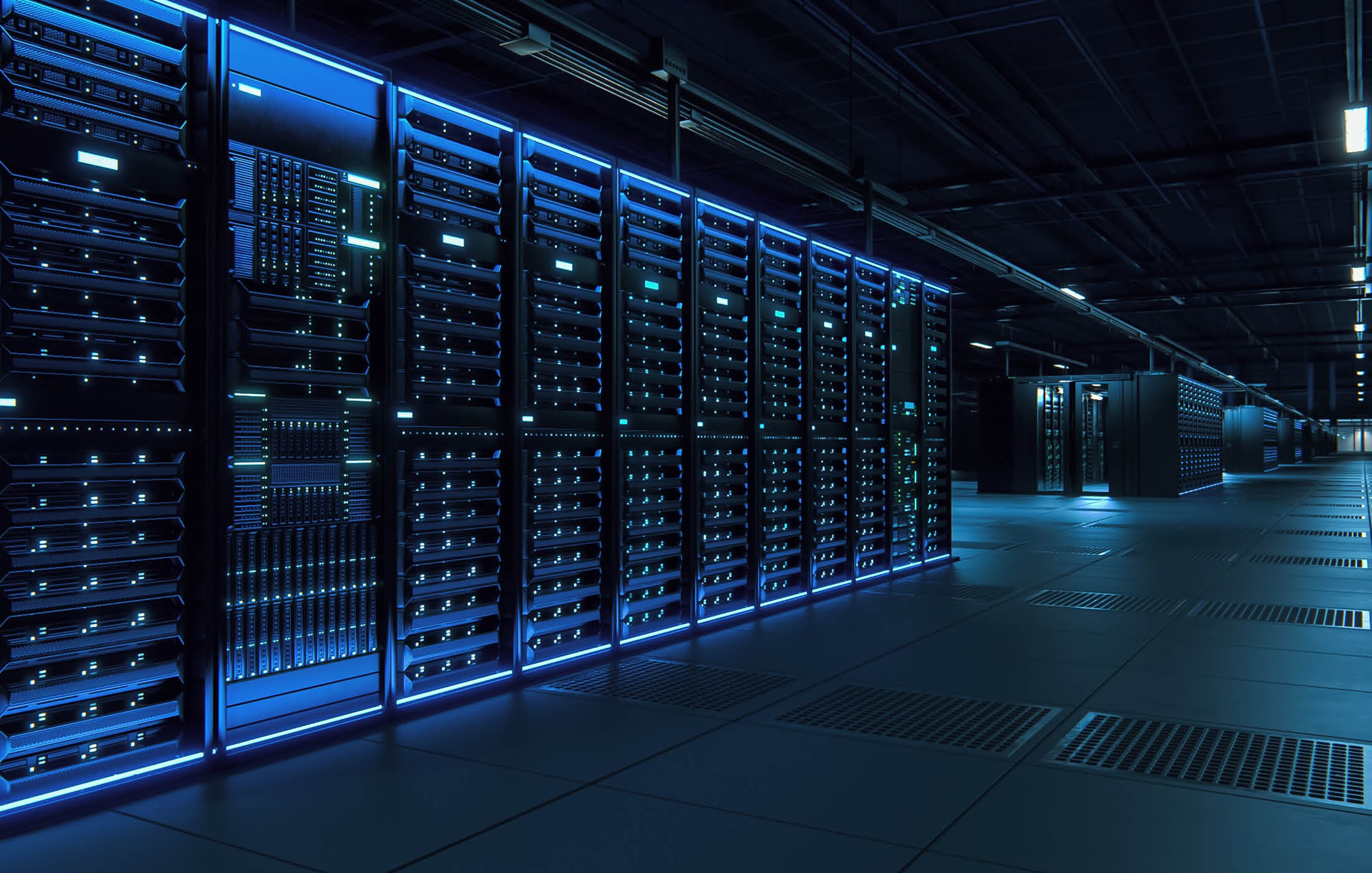
The policy scaffolding around all of this has moved fast. In June 2026, Japan's parliament amended the Economic Security Promotion Act, a fundamental shift: international submarine cables, along with satellites and rockets, were elevated to "specified critical materials," core infrastructure under explicit government protection. Before the reform, the 2022 version of the law had treated cables as merely "important private-sector technologies," with minimal policy support.
The revised law also rewrites the financial rules. The government-affiliated Japan Bank for International Cooperation (JBIC) can now issue high-risk subordinated debt and make direct investments in designated overseas projects, and in a crisis it can absorb losses to keep private Japanese telecom firms from going bankrupt over a cable project gone wrong.
The urgency has real roots. The government started paying attention to cable security after suspicious cable breaks in the waters off Taiwan and in the Baltic Sea in 2024, and tensions over the South China Sea have kept the issue on the agenda. The October subsidy round, selected through a competitive application window that ran from June 5 to July 6, 2026, is the program's third act: 50 billion yen in fiscal 2021, 30 billion in fiscal 2023, 40 billion now, with the Digital Infrastructure Development Fund's total allocation reaching 132.5 billion yen, about 1.97 billion dollars.
The through line is simple. The internet feels like it lives in the cloud, but the cloud has a front door, and front doors can be hardened. Watch where your country's cables land. It tells you how seriously your government takes the network you live on.
0 Comments