
Aircraft makers rarely admit they spent two years selling one airplane while quietly building another. Heart Aerospace just did. On September 23 the Swedish-American startup unveiled the ES-36, a 36-seat hybrid-electric regional airliner that replaces the ES-30 design it had promoted since 2022. Two weeks later, chief executive Anders Forslund explained in an October 7 interview with aviation journalist Hanneke Weitering why the redesign stayed secret: the company wanted to finish flying the X1 demonstrator, an all-electric four-propeller aircraft, before announcing a two-nacelle production design that looks nothing like it.
The interview is more than corporate candor. It is a rare window into how the best-funded hybrid-electric regional program in the West is navigating the physics, certification hurdles, and economics that have grounded nearly every competitor. Heart now claims an orderbook of more than 550 aircraft worth nearly 10 billion dollars, including a deposit-backed purchase agreement from charter carrier JSX for 50 firm aircraft with purchase rights for 50 more. If the ES-36 ever flies passengers, it will be the first electric-propulsion airliner in scheduled service. The schedule says 2031.
Two nacelles, one big bet
The ES-36 is a series hybrid. Each of its two nacelles contains a 1.65-megawatt electric motor driving a propeller, and each motor has its own dedicated turbogenerator, a gas-turbine-powered unit that makes electricity in flight to supplement the batteries. The turbogenerators never drive a propeller. Compared with the ES-30's independent hybrid, which paired two conventional turboprops on the outer wings with two electric motors inboard, the new layout carries six more passengers and 1,415 pounds more payload with the same battery capacity and the same maximum takeoff weight of about 40,000 pounds. The wingspan shrinks to 95 feet, roughly 11 feet shorter than its predecessor, and Heart is targeting operating costs at least 40 percent below legacy regional aircraft such as Bombardier's CRJ-550. All-electric range stays at 125 miles, a figure the company has quoted since 2022, while hybrid range jumps from 500 miles to a claimed 745 miles, plus the fuel reserves required under instrument flight rules.
Those numbers deserve a grain of salt. The 745-mile figure does not assume a full cabin, and the company has not said how much payload an operator must give up to carry enough fuel for it. The 40 percent cost target is a manufacturer goal, not a demonstrated result. But the direction of travel is unambiguous: every redesign has traded novelty for manufacturability, and the ES-36 is the most buildable airplane Heart has ever described.
Why the turbogenerator came back
Enjoying this story?
Get the five most important stories in tech, every morning. Free.
Forslund called the hybrid system the most challenging part of the aircraft, and the turbogenerator its hardest piece. No such unit is certified to power an airliner, so Heart would have to develop one and persuade the FAA that a turbine, generator, and power electronics working together could reliably keep a passenger airplane flying, with no precedent to follow. The 2024 independent hybrid dodged that problem with off-the-shelf turboprops, and it could take off and fly up to about 125 miles on the inboard electric motors alone with the turboprops feathered. But Forslund now admits the arrangement had, in his words, "weird operating points" the company was never fully satisfied with.
The reason any hybrid is needed at all is reserve energy. Regulations require an airplane to carry enough energy to divert to another airport, and one flight in a thousand diverts, according to Forslund. Carrying that reserve in batteries means most of the pack goes unused on a normal flight. Burn fuel for the diversion instead, and the airplane can spend its full battery on the planned leg. Heart says it has tested the underlying hybrid technology at its propulsion test site in Oxnard, California, and now believes it has found a way to build a certifiable turbogenerator on schedule. It has not said which commercial gas turbine the design is based on, or whether a turbogenerator has yet run at power.
"Change is part of our DNA. Change is not a bug in our development. It's a feature." That line explains everything: Heart has reached a major milestone every two years since 2020, and each one has looked like a pivot.
The fourth rewrite in six years
ES-36 vs ES-30: What Changed
Six more seats and 20 percent more payload on the same batteries and takeoff weight
Note: Figures are Heart Aerospace targets and claims, not certified performance. For illustrative purposes only.
Heart's history reads like a compressed syllabus of electric-aviation lessons. It launched in 2018 with the ES-19, a 19-seat all-electric design with four propellers. In September 2022 prospective airline customers said they needed more range and payload, so the ES-19 became the 30-seat ES-30, a series hybrid with turbogenerators in the rear fuselage and a strut-braced wing. In May 2024 Heart dropped the turbogenerators, the struts, and the winglets, and unveiled the independent hybrid, arguing that off-the-shelf turboprops made it the airplane the company could actually build. Now the turbogenerators are back, and the under-fuselage battery bay of 2022 has not returned.
The corporate journey mirrors the technical one. Ben Stabler joined as chief technology officer in May 2024, Heart opened a research and development center in Los Angeles, and in April 2025 the company moved its headquarters from Gothenburg, Sweden, to the Los Angeles area, bringing a pilot plant online that October. The X1 demonstrator flew for 27 minutes on August 12 at Plattsburgh International Airport in New York and has not flown since. Forslund says the brunt of the work has moved to the X2, a pre-production ES-36 now being assembled in Los Angeles, targeted to fly in the second half of 2028, ideally in time for the Los Angeles Summer Olympics, with FAA Part 25 certification and entry into service in 2031.
What to watch next
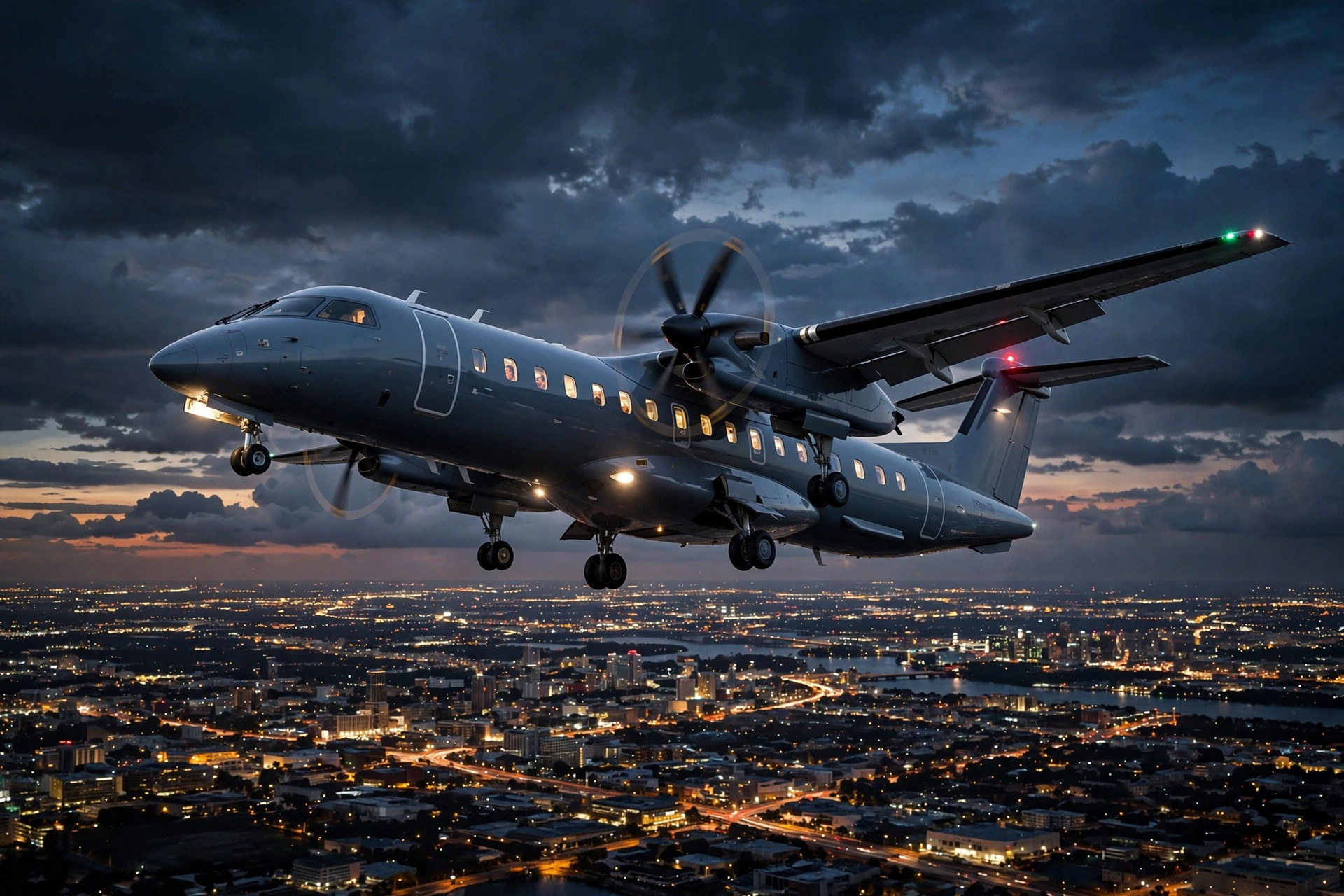
Three things will determine whether the ES-36 is a milestone or another beautiful rendering. First, the preliminary design review scheduled for next year, which will lock the airplane's configuration ahead of certification. Second, the turbogenerator: until Heart discloses the supplier gas turbine and shows one running at megawatt scale, the hardest piece of the program remains a rendering with a promising narrative. Third, JSX. The Dallas-based carrier's deposit-backed agreement converted a December 2023 letter of intent into 50 firm aircraft, and Heart and JSX plan to work together on cabin configuration, charging, turnaround procedures, route planning, and airport readiness at community airports including Santa Monica, Westchester County, Naples, and Napa Valley. United Airlines and Air Canada remain on the orderbook, but JSX is the customer doing real operational design with the airplane.
The broader signal matters more than any single startup. After a decade in which electric aviation meant either a tiny demonstrator or a bankrupt SPAC, the serious players are converging on the same architecture: battery-electric for the short legs, a turbine for the reserves, and a regional airliner instead of an air taxi. Virginia-based Electra is developing the nine-seat EL9 hybrid-electric aircraft toward a first flight by early 2028, making the same bet at a smaller scale. Whether the economics land in 2031 is an open question. That the industry is finally designing for certification instead of headlines is not.
0 Comments