
Somewhere in northern Virginia, a homeowner opened his electricity bill and found it had nearly tripled, from about $100 a month to $281. He had not changed a habit. What changed was the grid around him: the AI data centers had arrived, and the cost of feeding them had begun to flow, quietly, into his bill.
That bill is the sound of a milestone. For most of this decade, the constraint on artificial intelligence was silicon. That constraint has moved. The binding limit on the AI boom is now electricity, and the fight over who pays for it is becoming the defining political question of the technology.
The bill is arriving
The numbers have moved fast enough to startle even the forecasters. In its Short-Term Energy Outlook released October 6, the U.S. Energy Information Administration projected national electricity consumption will rise from last year's record 4.195 trillion kilowatt-hours to 4.288 trillion this year and 4.356 trillion next year, records in both years. Commercial electricity sales, the category that includes data centers, are expected to hit 1.549 trillion kilowatt-hours, up 3.8 percent, more than twice the growth rate of residential demand.
Put differently: a single sector of corporate buyers is now large enough to move national forecasts. A 2026 Department of Energy and Lawrence Berkeley National Laboratory study found data centers consumed about 4.7 percent of U.S. electricity in 2024, roughly 192 terawatt-hours, and projected they could consume between 9.5 and 15.3 percent by 2030, or 521 to 843 terawatt-hours. The Electric Power Research Institute sketches a similar range: 177 to 192 terawatt-hours in 2024, rising to 383 to 793 by 2030.
These are forecasts, not facts. But the price signals are already here. PJM Interconnection, serving 65 million people across 13 states, saw capacity auction prices jump from $28.92 per megawatt-day for 2024/25 to $329.17 for 2025/26, with 63 percent of the increase attributed directly to data center demand. In Virginia, residential prices rose roughly 13 percent over 12 months. MIT researchers found data center entry from 2010 through 2024 raised average retail electricity prices by 2.7 percent, with residential customers absorbing about 2.1 percent.
The binding limit on the AI boom is no longer silicon. It is electricity, and ordinary households are paying for the connection.
Who pays for the boom
Enjoying this story?
Get the five most important stories in tech, every morning. Free.
This is the part the industry would rather not discuss. When a data center requires a new substation, new transmission, or new generation, regulators must decide who foots the bill: the developer, the utility, existing customers, or some mix. In practice, existing customers keep getting the invoice. Nearly three-quarters of Virginia voters blame data centers for their rising costs, and they are not wrong about the mechanism.
The backlash is fierce. A March 2026 Gallup poll found seven in 10 Americans oppose new data centers in their area, with 48 percent strongly opposed. About 379 U.S. jurisdictions have imposed moratoriums or bans, including Indianapolis's freeze through 2027 and Charlotte's 150-day pause, and about 120 projects stalled in the first half of 2026.
Congress noticed. The Ratepayer Protection Act, S. 5028, would have set a federal "consideration" standard pushing regulators to keep data center costs off ordinary customers' bills. The House passed it 417 to 3 on September 16; the Senate failed to advance it on September 30, short of the 60-vote threshold. So who pays remains decided state by state, rate case by rate case.
Here is my view, stated plainly: a boom that cannot price its own electricity is not a productivity revolution. It is a transfer. If the data center industry wants to be treated as infrastructure, it should be regulated like infrastructure, starting with the principle that new large loads pay their own way.
Flexibility is the honest answer
The AI Power Surge, in Numbers
Real figures behind the grid debate, from EIA, PJM, MIT, and Duke.
Note: bar widths are relative within each measure, not across rows. Projections are scenario-dependent.
There is a genuine technical path out of this, and it does not require choosing between AI and affordable power. It requires data centers to be flexible about when they consume electricity.
The strategy is called demand response: temporarily reducing or shifting electricity use during peak demand or grid stress. The Electric Power Research Institute found peak reduction potential of 10 to 30 percent depending on facility type, with some hyperscalers able to go higher. A Duke University study estimated greater flexibility could save $40 billion to $150 billion in grid capital investment over the next decade. It could also let data centers connect to the grid faster, since operators are exploring quicker interconnection for facilities willing to curtail.
Early examples exist. OpenAI recently agreed to cut up to 1 gigawatt of grid draw from a planned 3.2-gigawatt Georgia facility during periods of grid stress: nearly a third of the site's load, made flexible by contract. (On the supply side, Google just struck a nuclear deal to power its AI buildout.)
Now consider what that implies. If the industry's own largest players can flex a third of a gigawatt-scale campus, flexibility is not a favor. It is a design parameter. The honest policy is to make it the price of admission: fast interconnection for flexible loads, slow or expensive interconnection for rigid ones. Regulators already use this logic for other big electricity users. The AI boom should not get a special exemption.
Power is the new permission
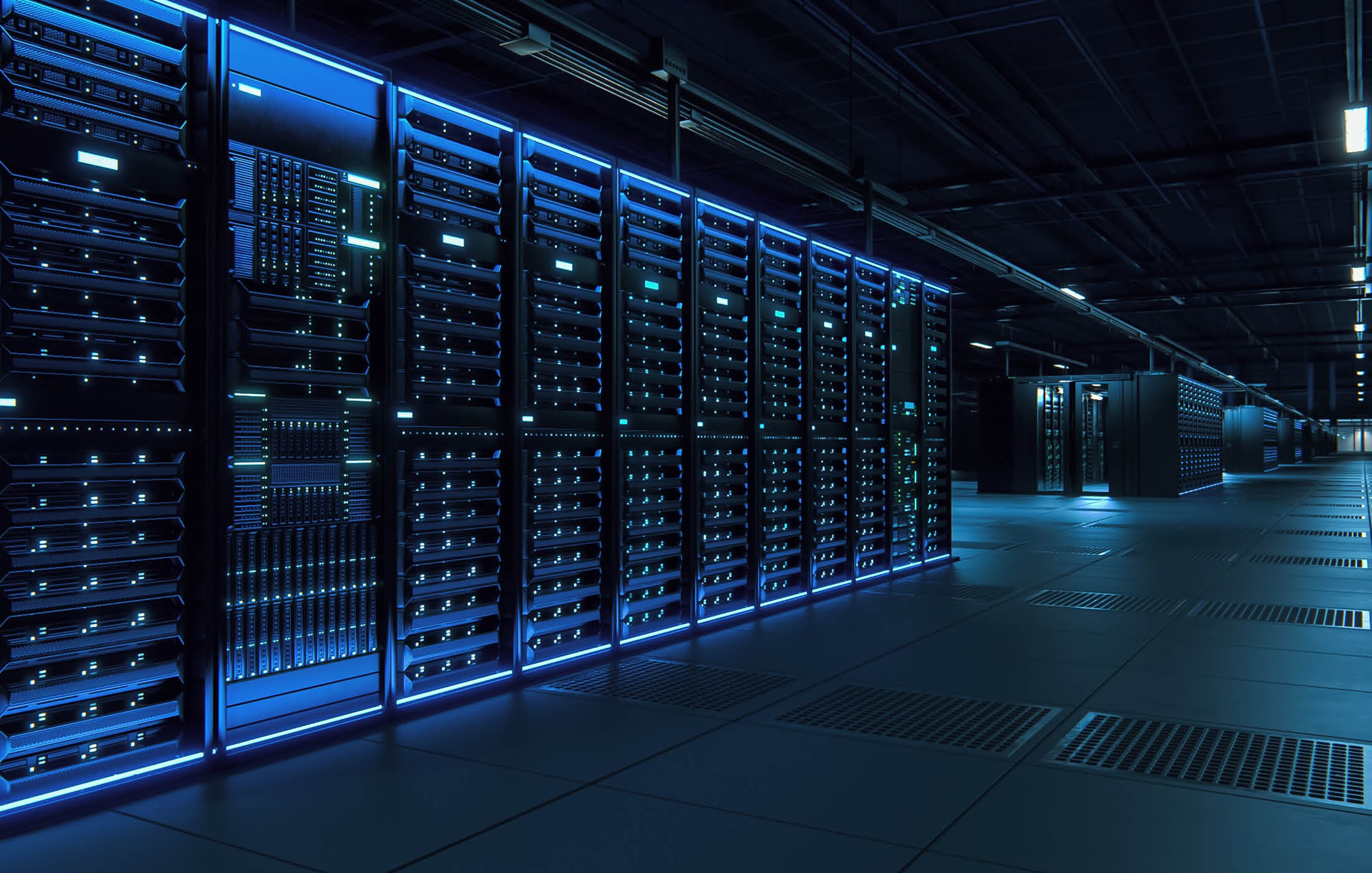
There is a deeper shift here worth naming. For fifty years, the gatekeeper of technological scale was capital. Now there is a second gatekeeper, and it is physical. A megawatt is a megawatt. You cannot print it, borrow it, or arbitrage it the way you can financial capital. The AI boom is discovering, in real time, that its destiny runs through substations, transformers, and rate cases.
That is, in an odd way, good news. Financial gates are exclusionary. Physical ones are negotiable. The grid constraint forces the industry into the one negotiation it has been avoiding: with the communities that host its machines, the ratepayers who subsidize its power, and the regulators who set its terms. The industry has spent this boom talking about alignment, mostly the alignment of AI systems with human values. The grid is presenting a simpler version of the same test: align the boom with the people paying for it.
The future of AI will not be decided only in research labs or on earnings calls. It will be decided in capacity auctions, in state utility commissions, and in the quiet arithmetic of a household bill in northern Virginia. Whoever controls the electrons controls the boom.
References
U.S. Energy Information Administration, Short-Term Energy Outlook (October 6, 2026), as reported by economy.ac; Reuters explainer on data center flexible power usage by Kavya Balaraman (October 8, 2026); U.S. Department of Energy and Lawrence Berkeley National Laboratory 2026 data center study and MIT CEEPR findings, via earthtimes.org; Duke University flexibility study figures via the Reuters explainer; Electric Power Research Institute projections; PJM auction results, Virginia prices, Gallup polling (March 2026), and opposition figures via completeaitraining.com; S. 5028 voting record; Google water use (10.9 billion gallons in 2025) and shareholder data via webpronews.com.
0 Comments