
On October 8, 2026, GlobalFoundries announced a $2 billion manufacturing agreement with TSMC, the world's largest contract chipmaker. Under the five-year deal, GlobalFoundries will produce silicon interposers at its facility in Malta, New York, components that feed directly into TSMC's advanced chip-packaging ecosystem.
The parts sound obscure. They sit at the center of the AI industry's least understood bottleneck. For two years the conversation has been about who can print smaller transistors. This deal is a $2 billion wager that the binding constraint is now something else entirely: the technology that connects chips together.
What the deal actually covers
The agreement has an initial term of five years and a headline value of $2 billion. GlobalFoundries will expand manufacturing capacity at its existing Malta fab to produce silicon interposers designed for TSMC's Chip-on-Wafer-on-Substrate (CoWoS) advanced packaging platform, the technology TSMC uses to assemble AI accelerators.
Volume production is expected to begin ramping in the first half of 2028. GlobalFoundries says the expanded Malta operation will become the first U.S.-based source of silicon interposers for advanced packaging technologies, and that it will support interposers incorporating embedded deep trench capacitors, components that stabilize power delivery inside the package.
A few things the announcement does not say matter too. GlobalFoundries has not specified which CoWoS configurations its interposers will serve, nor has it disclosed planned annual production volumes or the precise manufacturing investment required. The $2 billion figure is the agreement's value, not an immediate capital expenditure or a guaranteed annual revenue stream.
Why interposers became the bottleneck
Enjoying this story?
Get the five most important stories in tech, every morning. Free.
To understand the deal, look inside a modern AI accelerator. The old model put most computing on one big chip. Today's designs split the system into chiplets: a central compute die surrounded by stacks of high-bandwidth memory (HBM), all mounted in a single package.
The silicon interposer is the thin structure underneath those chiplets, threaded with extremely dense electrical connections. AI workloads constantly shuttle enormous volumes of data between processor and memory, and even the fastest compute die stalls if memory cannot keep up. HBM stacks memory dies vertically with wide interfaces, and the interposer's short, dense connections deliver the bandwidth that makes the whole assembly work.
TSMC describes CoWoS as 2.5D packaging, since chips sit side by side on the interconnection structure rather than stacking purely vertically. Its CoWoS-S variant uses a silicon interposer and can accommodate interposers up to about 3.3 times the conventional lithography reticle size. Building these structures takes specialized equipment, materials, and expertise, which is why packaging capacity cannot simply be conjured by running more wafers through a fab.
Advanced packaging is becoming increasingly critical to delivering the performance, power efficiency and scale required for next-generation AI systems. (Ed Kaste, GlobalFoundries)
Reuters has reported that advanced packaging has become a significant constraint on AI chip production because demand exceeds available manufacturing capacity. Counterpoint Research estimated last month that the supply-demand gap for TSMC's CoWoS capacity could sit near 20% in 2026 before narrowing to roughly 10% in 2027 as new capacity comes online. The GlobalFoundries deal is aimed squarely at that gap.
Why Malta, New York matters
The deal in numbers
The geography is as important as the technology. Advanced chip supply chains sprawl across multiple countries, which brings efficiency but also exposure to disruptions, trade restrictions, and geopolitical tension. A U.S.-based source of interposers adds flexibility to a chain that currently concentrates advanced packaging elsewhere.
The partnership is also notable because both companies are foundries. TSMC is famous for manufacturing advanced processors for customers like Nvidia and Apple. GlobalFoundries runs a differentiated business spanning communications, automotive, industrial, and data-center markets. They overlap without competing head-on everywhere, which makes specialization deals like this one possible: GlobalFoundries makes one critical component rather than duplicating TSMC's entire packaging operation or its leading-edge logic fabs.
The interposers are not simple wiring boards either. GlobalFoundries specifically cites support for embedded deep trench capacitors, tiny charge reservoirs etched into the silicon that smooth out the violent power swings of AI workloads. TSMC lists the same feature in its CoWoS platform, a sign the deal covers technically demanding components rather than commodity substrates.
What the deal does not change, yet
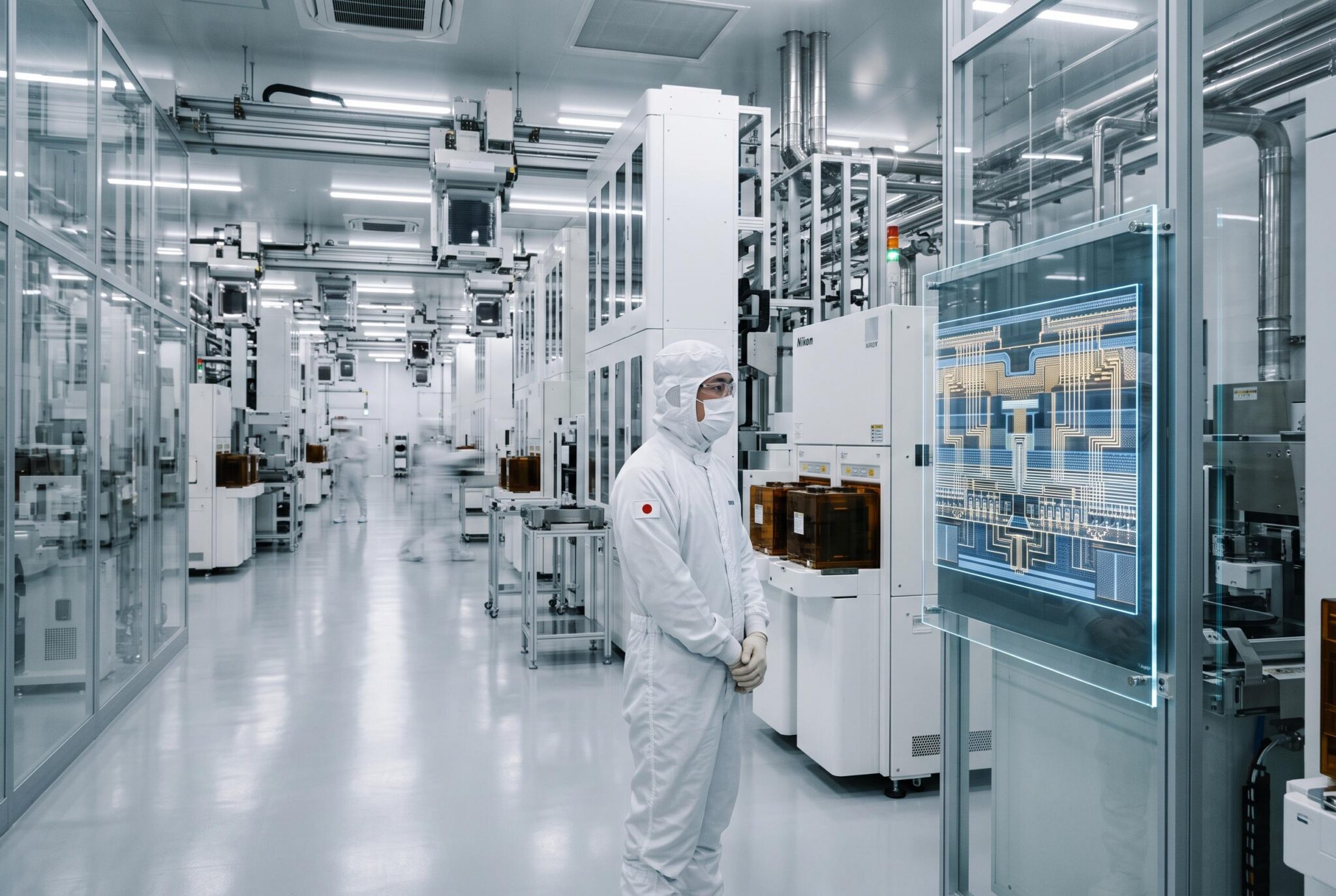
Investors noticed. GlobalFoundries shares rose nearly 6% in morning trading on October 8, bucking a broader market drawdown. But the timeline is long. With volume production not ramping until the first half of 2028, this agreement does nothing for today's AI chip shortage.
The same day, TSMC reported record third-quarter revenue of NT$1.49 trillion ($46.71 billion), up 50% from a year earlier and above analyst expectations, with September sales of NT$511.86 billion up 54.6% year over year. The numbers confirm the demand side of the story: AI infrastructure spending keeps climbing, and the industry's ability to package chips into finished accelerators will decide how much of that demand gets met. This deal is one more piece of that answer, arriving in 2028.
0 Comments