
Every crewed spaceflight has a moment engineers talk about in hushed tones. The capsule carrying the astronauts must let go of the module that kept them alive in orbit: power, propulsion, oxygen lines, all severed in a fraction of a second, with explosive charges, while the stack hurtles toward the atmosphere. If the separation is clean, the capsule turns its heat shield to the fire and comes home. If it is not, nothing else in the mission matters.
On Friday, India proved that moment will work. The Indian Space Research Organisation announced it had completed a series of separation tests between the Crew Module and the Service Module of its Gaganyaan spacecraft, the vehicle that will one day carry Indian astronauts into orbit and bring them home. The tests, conducted at the Vikram Sarabhai Space Centre in Thiruvananthapuram, simulated the full assembly breaking apart: umbilical cables cut, pyrotechnic devices fired, all under heavy instrumentation.
The result validates the design of the separation system and, according to ISRO, demonstrates that the Crew Module's most critical subsystems survive the violent shock of the breakaway. The milestone clears a key hurdle before Gaganyaan's first uncrewed mission, G1, which ISRO still targets for launch in 2026.
What the test actually proved
The Gaganyaan Orbital Module is really two spacecraft in one. The Crew Module is the cone-shaped capsule that will carry astronauts (or, on uncrewed flights, systems and instrumentation) and survives the plunge through the atmosphere. The Service Module is its support system in orbit: power, propulsion, and other functions, linked to the Crew Module through umbilical connections that carry electrical power and fluids.
The two modules are integrated before launch and operate as a single unit from liftoff through the end of the on-orbit phase. Then, just before re-entry, the Crew Module must separate from the Service Module through a precisely sequenced chain of events: pyrotechnic devices fire, jettisoning systems push the pieces apart, and the capsule is left alone to face the atmosphere.
To prove this choreography works, ISRO built a test setup at the VSSC that replicated the integrated Crew Module and Service Module assembly, wired with extensive instrumentation to measure every millisecond of the separation. The trials reproduced the sequence, including the severing of multiple umbilical connections between the two modules.
The important part is what survived the violence. ISRO says the tests demonstrated the robustness and shock-survivability of several critical Crew Module subsystems: the avionics and inertial navigation systems, the Thermal Protection System covering the aft and conical heat shields, the Crew Module Deployable Umbilical Shield, and the pyrotechnic devices tied to the Crew Module Uprighting System and the Thermal and Humidity Control System. That list reads like a roster of everything the capsule needs most after the split: its ability to navigate, its ability to survive heat, its ability to stay upright, and its ability to keep its interior livable.
Why separation is the scariest moment in the mission
Enjoying this story?
Get the five most important stories in tech, every morning. Free.
Staging events get less public attention than launches, but they are where missions are most often lost. A launch is one continuous push in one direction. A separation is a negotiated divorce between two masses moving at orbital velocity, executed by explosives, timed to fractions of a second, with no chance to try again.
A partial or sloppy separation is one of the worst failures a spacecraft can suffer. If the Service Module lingers, it can change the capsule's trajectory, induce a tumble, or strike the capsule itself. If the Crew Module separates but fails to settle into the correct attitude, the heat shield may not be facing the fire when the plasma arrives. And unlike a launch, which happens when the mission is fresh and the crew is at peak readiness, separation happens at the end, when the mission has spent most of its margin and the atmosphere is already approaching.
This is why space agencies test the event on the ground until the statistics are boring. ISRO's full-assembly test, with instrumentation capturing the shock each subsystem feels, is the equivalent of rehearsing the divorce until every witness agrees it was clean.
In human spaceflight, the most dangerous moments are not the ones where things explode. They are the ones where two parts must part ways cleanly and never touch again.
G1 goes first, with a robot in the seat
The Separation Sequence ISRO Just Validated
What happens in the seconds before Gaganyaan's Crew Module faces the atmosphere.
Note: Simplified sequence based on ISRO's October 2026 test announcement.
The separation test is one entry in a long qualification campaign, and it feeds directly into the next one. G1, the first uncrewed Gaganyaan mission, is the rehearsal where every validated subsystem gets its real-world debut together. According to ISRO, it remains targeted for launch in 2026.
On that flight, the Crew Module will carry its systems, instrumentation, and a passenger of sorts: Vyommitra, the half-humanoid robot ISRO has developed as a stand-in for the crew. Vyommitra will let engineers monitor how the cabin environment behaves with something resembling a human body aboard, without putting a human body at risk.
This is how human-rating actually works. Satellites are judged on whether they reach orbit and work. Crewed vehicles are judged on whether every lethal moment, separation, abort, re-entry, recovery, has been rehearsed until it is routine. Each test like this week's narrows the gap between an impressive engineering program and a flyable one.
The quiet road to the human-spaceflight club
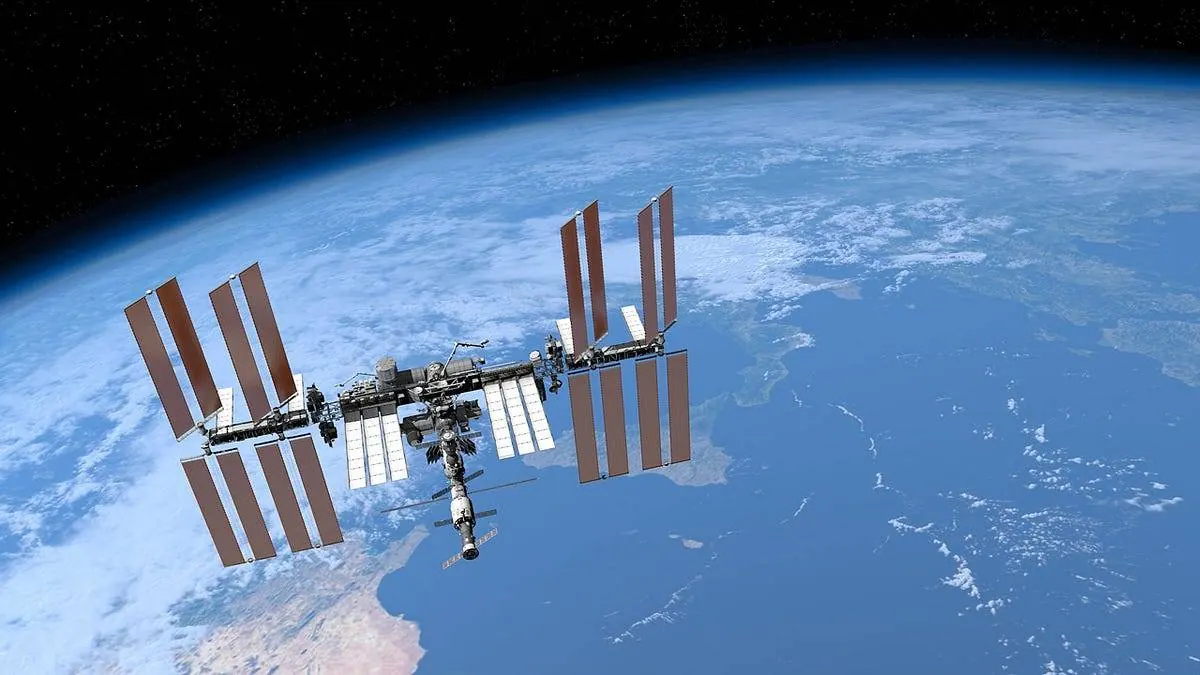
Only three countries have independently flown their own astronauts to orbit and brought them home: the Soviet Union and its successor Russia, the United States, and China. If Gaganyaan succeeds, India becomes the fourth. That fact is the quiet engine behind every announcement ISRO makes this year.
India's approach to joining that club is characteristically methodical. Rather than racing a deadline with a single spectacular flight, ISRO has been working through a deliberate sequence of validations: abort demonstrations, propulsion tests, crew escape system trials, recovery rehearsals, and now separation qualification. Each step is modest on its own. Together, they are the scaffolding of a crewed program.
The contrast with the program's peers is worth noting. Russia and the United States learned human spaceflight in a sprint driven by geopolitics. China's crewed program moved in a decades-long march of incremental firsts. India's path looks more like the second: test, validate, announce, repeat, with uncrewed missions standing in for the crew until the evidence is complete.
This week's result fits that pattern precisely. It is not a launch, not a landing, not a headline-friendly spectacle. It is proof that when the time comes, the capsule can let go of everything it needed to get to space, survive the shock of the split, and turn to face the fire alone. Every future Indian astronaut is depending on exactly that.
0 Comments