
The strangest robotics story of the month is a Terminator reference. It is also one of the most revealing. Figure AI, the American humanoid startup racing to put general-purpose robots into warehouses and homes, has retired most of its second-generation fleet, the F.02, by training the robots to jump into a 75-ton electric arc furnace full of molten steel at a foundry in Imatra, Finland. The company says the idea came from Arnold Schwarzenegger, and yes, he showed up for the filming.
The story broke in early October through tech press reports and Figure's own video, then landed formally this week with an official decommission notice on the company's news page, confirming the pivot to its expanding F.03 fleet and the in-development F.04. What looked like a publicity stunt turns out to have been a deliberate business decision, and the details say a lot about where the humanoid race is heading.
How you say goodbye to a robot
In August, Figure CEO Brett Adcock asked followers on X for suggestions on how the company should mark the end of the F.02 line. Schwarzenegger, who famously lowered himself into molten metal at the end of Terminator 2, answered. Per Figure's retelling of the exchange, his reply was: "You should melt them." Figure took him literally, contacted the actor, and he agreed to take part.
Finding a venue was its own project. According to the company's account, no foundry in the United States or Mexico would accept a humanoid robot containing lithium-ion batteries into its expensive equipment, so the search went international, with even former MythBusters reportedly contacted along the way. A steel foundry in Imatra, Finland finally volunteered. The 75-ton electric arc furnace did the work within what Figure describes as "just 24 hours and six melts," with only about 20 minutes of filming time per run before the surface of the molten metal hardened.
In the video, a Figure 02 is lowered into the furnace while hanging from chains and gives a thumbs-up, the film's signature gesture. Schwarzenegger appears, returns the thumbs-up, and signs off with, "Hasta la vista, Figure 02." The melted steel was returned to the United States for limited-edition keepsakes, with metal bar preorders reportedly priced from $500 to $1,900, the pricier tier already sold out.
Figure's account is blunt: the robots had to go because keeping them would have slowed the next generation. Melting them was the fastest way to make them gone.
Why melt a working robot at all
Enjoying this story?
Get the five most important stories in tech, every morning. Free.
The dramatic method was not, by the company's account, simply a stunt. Figure says the retired robots contained custom-built actuators and other proprietary hardware that it did not want left intact, where it could leak to competitors or tinkerers. Manually disassembling every machine would have required skilled engineering time, the exact resource the company says it needs for developing the F.04. The furnace solved both problems: total destruction of the intellectual property, with no engineers diverted from the future.
This is the part worth taking seriously. A company destroying its own flagship product to protect its actuators is telling you where it believes its moat lives. For all the attention on the AI models driving humanoids, Figure's move suggests the durable advantage is still in the metal: custom actuators, tight mechanical integration, manufacturing know-how. Software can be replicated. A production-grade humanoid actuator stack apparently cannot, at least not yet.
Teaching robots to take their final jump
The F.02 farewell, by the numbers
Figure’s account of the decommissioning operation.
Note: For illustrative purposes only.
The decommissioning also doubled as a capability demonstration, which is very on-brand for this industry. Sending a humanoid into a furnace of molten steel is a precision task: the jump has to land in a container at a facility the engineering team had never visited, on the first try, with no do-overs that don't involve very expensive equipment.
Figure's account of the preparation is specific. The company first trained its F.02 robots at its San Jose campus, setting up large airbags and teaching the machines to jump from the second floor of one of its buildings. It used movements performed by professional stunt artists as reference data, then trained a new AI model in simulation to produce accurate jumps into the target. When the robots went to Finland, they completed their jumps without error, despite what the company describes as extreme heat and electromagnetic interference at the foundry. Strip away the theater and you get the real product demo: a general-purpose humanoid, trained in simulation, executing a precise, novel physical maneuver in an environment it had never seen before the day of the task.
What the F.02 actually did
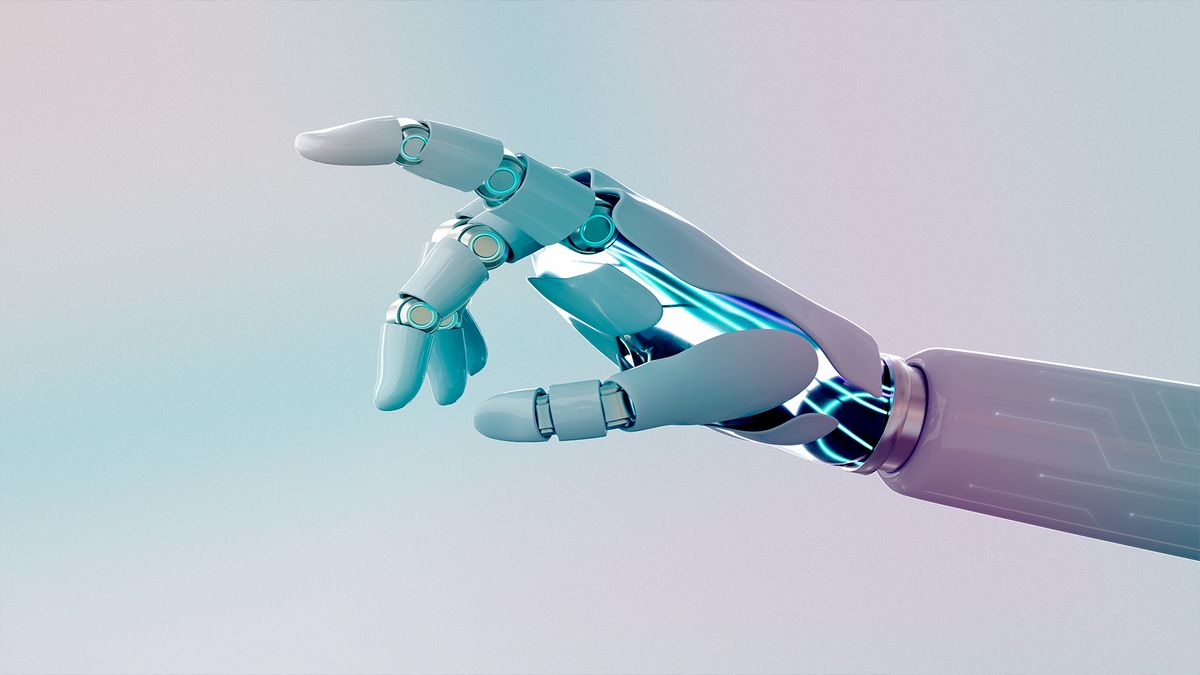
It is easy to lose the robot in the spectacle, so the record deserves a note. The F.02 was introduced in August 2024 as a 170 cm tall humanoid, and it carried several of the company's firsts: the first BMW deployment, with robots doing precision installation of sheet-metal components at the automaker's Spartanburg plant; the development of Figure's Helix system; the company's first household robot demonstrations; and an early logistics deployment. Adcock called it "an excellent model that laid the foundation for many of our company's first achievements."
Two years from introduction to the furnace. In industrial hardware, that is a startlingly short product generation: forklifts get decades, robot arms get a decade or more. The F.02 got about 26 months before most of the fleet was melted down, with only a small number of units kept in storage at headquarters.
What this signals about the humanoid race
Read it as one data point in a market that is suddenly moving very fast. Analyst figures quoted in an October industry roundup put global humanoid robot shipments at more than 22,000 units in the first half of 2026, up roughly 300 percent year over year, with China's Agibot holding over 43 percent of that volume. Meanwhile DEEP Robotics is trialing humanoids directing traffic at real Hangzhou intersections, and open-source platforms like RoboParty's RP1 were drawing crowds at IROS 2026.
That is the context in which Figure's furnace makes sense. When shipments are tripling and generations are turning over in two years, supporting last year's hardware is a tax on this year's. Retiring a flagship line wholesale, rather than maintaining it alongside the successor, is unusual in traditional industrial equipment. In humanoids in 2026, it may just be what the product cycle looks like now.
There is also a quieter signal in the method. End-of-life destruction to protect intellectual property is standard practice in defense and chipmaking. Its arrival in humanoid robotics suggests the industry now considers its hardware designs valuable enough to destroy. That is, oddly, a sign of maturity: you only melt down what is worth stealing.
The memorabilia is the cherry on top. Selling $500 to $1,900 bars of robot steel is brand theater, but it is also a confident read of the audience. In an industry still selling a vision more than a product, the company that stages the best vision wins the next round of funding. Hasta la vista, indeed.
References
TokenHarbor, Figure AI decommissions F.02 humanoid robot, October 9, 2026. Gizmodo, Figure AI trains retired robots to dive into molten steel, October 2026. Phandroid, Terminator-style retirement: robots leap into a 75-ton furnace, October 2, 2026. The AI Insider, Figure AI retires humanoid robot fleet by having them jump into vat of molten steel, October 1, 2026. TechnoTime, Figure AI melts down its humanoid robot fleet, October 2026. Root-Nation, Figure AI shows the final journey of its robots, October 2026. DigitalToday, Figure melts Figure 02 humanoid robot in molten metal in Terminator 2-style video, October 2026. Robotics Updates industry roundup, October 7, 2026 (Counterpoint shipment figures).
0 Comments