
Washington spent the second week of October running the chip war on two tracks at once. On one track, Congress tried to write tougher AI chip restrictions into law, and watched the effort die inside a single news cycle. On the other, the executive branch moved to turn a year of private warning letters into binding regulation for the entire industry. The contrast between the two tells you how American technology policy actually gets made right now: legislatures propose, executives dispose.
The legislative story starts Thursday, October 8, 2026. Hours after President Donald Trump said he had discussed Beijing's access to Nvidia processors with Chinese President Xi Jinping, Representative John Moolenaar, Republican of Michigan and chairman of the House Select Committee on China, unveiled the Guaranteeing Access and Innovation for National Artificial Intelligence Act of 2025, better known as the GAIN AI Act. "This is an America First Chip Policy in action that will build sustained American AI dominance," Moolenaar said in a statement.
The bill's core mechanism was simple. Advanced chipmakers would have to give American businesses and persons priority in acquiring chips that would otherwise have required an export license to ship abroad.
Dead within 24 hours
By Friday, October 9, the fast track was effectively over. Anonymous sources told Bloomberg that the bipartisan bill had not been included in the annual defense policy bill, the National Defense Authorization Act, which was set to be released that day. Lawmakers frequently attach technology legislation to the defense bill because it is one of the few measures Congress reliably passes each year. Without that ride, the GAIN AI Act became another standalone proposal, facing an uncertain path.
The most pointed reaction came from Jensen Huang, Nvidia's chief executive, who told reporters the exclusion was "wise" and that "the GAIN AI Act is even more detrimental to the United States than the AI Diffusion Act." The Trump administration's AI czar, David Sacks, favors an export-oriented strategy that hooks key allies onto the American AI stack while squeezing Chinese competitors out of the market, so he had no reason to mourn the bill's removal either.
Lawmakers propose. Executives dispose. The GAIN AI Act lasted one news cycle; the Commerce Department's rulebook may last a decade.
There is also a complication the hawks rarely mention. In September, the Chinese government told domestic companies to stop buying Nvidia chips, citing security concerns about possible backdoor access. Even as Washington debated how to keep advanced chips out of China, Beijing was telling its own companies not to buy them.
The rules that survived
Enjoying this story?
Get the five most important stories in tech, every morning. Free.
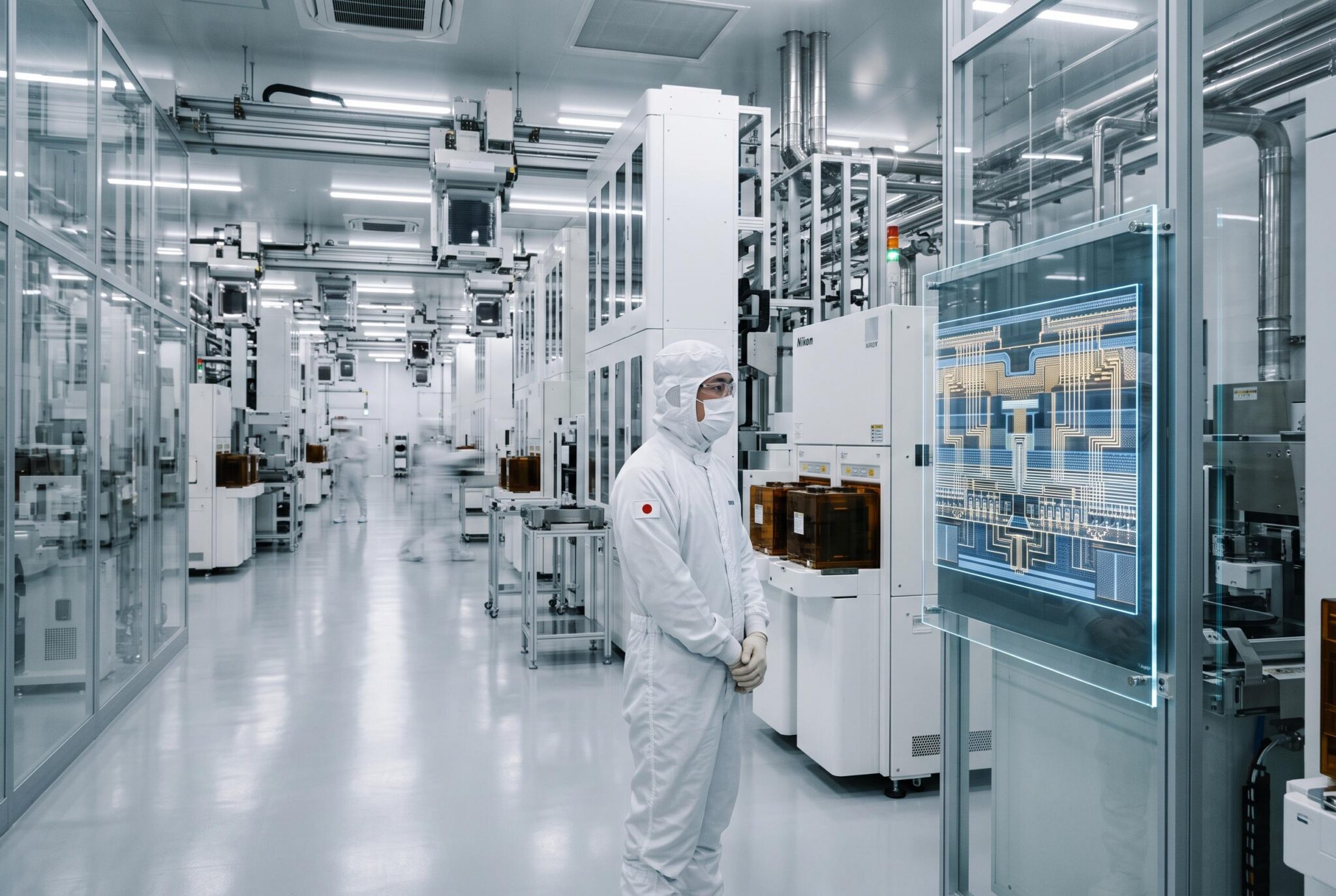
The same week, the Commerce Department was rolling out a package of rules that takes restrictions previously handed down company by company, in private letters, and writes them into the Export Administration Regulations for everyone. Two sets of controls are involved. First, limits on selling chipmaking tools capable of producing logic chips at 14 nanometers or finer. Second, a tighter licensing path for advanced AI and supercomputing chips bound for China. The rules also expand the foreign direct product rule, the mechanism that lets Washington reach foreign-made chips and tools when they contain enough American technology, to catch more Chinese entities than before.
The letters being codified have a paper trail. In April 2026, Commerce sent individual letters to KLA, Lam Research, and Applied Materials, the three American giants of chipmaking equipment, ordering them to stop shipping certain tools to Hua Hong, China's second-largest chip foundry, and its Huali Microelectronics subsidiary. The targets were specific: Hua Hong's Fab 6 in Shanghai, which runs 28 and 22 nanometer lines, and a second site, Fab 8a, that does not even appear on the company's own website. American officials suspected Huali was pushing toward a 7 nanometer process there, with Huawei reportedly lined up to shift some of its AI chip production to the site once it was running. Earlier in 2026, Nvidia and AMD received similar letters instructing them to stop shipping certain AI computing chips to China without a license.
Those letters applied only to the companies that received them. The new rules apply to every equipment maker and chip designer that sells into China.
The November 9 clock
The Chip War, in Numbers
Verified figures, October 2026.
Note: Smuggling and repair figures reported by the Financial Times, via secondary coverage.
The timing only makes sense against the deadline both governments are watching. At the October 2025 APEC summit in Gyeongju, South Korea, the United States and China struck a one-year truce. Washington agreed to suspend its "50% Rule," which would have extended export blacklisting to any company at least half-owned by an entity already on the list, for one year starting November 10, 2025. China, in turn, deferred its own export controls on rare earths and critical minerals, including gallium, germanium, antimony, and graphite, materials where it controls 60% to 90% of global supply. That truce expires November 9, 2026.
This is where the administration's record gets harder to read cleanly. This same administration spent much of 2026 easing the very restrictions it is now locking into law. It approved Nvidia's H200 chip for export to China on the condition that the United States government collect 25% of the proceeds, a structure former officials criticized as trading away a national security tool for revenue. Codifying the letters now reads less like a sudden crackdown and more like a hedge: keep the door open for trade talks, but have the stricter rulebook ready the moment November 9 passes without a deal. That reading is analysis, but it fits the pattern.
Why the rules keep leaking
None of this happens on a clean map. The Financial Times reported that more than $1 billion worth of Nvidia's AI chips, including B200, H100, and H200 models, were smuggled into China in the three months after the administration tightened export controls earlier in 2026. Resellers in Guangdong, Zhejiang, and Anhui provinces are reportedly selling the banned processors openly to AI data centers, and a repair industry has sprung up in Shenzhen that reportedly services as many as 500 of the chips a month. Some buyers are said to be sourcing hardware through Southeast Asian markets, including Thailand, rather than bringing chips into China directly.
Those flows do not touch the equipment rule Commerce is finalizing, which targets the machines that make chips, not the chips themselves. But they are the backdrop against which lawmakers keep asking whether the licensing regime is working.
What comes next
For KLA, Lam Research, and Applied Materials, China revenue that was already uncertain now gets a formal ceiling. For Nvidia and AMD, the license regime tightens on paper at the exact moment their chips are reportedly moving around it in practice. The GAIN AI Act may yet advance as a standalone bill, but losing the defense-bill vehicle usually means a proposal has lost its momentum, and the legislative track of the chip war is now the weaker of the two.
The executive track, by contrast, is built for speed. Commerce's rules do not need 60 Senate votes, and they land weeks before the truce expires, when both governments will decide whether to extend the pause or restart the fight. If talks collapse after November 9, Washington will reach for the rulebook it just finished writing. That is the point of writing it.
0 Comments