
American research lab arbastro has released Collidere, a language model that starts from nothing and learns exclusively from conversations with the public. The 25.3-million-parameter model was written from scratch. It has never been trained on a web crawl, never been distilled from a bigger model, and it can't look anything up. Everything it knows, it learns in public.
There are two of it. Model A is the control: random weights, no reading material, nothing but live conversation. Model B got a head start, reading about 23.2 million words of recorded debates from the ChangeMyView forum before launch. From here on, both learn only from the people who talk to them, and both answer every message side by side. The difference between them is the experiment.
The idea is to test something AI researchers argue about constantly and measure rarely. When training data contains two people saying opposite things, today's models don't pick a side. They hedge. Nothing in how they're trained penalizes holding two contradictory beliefs at once, so they learn to sound reasonable about both. Collidere AI is built to find out whether live disagreement moves a model differently than the same words written down in advance.
How it learns
Here's how it works. The Collidere AI model doesn't learn from each message as it arrives. Instead, it trains in nightly batches, permanently rewriting its weights based on the day's conversations. To avoid forgetting old lessons, three quarters of each training batch is reheated material and one quarter is new. And nothing gets in automatically: a human reviews every contributed message, and it sits for 36 hours before it can be used. Contributors post under numbers, not names, and the model's own replies are never used as training data, which avoids the well-known spiral where models trained on their own output get progressively worse.
Nothing in how today's models are trained penalizes holding two contradictory beliefs at once, so they learn to sound reasonable about both.
The Tay lesson
Enjoying this story?
Get the five most important stories in tech, every morning. Free.
An earlier attempt at this exact idea became one of AI's most famous cautionary tales. In March 2016, Microsoft put a chatbot called Tay on Twitter that was designed to learn from conversation with users. Within a day, coordinated trolls had taught Microsoft Tay to spew racist and abusive garbage, and Microsoft unplugged it in under 24 hours. The failure wasn't the idea of learning from people. It was learning instantly, from anyone, with nothing in between. Collidere is built as the opposite of that bet: a human reads every turn before it can train anything, nothing enters the weights for 36 hours, and the model updates in nightly batches instead of reacting in the moment.
After every update, both models take the same tests: held-out text they've never seen, fifty frozen questions, and a check of how their answers shifted on topics where contributors disagreed.
Stumbles on the way
Collidere II by the Numbers
The vital statistics of arbastro's continual-learning experiment.
Note: figures from arbastro's Collidere research writeup, September 2026.
The project has already produced some interesting stumbles. The first training run accidentally taught the model where its training window ended instead of where sentences end, because nearly half of all sentence endings happened to land on the last slot of the window. The team threw the run out and started over as Collidere II. They also learned that an update size tuned for a giant corpus will wreck a small model: 200 training steps over a single day of conversation was the equivalent of reading the same few sentences 248 times, and the model got worse. Updates are now sized at three passes over the available data.
Why continual learning matters now
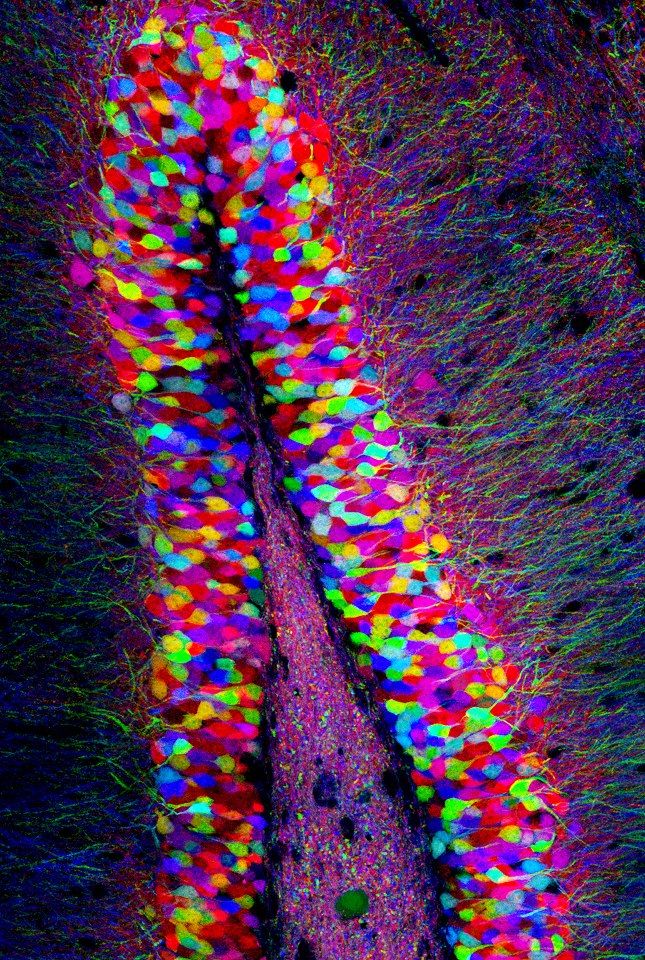
Collidere belongs to the growing field of continual learning, the area of AI research around models that keep learning after deployment. Recent work includes CLaaS, a system for continual learning behind a chat API, and a 2024 paper on training large models while people chat with them. The closest prior result comes from a 2026 study that trained small transformers on deliberately contradictory data and found the models only preferred correct answers when the wrong ones were random noise, not when they followed a coherent alternative logic.
If it works, Collidere points to a different future for AI: models that don't arrive fully formed from a data center but grow up in public, shaped by the people around them. arbastro's bet is that continual learning, done with guardrails instead of blind trust, is what gets the field past the era of training a model once and freezing it forever. The lab is upfront about the long odds. Conversation produces text very slowly: by their math, twenty people each having one real conversation a day would take about four and a half years to get the from-scratch model to weak but recognizable English. Their position is that even that failure is worth publishing, with the curve to prove it.
About arbastro: arbastro is an American technology company building software, games, and AI research. Its games include Expedition Rubasa and Pirate Wars, and its research projects include Collidere.
References
- Fallah et al. (2026), "CLaaS: Continual Learning as a Service for Sample Efficient Online Learning." arXiv:2606.05559.
- "Online Training of Large Language Models: Learn while chatting" (2024). arXiv:2403.04790.
- Krestnikov (2026), "Truth as a Compression Artifact in Language Model Training." arXiv:2603.11749.
- Collidere by arbastro. Try it at collidere.arbastro.com; full research writeup at arbastro.com/projects/research/collidere.
0 Comments