Senior Technology Correspondent · October 02, 2026 · 6 min read
👁 ...💬 ...
In a fourth-grade classroom in Ohio, each student works with an AI tutor that knows exactly where they struggle with fractions, adapts explanations to their learning style, and never gets impatient. The teacher circulates, spending time where human judgment matters most. Test scores are up. The teacher is cautiously optimistic. The students just think it's normal.
AI in education has moved past the pilot phase. It's here, it's working, and it's raising questions nobody fully anticipated.
What works
The core promise is personalization at scale. A human teacher with 30 students can't adapt every lesson to every learner. An AI tutor can, adjusting difficulty in real time, offering alternative explanations, providing infinite patience for the student who needs the concept explained five different ways.
The results in early deployments are genuinely impressive. Struggling students get more practice where they need it. Advanced students aren't held back. Teachers get detailed analytics on where the class stands, replacing gut feeling with data.
A human teacher with 30 students can't adapt every lesson to every learner. An AI tutor can.
What worries teachers
Enjoying this story?
Get the five most important stories in tech, every morning. Free.
✓ You're on the list.
But ask teachers, and you'll hear nuanced concerns. The biggest: over-reliance. Students who learn to lean on AI for every answer may not develop the struggle tolerance that deep learning requires. There's a difference between a tutor that guides and a shortcut that bypasses thinking.
Then there's the social dimension. Classrooms aren't just knowledge-transfer machines: they're where kids learn to collaborate, debate, and navigate disagreement. An AI tutor is infinitely patient but socially sterile. Teachers worry about what gets lost when screen time replaces human interaction.
The emerging model
Who Does What in the AI Classroom
The model that works: AI as force multiplier, teachers as irreplaceable.
Real-time personalization, adapted to each learner, infinite patienceAI tutor
Drill, practice, and analytics on where the class standsAI tutor
Inspiration, mentorship, and human judgmentTeacher
Leaning on AI for every answer, skipping the struggleThe over-reliance risk
Note: For illustrative purposes only.
The schools getting this right treat AI as a force multiplier for teachers, not a replacement. The AI handles drill, practice, and personalization. The teacher handles inspiration, mentorship, and the human moments that no algorithm can replicate.
It's early, and the honest answer is that nobody knows the long-term effects. But the experiment is running at scale now, in real classrooms, with real kids. The results, good and bad, will shape education for a generation.
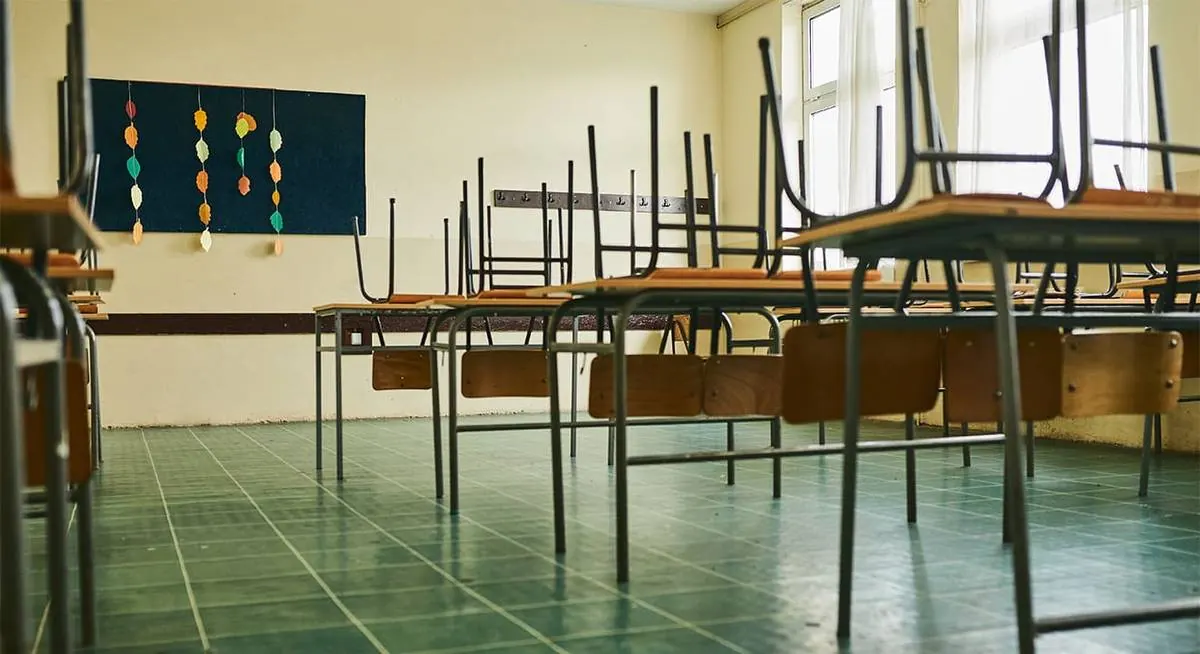
AI tutors are entering real classrooms. (Photo: Transforming Society)
Each student works with software that tracks exactly where they struggle, adapts explanations to their learning style, and adjusts difficulty in real time, with effectively infinite patience for the student who needs a concept explained five different ways. Teachers circulate and spend their time where human judgment matters most, armed with analytics on where the class stands. In early deployments, test scores are up and teachers are cautiously optimistic.
What worries teachers most about AI tutors?
The biggest concern is over-reliance: students who lean on AI for every answer may never develop the struggle tolerance that deep learning requires, and there is a real difference between a tutor that guides and a shortcut that bypasses thinking. Teachers also worry about the social dimension: classrooms are where kids learn to collaborate, debate, and navigate disagreement, and an AI tutor is infinitely patient but socially sterile. Screen time that replaces human interaction costs something hard to measure.
Are AI tutors replacing teachers?
The schools getting this right treat AI as a force multiplier for teachers, not a replacement. The software handles drill, practice, and personalization at scale: things a teacher with 30 students cannot do for every learner at once. The teacher handles inspiration, mentorship, and the human moments no algorithm can replicate. That division of labor is the emerging model, and it only works when the technology is deployed in service of the teacher's judgment.
Do we know the long-term effects of AI tutors yet?
Honestly, no. The experiment is running at scale now in real classrooms with real kids, and the honest answer is that nobody knows the long-term effects on how children learn, struggle, and socialize. The results, good and bad, will shape education for a generation. What is already clear is that personalization at scale works in the short term: struggling students get targeted practice and advanced students are no longer held back.
Maya covers artificial intelligence, developer tools, and the economics of software. Previously a machine learning engineer, she writes about technology from…

0 Comments